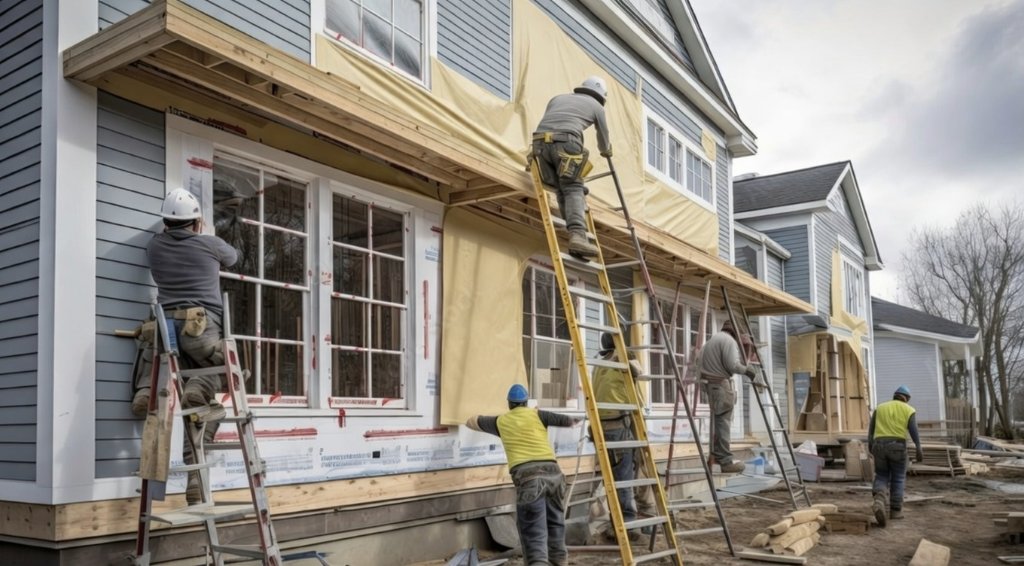
Siding That SurvivesColorado Storms.
James Hardie fiber cement, LP SmartSide, and steel siding engineered for hail, wind, and fire. Installed with proper flashing, moisture management, and fastening — so it stays on the wall and looks great for decades.
Your Siding Takes the Brunt of Every Storm.
On the Front Range of Colorado, your siding is on the front line. Hail, wind-driven debris, intense UV, freeze-thaw cycling, and wildfire risk all test your exterior cladding in ways that homes in milder climates never experience.
Vinyl siding — the default on many Front Range homes built in the last 30 years — simply isn't built for that. It shatters on hail impact, fades in the altitude UV, becomes brittle in cold, and traps moisture behind the wall. After one good storm, a whole elevation can look like it went through a shotgun test.
We install siding that's actually built for Colorado: James Hardie fiber cement, LP SmartSide engineered wood, and steel. Products rated for impact, resistant to fire and rot, and installed with proper flashing and moisture management so your wall assembly performs the way it was designed to.
What the Right Siding Does for Your Home
Siding is your home's armor. The right product, installed correctly, solves problems that vinyl and worn-out wood can't.
Hail & Impact Resistance
Colorado hail destroys vinyl and aluminum siding. Engineered products like LP SmartSide and James Hardie fiber cement are rated for impact — they take a hit and keep protecting your home instead of shattering into fragments.
Built for Chinook Winds
Front Range downslope winds regularly exceed 60 mph and can top 90. Properly installed siding with the right fastening schedule stays on the wall when cheap installations peel off.
Moisture & Rot Protection
Wood siding swells and rots. Vinyl traps moisture behind it. Fiber cement and engineered wood products resist water, won't rot, and allow your wall assembly to breathe and dry out properly.
Fire Resistance
Fiber cement siding is non-combustible — a meaningful advantage in Colorado's wildfire-risk zones. It won't contribute fuel to a fire the way wood and vinyl do.
Curb Appeal & Color Retention
New siding transforms a home's appearance. Premium products hold their color for decades without fading, and factory finishes carry warranties that field-applied paint simply can't match.
Low Maintenance
No more scraping, priming, and painting every five years. Modern siding products are engineered to look great with nothing more than an occasional wash with a hose.
Siding Products We Trust
We're not locked into one manufacturer. These are the siding products we install most often on Front Range homes — each with its own strengths.
James Hardie Fiber Cement
The industry standard for premium siding on the Front Range. Non-combustible, impact-resistant, and warranted against rot, warping, and cracking. ColorPlus technology provides a factory-applied finish that lasts far longer than field paint. Available in lap siding, panels, shakes, and trim.
LP SmartSide Engineered Wood
Treated wood strands bonded with resins and waxes for strength and moisture resistance. Impact-rated — takes hail far better than vinyl. Easier to install than fiber cement and accepts paint beautifully. A strong mid-range option with excellent durability.
Vinyl Siding
The budget option. We install it when budget dictates, but on hail-prone Front Range homes we strongly recommend fiber cement or engineered wood instead. Vinyl shatters on impact and traps moisture behind the wall.
Steel & Aluminum
Metal siding is durable and fire-resistant. Steel offers excellent hail performance; aluminum dents but doesn't crack. Both are low-maintenance and available in a range of profiles and colors.
Stucco Repair & Remediation
Many Front Range homes have stucco exteriors. We repair cracks, address moisture intrusion behind stucco, and remediate failed installations — often in combination with siding replacement on damaged walls.
Trim & Accents
Window trim, corner boards, fascia, rake boards, and decorative accents. A siding project is only as good as its trim — we use the same durable, low-maintenance materials for the details that frame your home.
What a PKR Siding Installation Includes
Siding failure almost always traces back to installation. Here's what we do on every project to make sure it lasts.
Siding Replacement FAQ
The questions Front Range homeowners ask us about siding materials, hail damage, and the installation process.
For hail resistance, James Hardie fiber cement and LP SmartSide engineered wood are the two products we recommend most. Both are rated for impact and will survive hail that shatters vinyl. Steel siding is also an excellent hail-resistant option. We avoid vinyl siding on hail-prone Front Range homes unless budget absolutely dictates it — vinyl shatters on impact and the damage is usually a full-wall replacement.
A typical single-family home takes 5–10 working days depending on size, material, and complexity. Fiber cement takes longer than vinyl because it requires more cutting and fastening. We work section by section, keep the site clean daily, and keep you informed of progress throughout.
Yes — if hail or wind damaged your siding, it's a covered loss under most homeowner's policies. We document all damage, coordinate with your adjuster on-site, and make sure the full scope is included. Siding claims often miss wind-driven damage on the back elevations of the home — we inspect all sides, not just the one that got hit.
We remove the old siding down to the sheathing on every project. Installing over old siding hides rot, traps moisture, creates an uneven surface, and voids manufacturer warranties. The only time we'll leave existing siding in place is when it's a compatible material in sound condition and the homeowner specifically requests it — and we'll still inspect underneath.
James Hardie fiber cement is made from cement, sand, and cellulose fibers — non-combustible, impervious to rot and insects, and extremely durable. LP SmartSide is made from treated wood strands bonded with resins — also impact-resistant and durable, lighter and easier to work with, and typically less expensive than fiber cement. Both are excellent choices; the right one depends on your budget and priorities.
Fiber cement siding can last 50 years or more with minimal maintenance. LP SmartSide carries a 50-year limited warranty. Steel and aluminum siding last 40+ years. Vinyl siding typically lasts 20–30 years but is vulnerable to hail damage throughout its life. The key factor in longevity is installation quality — even the best siding fails early if it's installed wrong.
Yes. A siding project is only complete when the trim, corner boards, window casing, and fascia are done. We use matching durable materials — typically fiber cement or engineered wood trim — so your entire exterior system performs consistently and looks cohesive.
Yes. Siding replacement consistently ranks as one of the highest-ROI exterior remodeling projects. On the Front Range specifically, buyers value impact-resistant, low-maintenance exteriors — especially in hail-prone areas. New siding also improves energy efficiency by tightening the building envelope and reducing air infiltration.