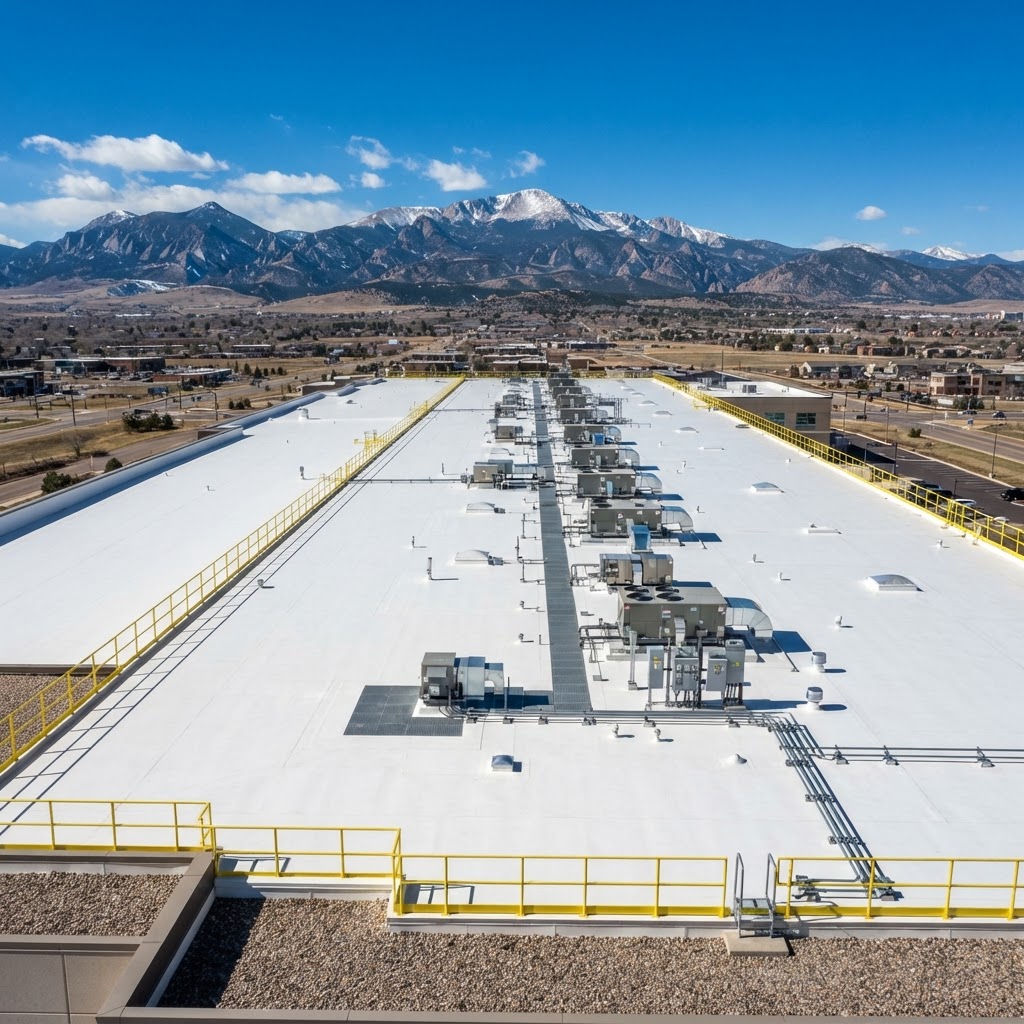
Commercial roofing is a different discipline from residential roofing, and choosing the right contractor and system matters enormously for a building owner or property manager. Most commercial buildings have flat or low-slope roofs, which behave differently from the steep pitched roofs on houses — they rely on membrane systems rather than shingles, they drain differently, and they fail differently. This page explains commercial roofing systems, what to consider for your building, and how we approach commercial work across the Colorado Front Range. We handle commercial and flat roofing for a range of buildings, and while we install manufacturer systems including Mule-Hide products, we'll work with the system that fits your building rather than pushing a single brand.
Who needs commercial roofing
Commercial roofing serves a wide range of property owners and managers: owners of office buildings, retail and mixed-use properties, warehouses and industrial facilities, apartment and multifamily buildings, churches and nonprofit facilities, and HOAs with shared or commercial structures. What these have in common is that the roof is a significant asset protecting a significant investment, and often the people or businesses inside. For a property manager, the roof is also an operational concern — leaks disrupt tenants, and downtime costs money. Commercial roofing is about protecting both the building and what it houses.
How commercial roofs differ from residential
The core difference is slope. Most commercial roofs are flat or low-slope, which changes everything about how they work. A steep residential roof sheds water quickly by gravity; a flat roof holds water longer and relies on membrane systems, drains, and proper slope to move it. This means flat roofs are more sensitive to drainage problems, ponding, and membrane condition. Commercial roofs are also typically larger, with more rooftop equipment — HVAC units, vents, and penetrations, each of which is a potential leak point. And they use entirely different materials — membranes like TPO, EPDM, and PVC rather than the shingles on a house. Because of these differences, commercial roofing requires specific expertise and systems.
The main commercial roofing systems
Several membrane systems dominate commercial low-slope roofing, and each has its place. TPO (thermoplastic polyolefin) is a single-ply membrane popular for its reflective white surface, which can reduce cooling loads, and its heat-welded seams — a common choice for many commercial buildings. EPDM is a durable rubber membrane known for longevity and proven performance, especially valued for its resilience; it's typically dark, though reflective options exist. PVC is a single-ply membrane known for strong chemical resistance and durable heat-welded seams, often chosen for buildings like restaurants where the roof is exposed to grease and chemicals. Beyond single-ply, there are built-up and modified bitumen systems, and metal for certain low-slope applications. And roof coatings can restore and extend the life of some existing roofs. We'll help you understand which system fits your building's needs, budget, and existing roof.
Choosing the right system for your building
The best commercial roofing system depends on your specific building and situation. Factors include your existing roof and whether it can be restored or needs replacement; your building's use and what the roof is exposed to; your energy priorities, since reflective membranes can reduce cooling costs; your budget and timeline; and your building's drainage and structure. A restaurant with grease exposure, a warehouse with a large simple roof, and a small office building are different situations that may call for different systems. Rather than pushing one product, we assess your building and help you choose the system that genuinely fits. Because we're not locked into a single manufacturer, we can recommend what's right for you.
Commercial roof repair versus replacement
As with residential roofing, commercial roofs face a repair-versus-replacement decision. Many commercial roof problems — leaks at seams or penetrations, localized membrane damage, flashing failures, or drainage issues — can be repaired, extending the roof's life without a full replacement. A roof coating can also restore some aging membranes, buying additional years. Replacement makes sense when a roof is failing widely, near the end of its life, or beyond cost-effective repair. For a property manager watching a budget, knowing whether repair, coating, or replacement is the right call matters, and it starts with an honest inspection of the roof's actual condition. We'll give you a straight assessment rather than defaulting to the most expensive option.
What commercial roofing involves
A commercial roofing project has considerations residential work doesn't: coordinating around building operations and tenants so business can continue; working with property managers and owners on scope, timing, and budget; handling rooftop equipment and the many penetrations that come with commercial buildings; addressing drainage properly, since flat roofs live or die by how they shed water; and providing the documentation and scope that commercial decisions, and sometimes insurance claims, require. We approach commercial projects with these realities in mind, planning the work around your building's operation and keeping you informed.
Colorado considerations for commercial roofs
Colorado's climate affects commercial roofs in specific ways. Hail damages commercial membranes just as it does residential shingles, and a large flat roof can take significant hail damage that needs assessment. Intense high-altitude UV ages membranes and makes reflective and UV-resistant systems worth considering. Snow load and freeze-thaw stress flat roofs and their drainage, and ponding water that freezes is a real concern. Wind can damage membrane edges and flashing. These conditions make proper installation, drainage, and material choice especially important for a commercial roof that will last in this climate.
Why choose us for commercial roofing
We bring an honest, experienced approach to commercial roofing. We assess your roof's actual condition and recommend repair, coating, or replacement based on what it needs, not on what's most profitable. We install quality systems including Mule-Hide products, and because we're not tied to one manufacturer, we help you choose what fits your building. We're licensed and insured, local, and committed to standing behind our work with our workmanship warranty. And we understand that for a property manager or owner, the roof is an operational and financial concern, so we communicate clearly and plan around your building's needs. We're straightforward about our capabilities: we're an experienced commercial installer, not a manufacturer-certified specialist, and we'll tell you honestly what we can do for your building.
Getting started with your commercial roof
The path starts with an inspection. We assess your commercial roof's condition, identify any problems and their causes, and discuss your building's needs, budget, and timeline. We provide a clear scope and honest recommendation — whether that's a repair, a coating, or a replacement, and the right system for your situation. From there, you have the information to make a sound decision about a significant building asset.
Key Takeaways: Commercial Roofing in Colorado
Commercial roofing is a different discipline, centered on flat and low-slope membrane systems rather than shingles. Main systems include TPO, EPDM, and PVC, each with strengths for different buildings, plus coatings that can restore aging roofs. The right system depends on your building's use, exposure, energy priorities, budget, and existing roof. Many commercial roof problems can be repaired or coated rather than replaced, which an honest inspection determines. We're an experienced commercial installer using quality systems including Mule-Hide, not locked into one manufacturer, and honest about our capabilities.
Commercial flat membrane roof with rooftop HVAC units in Colorado.
Frequently Asked Questions
Related Pages
Written by Peter Regalado, Operations Manager · Reviewed by Mason Pastorello, Managing Director · Last reviewed: July 2026
- Licensed & insured — documentation available on request
- Free, documented roof inspections
- Real emergency service available
- 5-year workmanship warranty (manufacturer warranties vary by product)
- 30 years of construction experience
- Serving Denver, Adams, Arapahoe, Douglas, Jefferson, and El Paso counties
Promise Keepers Restoration
9615 E. County Line Rd, Ste. B-477, Centennial, CO 80112
Hours: Mon–Sat 8:00 AM–5:00 PM