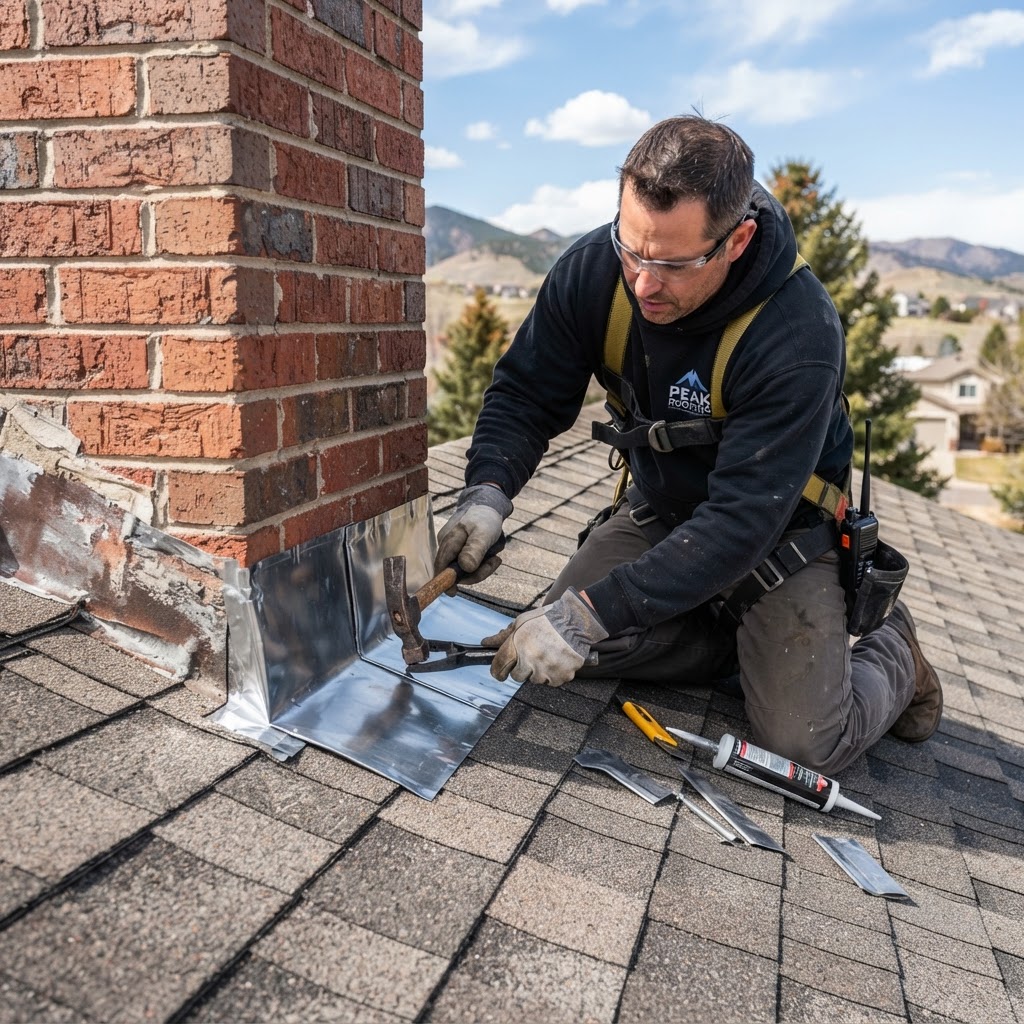
Not every roof problem needs a new roof. A repair is the right answer when damage is isolated — a leak around a pipe boot, a few shingles lifted by wind, cracked flashing at a chimney — and the rest of the roof still has life in it. We diagnose the actual cause before recommending anything, because the difference between a $400 repair and a $15,000 replacement should be based on what your roof actually needs, not on which one pays better.
The honest challenge with repairs is that the visible symptom and the real source are often in different places. Water travels. A stain on your living room ceiling can start feet away at a failed flashing, run along a rafter, and drop down somewhere completely unrelated. Finding the true source — not just the wet spot — is the whole job.
Problems a repair usually solves
Most residential roof repairs fall into a handful of categories:
- Leaks at penetrations — pipe boots, vents, skylights, and chimneys, where the roof surface is interrupted and sealed by details that wear out.
- Wind-lifted or missing shingles in a limited area, often along edges, ridges, or a single slope.
- Damaged or separated flashing in valleys or where the roof meets a wall.
- Isolated hail impact that hasn't compromised the roof as a whole.
- Cracked or deteriorated sealant at flashings and penetrations — one of the most common Colorado failures.
If your problem is one of these and the surrounding roof is sound, a targeted repair is usually the smart, cost-effective choice.
How we find the real problem
A repair inspection is detective work, and it's where experience earns its keep. We don't just look at the ceiling stain and patch the roof directly above it — that's how homeowners end up paying for two or three "repairs" that never fix the leak.
Instead we trace the water path from the inside out where possible: checking the attic side for staining, rusted nails, and moisture trails that point back to the entry point; then examining the details on the roof that fail first. We check flashing at every transition, the seals around penetrations, the condition of valleys, and the shingles immediately uphill of the symptom, since water runs down before it drips through. We document what we find with photos, so the fix targets the cause, not the symptom — and so you can see the reasoning behind it.
Common Colorado roof repairs and what each involves
Colorado's climate produces some distinctive repair patterns. A few we see often:
- Pipe boot failure. The rubber gaskets around plumbing vents dry out and crack under Colorado UV, often within a decade. The repair is a straightforward boot replacement — but it's one of the single most common leak sources here.
- Flashing separation. Freeze-thaw cycling works metal flashing loose over time, especially at chimneys and wall transitions. The repair involves resealing or replacing the flashing, not just caulking over the gap.
- Wind-lifted shingles. Wind breaks the adhesive seal and lifts shingles; even those that look flat may no longer be sealed. Repair means replacing creased shingles (they won't reseal) and re-securing the area.
- Ice-dam leaks at eaves. A distinct Colorado pattern where snowmelt refreezes at the roof edge and forces water backward under the shingles. The real fix addresses the eave detail and underlying ventilation, not just the visible leak.
- Isolated hail bruising. When only a small area shows functional hail damage, replacing the affected shingles can restore the roof without a full tear-off.
When a repair isn't enough
We'll tell you directly when a repair is only a band-aid. If the underlying shingles are brittle and failing across the roof, if damage is widespread rather than contained, or if the deck below has been compromised by a long-standing leak, patching one spot just moves the problem. Water will find the next weak point.
| Situation | Leans toward repair | Leans toward replacement |
|---|---|---|
| Extent of damage | Isolated to one area | Widespread across slopes |
| Roof age | Plenty of life left | Near or past service life |
| Repair history | First real issue | Repeated, recurring repairs |
| Shingle condition | Sound and pliable elsewhere | Brittle, granule-bare throughout |
| Decking | Solid | Rotted or soft below |
Colorado-specific repair challenges
Repairs here come with wrinkles that milder climates don't. Freeze-thaw cracks aged sealant and lifts flashing. High-altitude UV makes older shingles brittle, so a "quick" repair on a sun-baked roof can crack the neighboring shingles just from being walked on or lifted — which is why an experienced hand matters more than it sounds. Wind events lift and crease shingles that look completely intact from the ground. And exact shingle matching gets harder as a roof ages, because color weathers and product lines change; we'll be upfront when a perfect match isn't possible.
What to do if your roof is leaking right now
If water is coming in, the priority is limiting interior damage until we can get there. A few practical steps:
- Move furniture and valuables out from under the leak, and put down a bucket or bin to catch water.
- If the ceiling is bulging with trapped water, carefully relieve it with a small hole over a bucket — a bulging ceiling can hold a surprising amount of water and collapse if left alone.
- Photograph the damage for your records and any potential insurance claim.
- Don't climb onto a wet or storm-damaged roof yourself. It's how people get hurt, and it rarely helps.
- Call us — and if the leak is severe or a section of roof is open, ask about emergency roof tarping, which protects the interior until a permanent repair can be scheduled.
Roofer repairing cracked chimney flashing on a Colorado home
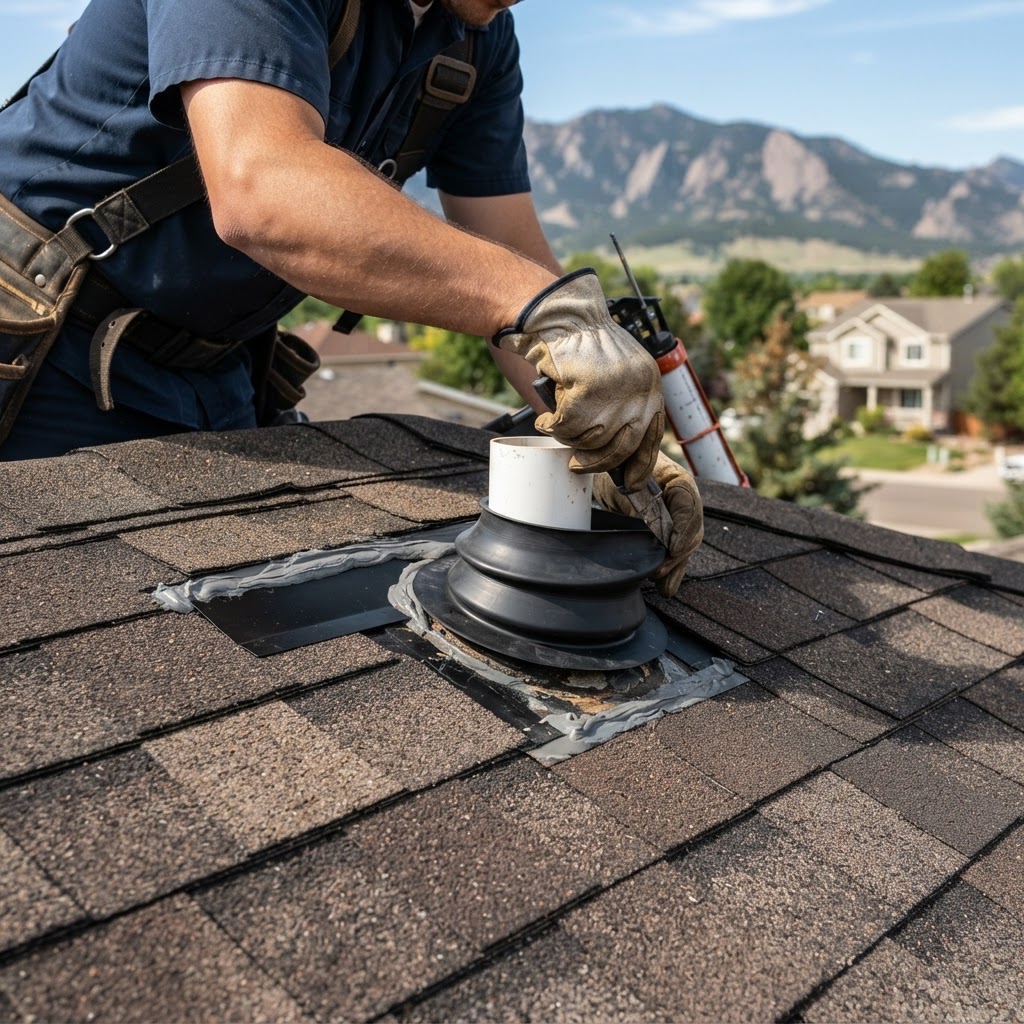
Replacing a UV-cracked pipe boot during a Front Range roof repair.
Frequently Asked Questions
Related Pages
Written by Peter Regalado, Operations Manager · Reviewed by Mason Pastorello, Managing Director · Last reviewed: July 2026
- Licensed & insured — documentation available on request
- Free, documented roof inspections
- Real emergency service available
- 5-year workmanship warranty (manufacturer warranties vary by product)
- 30 years of construction experience
- Serving Denver, Adams, Arapahoe, Douglas, Jefferson, and El Paso counties
Promise Keepers Restoration
9615 E. County Line Rd, Ste. B-477, Centennial, CO 80112
Hours: Mon–Sat 8:00 AM–5:00 PM