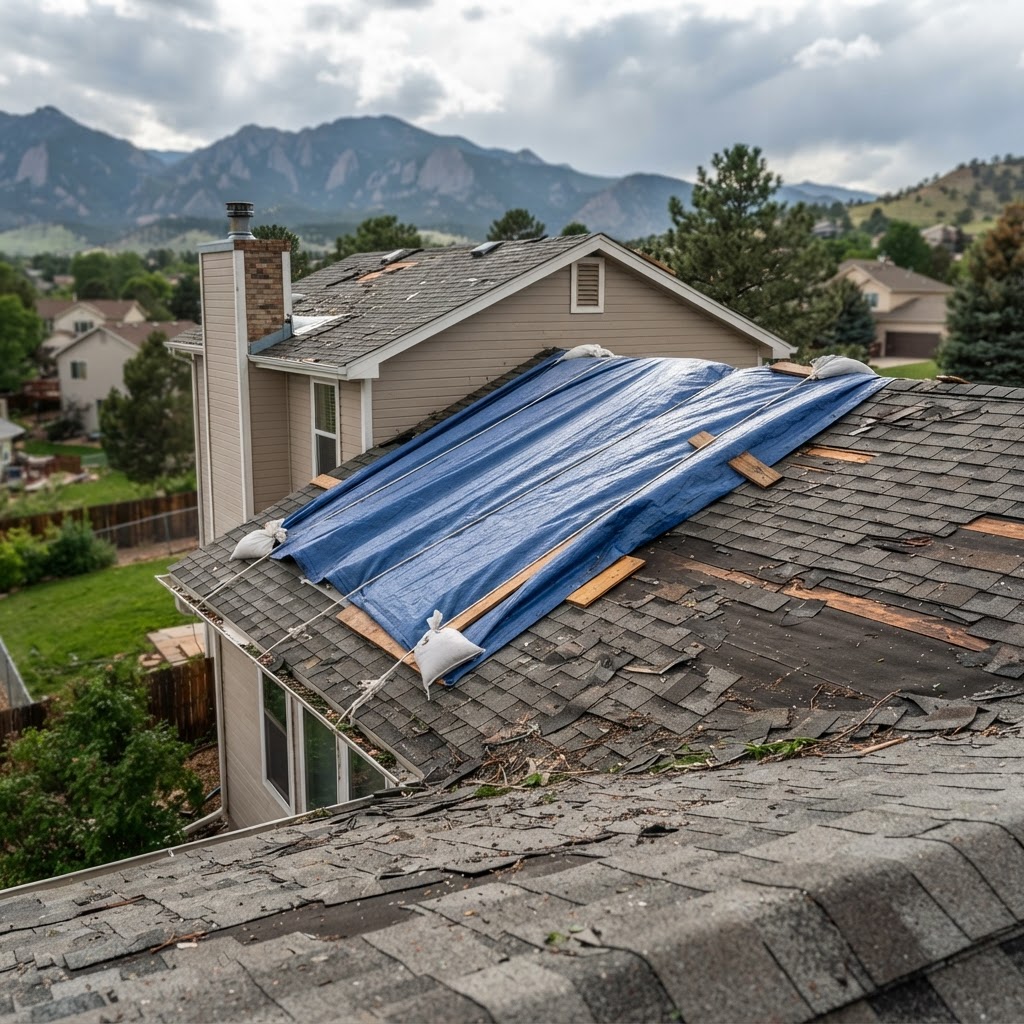
When a storm rolls across the Front Range, the damage isn't always obvious from your driveway. Hail bruises shingles invisibly; wind breaks their seals without blowing anything off. The right first step is almost never 'file a claim' or 'replace the roof' — it's a proper inspection that tells you what actually happened up there. We handle storm restoration end to end for homeowners across the Denver metro, Douglas County, the foothills, and the Colorado Springs area: emergency protection, documented inspection, and repair or replacement, with honest guidance at every step.
This page is the starting point for anyone dealing with storm damage. Below, each part of the process links to a detailed page so you can go straight to what applies to you.
What to do first after a storm
The order matters. Doing these in sequence protects your home, your wallet, and any insurance claim you might file:
- Protect the interior first. If there's an active leak or an exposed section of roof, emergency roof tarping stops further water damage before anything else happens.
- Get a free, documented inspection. A trained look — on the roof where it's safe — determines the real extent of damage, which is often very different from what's visible from the ground.
- Get a straight recommendation. Repair, replace, or 'your roof is actually fine.' All three are honest outcomes, and we'll tell you which one applies.
- Decide on insurance, if it's warranted. If the damage supports a claim, we document it and provide our scope. If it doesn't, we'll tell you that too, rather than pushing you into a claim you don't need.
The two kinds of storm damage
Nearly all Colorado roof storm damage is hail, wind, or a combination — and they behave very differently. Each has its own dedicated page; here's how to tell them apart.
- Hail damage. Hail doesn't usually punch holes. It bruises shingles — fracturing the mat underneath and knocking away the granules that protect the asphalt from UV.
- Wind damage. Wind works on edges and seals. It lifts shingles, breaks the adhesive bond, and sets them back down looking normal — but now free to flap, crease, and eventually blow off.
Cosmetic versus functional damage
Not every mark from a storm means a failed roof. Some hail impacts are cosmetic; others are functional damage that genuinely shortens the roof's life. We show you what we find and explain which category it falls into.
How to spot possible storm damage from the ground
You can't fully assess a roof from the driveway — and you shouldn't climb up to try — but there are safe ground-level signs that tell you an inspection is worth scheduling:
- Granules in gutters: Coarse black sand means hail may have knocked the protective surface off your shingles.
- Shingle debris: Whole shingles or pieces in flower beds and grass point to wind damage.
- An uneven roofline: Look for shingles that are missing, lifted, curled, or sitting crooked.
- Dented metal: Gutters, downspouts, vents, and flashing often show hail impact first.
- Other dented outdoor items: AC fins, mailbox, and garage door are useful proxies.
- New interior stains: Fresh water marks on ceilings or in the attic after a storm.
When storm damage becomes an emergency
Call for emergency service right away if you have active water intrusion, a visibly open roof section, large debris on the roof, or interior ceiling sagging.
How storm timing affects your options
Time works against you after a storm. Exposed roofs get worse with every rain or snow, and insurance carriers expect damage to be reported promptly.
Where insurance fits — honestly
Our job is to inspect, document the damage with photos, and provide our detailed scope. Your insurer's job is to decide coverage. We don't act as an adjuster or negotiate claims.
What not to do after a storm
- Don't assume the roof is fine because it looks fine.
- Don't sign anything that assigns your claim before damage is confirmed.
- Don't trust ground-level/drone-only diagnoses.
- Don't wait months to act.
- Don't file a claim reflexively without an inspection first.
How storm restoration works with us
We tarp if necessary, perform a free documented inspection, provide a straight recommendation, and if a claim is warranted, provide the documentation to support your insurer's evaluation. We complete the work backed by a 5-year workmanship warranty.
Emergency roof tarp installed after storm damage on a Colorado home
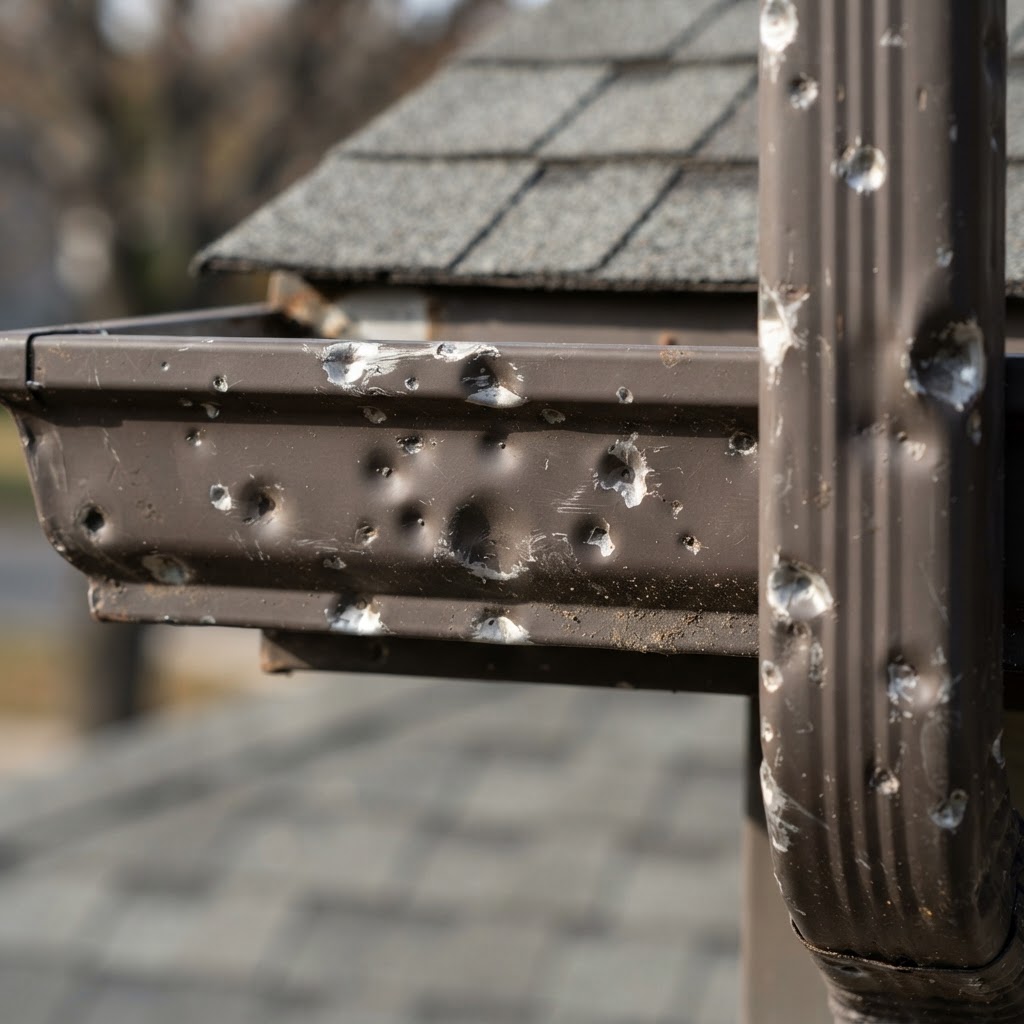
Hail-dented gutter documented during a Front Range storm inspection.
Frequently Asked Questions
Related Pages
Written by Peter Regalado, Operations Manager · Reviewed by Mason Pastorello, Managing Director · Last reviewed: July 2026
- Licensed & insured — documentation available on request
- Free, documented roof inspections
- Real emergency service available
- 5-year workmanship warranty (manufacturer warranties vary by product)
- 30 years of construction experience
- Serving Denver, Adams, Arapahoe, Douglas, Jefferson, and El Paso counties
Promise Keepers Restoration
9615 E. County Line Rd, Ste. B-477, Centennial, CO 80112
Hours: Mon–Sat 8:00 AM–5:00 PM