If a storm damaged your roof, your homeowners policy may cover the repair or replacement — and the process can feel confusing and high-stakes. This page gives you an honest picture of what a roofing contractor can and can't do in an insurance situation, and how we help. No hype, no promises we can't keep.
We provide storm-damage inspection, documentation, and restoration for homeowners across the Denver metro, Douglas County, the foothills, and the Colorado Springs area. When a claim is involved, our job is to give you and your insurer a clear, factual basis to work from — and then to do the restoration right once the claim is resolved.
What we do in an insurance situation
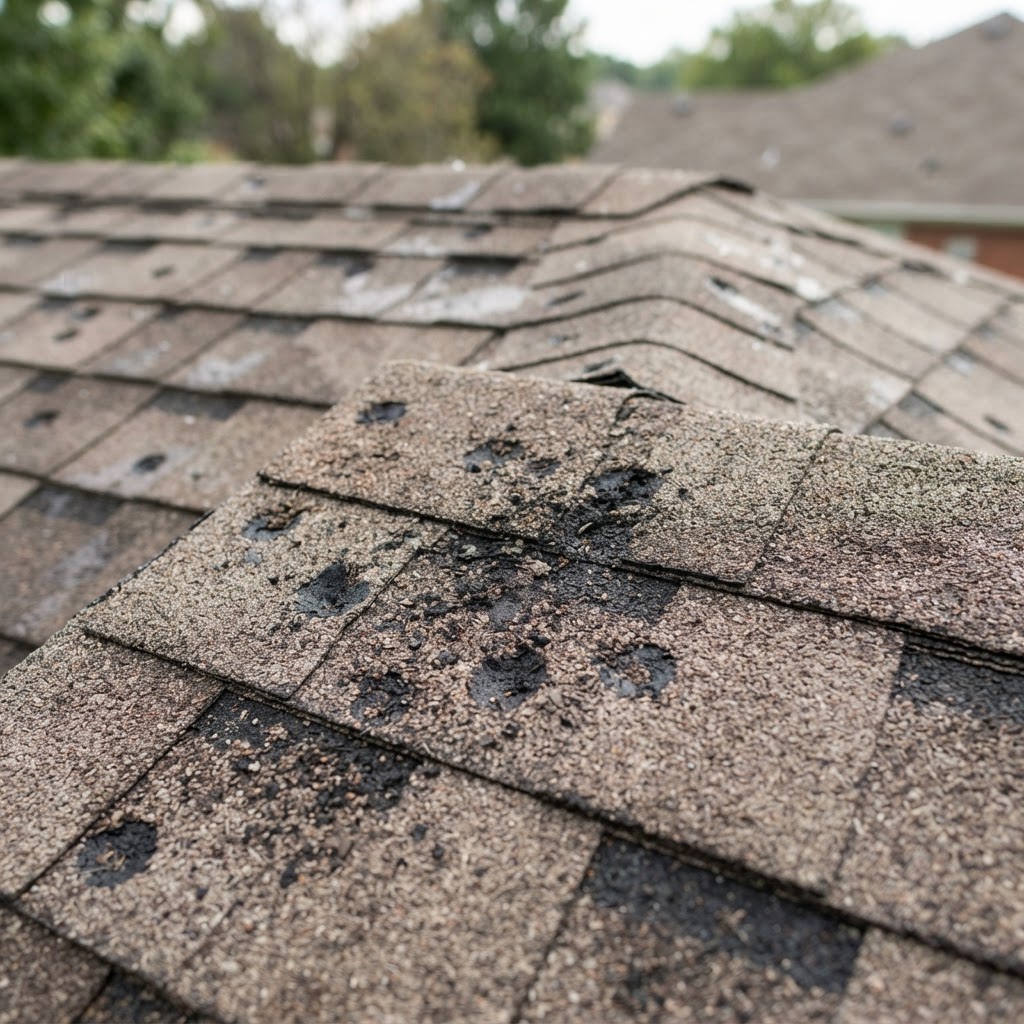
- Inspect and document. We perform a free, thorough inspection and photograph the damage, creating a clear, dated record of your roof's condition after the storm.
- Provide a detailed scope and estimate. We prepare a written scope of the work the damage calls for, which you and your insurer can review against your policy.
- Coordinate the approved restoration. Once your claim is resolved and the work is approved, we complete the restoration to the agreed scope, backed by our 5-year workmanship warranty.
That's the honest extent of a contractor's proper role — and it's genuinely valuable. Clear documentation and an accurate scope are what a fair claim is built on.
What we don't do — and why that matters
We're roofers, not your insurance company and not a public adjuster. So, plainly:
- We don't decide your claim. Coverage is determined by your insurer under the terms of your policy.
- We don't negotiate or adjust the claim on your behalf. That's a regulated activity, and it isn't a contractor's role.
- We don't promise a carrier will approve or pay. No honest roofer can, and anyone who guarantees an "approval" or a "maximum settlement" is telling you something they can't back up.
We're spelling this out because the roofing industry has a reputation problem here, especially after big storms. Overpromising on insurance is one of the most common ways homeowners get misled. We'd rather be straight with you and earn the work.
How a roof insurance claim generally works
Every carrier and policy is different, so treat this as a general map — not advice about your specific policy:
- Storm damage occurs (hail or wind).
- You get the roof inspected and documented, so you know whether the damage is worth a claim.
- You file a claim with your insurer, who typically assigns an adjuster.
- The insurer inspects and determines coverage based on your policy.
- If covered, the scope and payment are set — often involving depreciation (see ACV vs RCV).
- The approved work is completed to the agreed scope.
We can be involved at the inspection, documentation, scope, and restoration stages. The coverage decision at step 4 is always your insurer's.
What to have ready before you file a claim
A little preparation makes the claims process smoother and helps you make good decisions. Before you file, it helps to have:
- A documented inspection of the damage with dated photos, so you know what you're actually dealing with.
- Your insurance policy — or at least your policy number and a general sense of your coverage and deductible.
- A record of when the storm happened, which you can generally confirm through public weather sources.
- Photos of the interior, if there's any water damage inside.
- A written scope from a roofer describing the damage and the work it calls for.
Having these in hand means you're deciding whether and how to file from a position of information rather than guessing, and it gives your insurer a clear starting point. We can help with the roofing pieces of that list — the inspection, the documentation, and the scope. The policy questions are between you and your insurer; if you have questions about your coverage, your insurer or an independent licensed adviser is the right place to get them answered.
Key insurance terms, in plain English
| Term | What it means |
|---|---|
| Deductible | The amount you're responsible for before coverage applies. It's yours to pay — see the caution below. |
| ACV (Actual Cash Value) | The depreciated value of the roof — what it's "worth" now, accounting for age and wear. |
| RCV (Replacement Cost Value) | The cost to replace the roof, often paid in stages, with depreciation recoverable after work is done. |
| Depreciation | The reduction in value for age and wear; whether it's recoverable depends on your policy. |
| Scope | The itemized description of the damage and the work required to restore it. |
An honest caution about deductibles
Your deductible is your responsibility under your policy. In Colorado, offers to "waive," "eat," "cover," or "absorb" your deductible are a serious red flag — and Colorado has specific law addressing roofing contracts and deductibles. We follow that law, and we'd caution you strongly against any contractor who offers to make your deductible disappear. It's not a favor; it's a warning sign about how they operate.
Warning signs after a storm
- Anyone who guarantees your claim will be approved before it's even filed.
- Anyone who asks you to sign over your claim (an assignment of benefits) or authorize work before the damage is properly inspected.
- Deductible-waiving offers, as above.
- Pressure and urgency — "sign today or miss out."
- A company with no local address or track record you can verify.
Why work with a local, established contractor
When your claim resolves and it's time to do the work, you want the company that documented your damage to be the same one that stands behind the finished roof — and to still be reachable if a question comes up a year later. Storm-chasing crews are gone by the next season. As a local company, our reputation depends on the homeowners we serve here.
Claim missteps that cost homeowners
- Filing a claim before an inspection.
- Signing an assignment of benefits to a contractor before understanding what you're giving up.
- Trusting a guaranteed "approval."
- Accepting a deductible-waiver offer.
- Waiting too long.
- Letting the tarp or repair cover the damage before it's documented.
How the restoration process works with us
From storm to finished roof, here's the sequence. We perform a free, documented inspection and show you the findings with photos. If the damage warrants a claim, we provide our documentation and detailed scope for you and your insurer to review. You file and work with your carrier on the coverage decision. Once the claim is resolved and work is approved, we complete the restoration to the agreed scope, keep the site protected, replace any bad decking we find, and finish with a full cleanup. The work carries our 5-year workmanship warranty.
Documented hail damage photos supporting a Colorado roof insurance claim
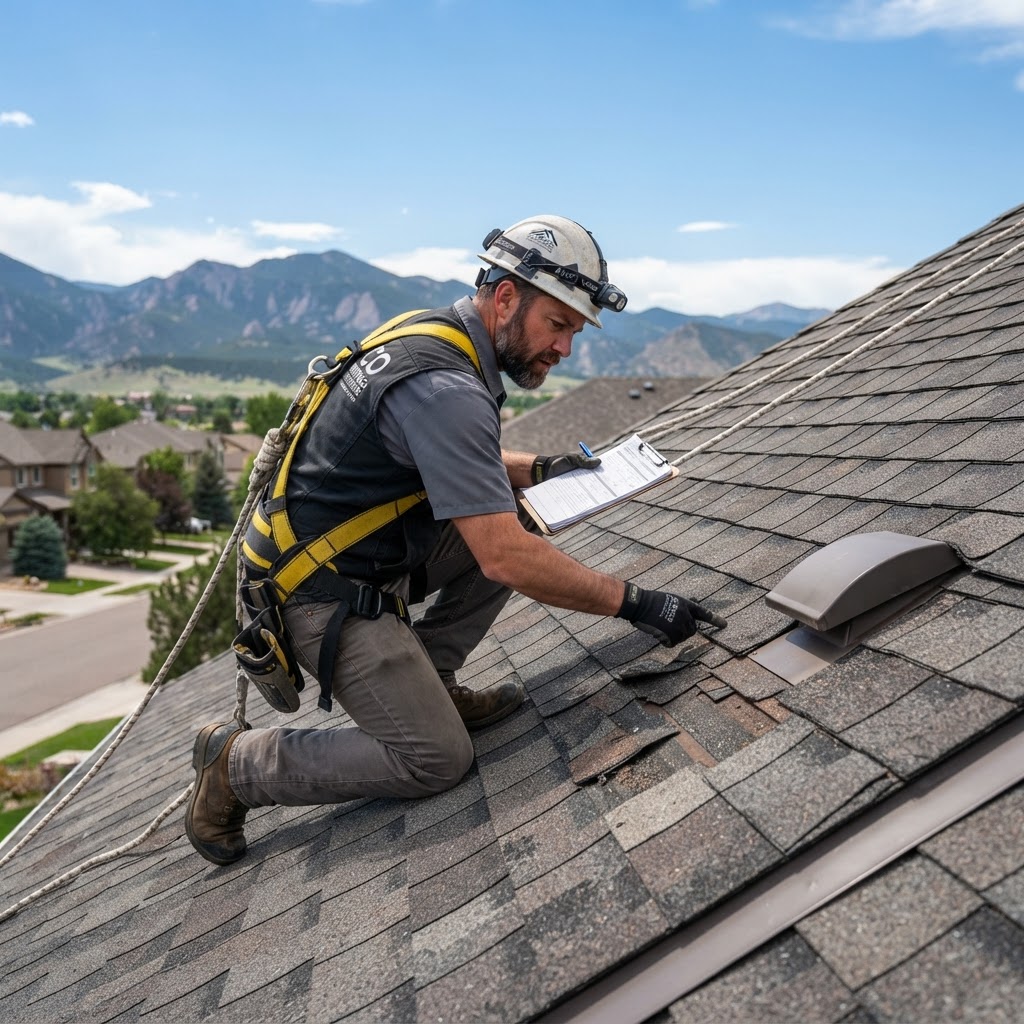
Roofer recording damage for an insurance scope on a Front Range home.
Frequently Asked Questions
Related Pages
Written by Peter Regalado, Operations Manager · Reviewed by Mason Pastorello, Managing Director · Last reviewed: July 2026
- Licensed & insured — documentation available on request
- Free, documented roof inspections
- Real emergency service available
- 5-year workmanship warranty (manufacturer warranties vary by product)
- 30 years of construction experience
- Serving Denver, Adams, Arapahoe, Douglas, Jefferson, and El Paso counties
Promise Keepers Restoration
9615 E. County Line Rd, Ste. B-477, Centennial, CO 80112
Hours: Mon–Sat 8:00 AM–5:00 PM