Written by Peter Regalado, Operations Manager · Reviewed by Mason Pastorello, Managing Director · Last reviewed: July 2026
▚ PAGE P144 — Roof Flashing Failures: A Leading Cause of Leaks (1,612 words ✅)
Flashing failures are one of the most common causes of roof leaks, because flashing — the metal that seals the joints and transitions of a roof — is exactly where water tries hardest to get in and where roofs are most vulnerable. When flashing fails at a chimney, a wall, a valley, or a penetration, water finds its way into the roof and home. This article explains what flashing is, why it's so critical, where and why it fails, and how flashing problems are addressed, so you understand this often-overlooked but leak-critical part of your roof.
What flashing is and why it matters. Flashing is the material, usually metal, installed at the joints, transitions, and penetrations of a roof to seal them against water. A roof isn't just a continuous field of shingles — it has chimneys, walls that meet the roof, valleys where roof planes join, vents, pipes, skylights, and edges, and every one of these interruptions is a potential entry point for water. Flashing seals these vulnerable areas, directing water away from the joints and keeping it out. Flashing is critically important because these transitions and penetrations are where roofs are most likely to leak. In fact, many roof leaks originate not in the field of the shingles but at the flashing. This is why proper flashing is essential to a watertight roof and why flashing failures are such a common source of leaks.
Why flashing is where roofs leak. Understanding why flashing is so leak-prone helps explain its importance. The joints, transitions, and penetrations that flashing seals are inherently the weak points of a roof — the places where the protective surface is interrupted. Water running down a roof concentrates at valleys, collects against walls and chimneys, and finds any gap around penetrations. These are exactly the areas flashing must seal, and they're under the most water stress. Additionally, flashing involves the integration of different materials and surfaces — metal against masonry, roofing against walls — which creates joints that must be properly sealed and maintained. Because these areas are both the most water-stressed and the most complex to seal, they're where roofs most commonly leak, making flashing failures a leading cause of roof leaks.
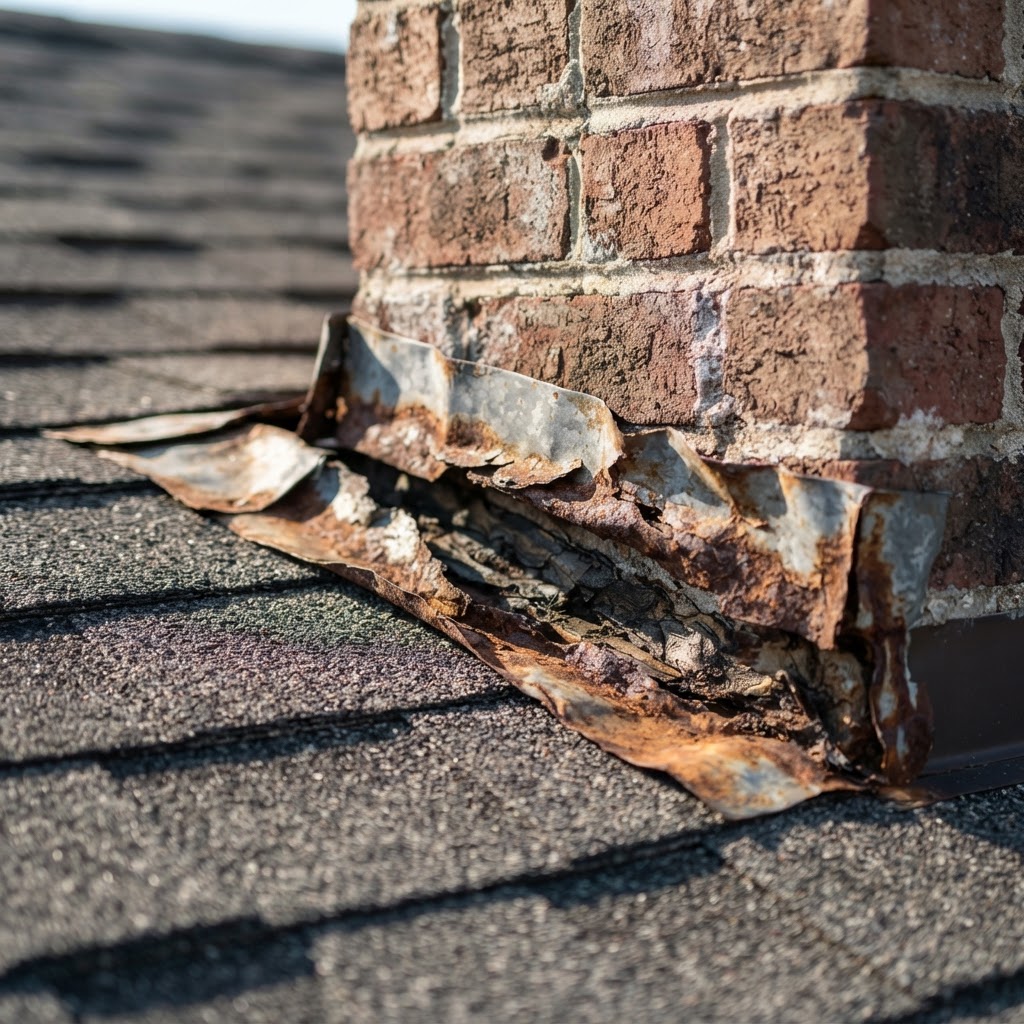
Common flashing locations. Flashing appears at several key locations, each a potential leak point. Chimney flashing seals where the chimney penetrates the roof — a very common leak location because of the complex joint between masonry and roofing. Wall flashing seals where a roof meets a vertical wall, such as where a lower roof meets an upper story. Valley flashing seals the valleys where two roof planes meet, channeling the concentrated water flow. Vent and pipe flashing seals around the various penetrations for plumbing vents and exhaust. Skylight flashing seals around skylights. And drip edge and edge flashing protect the roof edges. Each of these locations relies on proper flashing to stay watertight, and each is a place where flashing can fail and cause a leak. Knowing these locations helps understand where roof leaks commonly originate.
Why flashing fails. Flashing fails for several reasons. Age and weathering — over time, flashing and its seals deteriorate. Improper installation — flashing that wasn't installed correctly in the first place is prone to failure, a common issue since flashing requires skill to do right. Sealant failure — the caulking or sealant used with flashing degrades over time. Corrosion — metal flashing can corrode over the years. Movement and settling can work flashing loose. Storm damage — hail and wind can damage flashing. And in Colorado specifically, freeze-thaw cycles work at flashing and its seals, driving failures. Because flashing faces all these threats, and because it's often the product of installation quality, flashing failures are common. Poor flashing installation in particular is a frequent culprit, which is why quality installation matters so much for flashing.
How flashing failures cause leaks. When flashing fails, water gets in. A failed chimney flashing lets water in around the chimney; a failed wall flashing lets water in where the roof meets the wall; a compromised valley lets the concentrated valley water intrude; and failed penetration flashing lets water in around vents and pipes. Because flashing is at the vulnerable transitions, a flashing failure often means water entering at these critical points. And because water travels, the leak may appear inside the home some distance from the actual flashing failure, making diagnosis important. Many of the roof leaks homeowners experience trace back to flashing rather than the shingles themselves, which is why a good leak diagnosis examines the flashing. This is a key reason correct diagnosis matters — the flashing is often the real source even when the symptom appears elsewhere.
Addressing flashing problems. Flashing problems are addressed based on the specific failure. Sometimes resealing or repairing the existing flashing resolves the issue. Sometimes the flashing must be replaced, particularly if it's corroded, damaged, or was improperly installed. During a roof replacement, flashing is typically addressed as part of the work, with new or properly reused flashing ensuring the transitions are properly sealed with the new roof. The key in any flashing repair is correctly identifying the failure and properly sealing the transition, since flashing done poorly will just fail again. Because flashing requires skill to do right, addressing flashing problems is work for an experienced roofer. We diagnose and address flashing failures correctly, ensuring the vulnerable transitions are properly sealed.
Flashing and roof replacement. An important point is that flashing should be properly addressed during a roof replacement. Because flashing seals the roof's vulnerable transitions, and because old flashing may be near the end of its life, leaving old flashing in place during a roof replacement can mean the new roof leaks at the old flashing. Proper roof replacement addresses the flashing — installing new flashing or properly integrating the flashing with the new roof so the transitions are watertight. This is part of why quality roof installation attends to flashing details — the flashing is where the new roof is most likely to leak if not done right. When we replace a roof, we address the flashing as part of the work, ensuring the vulnerable areas are properly sealed rather than leaving old flashing to become the new roof's weak point. This attention to flashing is part of a quality installation.
Why quality flashing installation matters so much. A theme worth emphasizing about flashing is how much its performance depends on quality installation. Unlike some roofing elements, flashing requires real skill to install correctly — the metal must be properly formed, positioned, integrated with the roofing, and sealed at complex transitions. Poorly installed flashing is one of the most common reasons roofs leak, sometimes soon after installation. This means the quality of your roofer directly affects whether your flashing performs. A skilled roofer who properly installs flashing produces watertight transitions, while a careless or inexperienced one can leave flashing that leaks. This is one of the areas where the difference between a quality installation and a poor one shows up most clearly and most consequentially. For a homeowner, this is a reason to value quality workmanship — the flashing details, which you can't easily see, are where a roof's watertightness is often won or lost. When we install or replace a roof, we give the flashing the careful attention it requires, because we know it's both critical and a common failure point. Quality flashing work is part of what distinguishes a roof that stays watertight from one that leaks at the transitions.
Flashing maintenance and inspection. Because flashing is a common leak source, and because it deteriorates over time, flashing deserves attention in roof maintenance and inspection. During a roof inspection, the flashing should be examined for signs of deterioration, corrosion, sealant failure, or damage, since these are the precursors to flashing leaks. Catching flashing issues before they cause leaks allows them to be addressed proactively through resealing or repair rather than after water has already gotten in. This is part of why periodic roof inspections are valuable — they can catch flashing problems early. For a homeowner, being aware that flashing is a common leak source and having it checked as part of roof inspections helps prevent the leaks that failing flashing causes. When we inspect a roof, we examine the flashing at chimneys, walls, valleys, and penetrations, because these are exactly where problems tend to develop and where catching them early prevents leaks. Attention to flashing in maintenance and inspection is part of protecting a roof from one of its most common vulnerabilities.
Colorado context. Colorado's climate makes flashing failures particularly relevant. The freeze-thaw cycles work at flashing and its seals, driving deterioration and failures over time. Hail can damage flashing along with the rest of the roof. Wind stresses flashing, especially at edges. And the intense UV degrades the sealants used with flashing. These conditions mean flashing in Colorado faces real stresses, making flashing maintenance and quality installation important and making flashing a common source of the leaks Colorado roofs develop. For a Colorado homeowner, being aware that flashing is a common leak source and ensuring quality flashing work is worthwhile protection against leaks.
Key takeaways. Flashing is the metal sealing a roof's joints, transitions, and penetrations, and it's one of the most common sources of roof leaks. Flashing is leak-prone because it seals the roof's most water-stressed and complex areas — chimneys, walls, valleys, and penetrations. Flashing fails from age, improper installation, sealant failure, corrosion, movement, storm damage, and Colorado's freeze-thaw. Because water travels, a flashing leak may appear elsewhere, making correct diagnosis important. Flashing should be properly addressed during a roof replacement so it doesn't become the new roof's weak point.
This article is general information; contact us to diagnose and address flashing problems.
Written by Peter Regalado, Operations Manager · Reviewed by Mason Pastorello, Managing Director · Last reviewed: July 2026
Metal flashing sealing the joint where a chimney penetrates a Colorado roof.
Frequently Asked Questions
- Licensed & insured — documentation available on request
- Free, documented roof inspections
- Real emergency service available
- 5-year workmanship warranty (manufacturer warranties vary by product)
- 30 years of construction experience
- Serving Denver, Adams, Arapahoe, Douglas, Jefferson, and El Paso counties
Promise Keepers Restoration
9615 E. County Line Rd, Ste. B-477, Centennial, CO 80112
Hours: Mon–Sat 8:00 AM–5:00 PM