Written by Peter Regalado, Operations Manager · Reviewed by Mason Pastorello, Managing Director · Last reviewed: July 2026
Roof granule loss is the wearing away of the protective granules on asphalt shingles, and while some granule loss is normal over a roof's life, excessive or accelerated granule loss can be a sign of shingle wear, aging, damage, or deterioration — making it worth understanding what causes granule loss and what it indicates. The granules on asphalt shingles serve a protective purpose, so their loss relates to the shingles' condition. This article explains what roof granules are, what causes granule loss, what it indicates, and when it's a concern, so you understand this aspect of asphalt shingle roofs.
What roof granules are
The granules on asphalt shingles are the mineral granules that coat the surface of the shingles, giving them their color and texture and serving protective functions. These granules protect the underlying asphalt from the sun's UV rays, which degrade asphalt over time, and contribute to the shingles' weather resistance and durability.
Some granule loss is normal
An important point is that some granule loss is normal over a roof's life. Shingles gradually lose some granules over time through weathering and normal wear. You might see some granules in the gutters or washed off, which in modest amounts is normal.
What causes granule loss
Granule loss has several causes, some normal and some indicating issues. Normal weathering and aging gradually wear granules over a roof's life. Age, weather, and storms (including hail) can knock granules loose. Physical wear, such as foot traffic, can also dislodge granules.
When granule loss is a concern
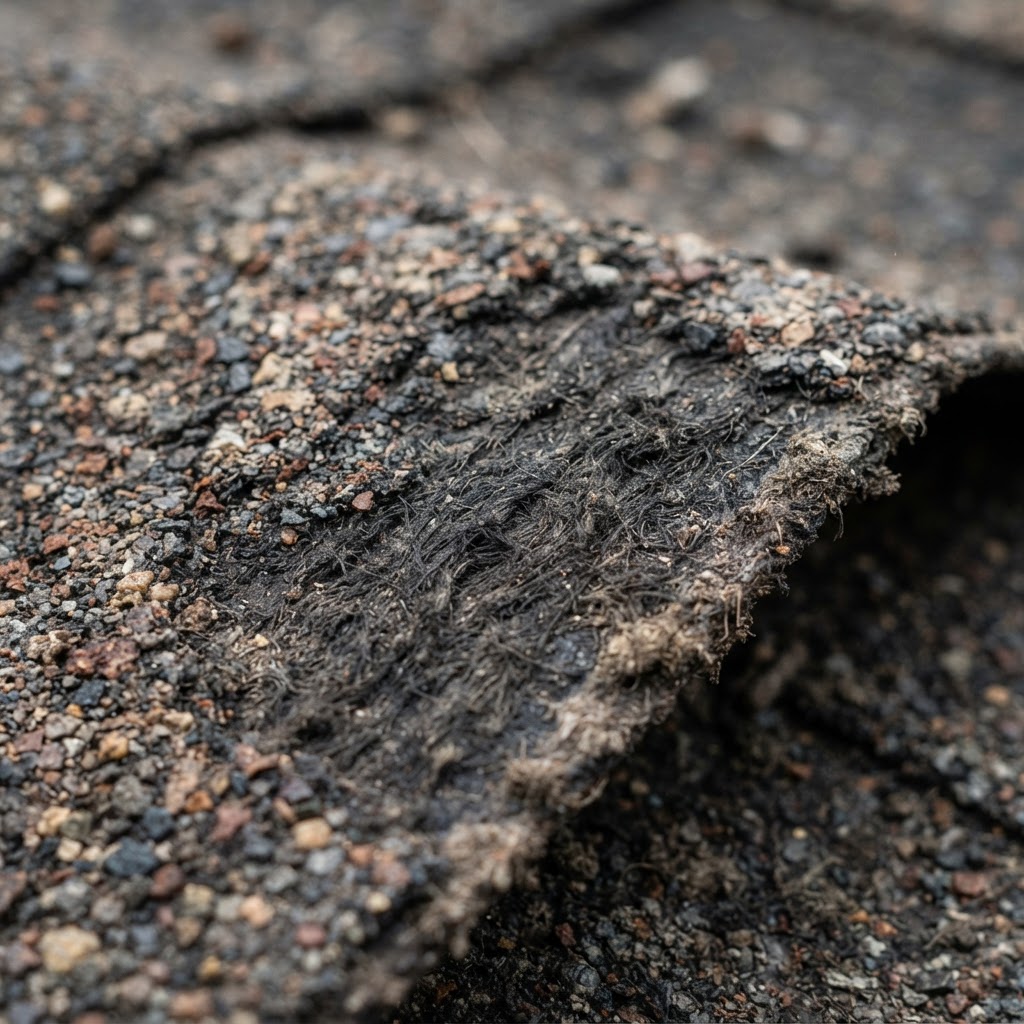
Granule loss becomes a concern when it's excessive or accelerated, indicating shingle wear, aging, damage, or deterioration. Significant granule loss exposes more of the underlying asphalt to UV, accelerating shingle degradation.
Granule loss and shingle age
As asphalt shingles reach the later part of their lifespan, granule loss tends to increase as the shingles wear and deteriorate. Increasing granule loss can be a sign that a roof is aging and approaching the later part of its life.
Granule loss and storm damage
Granule loss can also relate to storm damage, particularly hail. Hail impact can knock granules loose, so granule loss can be a sign of hail damage. If granule loss appears after a storm, it may indicate storm damage worth assessing.
Granule loss versus other shingle issues
It helps to understand how granule loss relates to other shingle issues like cracking, curling, or buckling. Granule loss is one aspect of shingle condition that, along with these other signs, contributes to the overall picture of a roof's condition.
Colorado Context: What Causes Roof Granule Loss?
In Colorado, granule loss has particular relevance. The frequent hail can cause granule loss, and the intense high-altitude sun makes the granules' UV-protective role even more important to shingle longevity.
Close-up of granule loss on aging asphalt shingles exposing the underlying asphalt on a Colorado roof.
Frequently Asked Questions
- Licensed & insured — documentation available on request
- Free, documented roof inspections
- Real emergency service available
- 5-year workmanship warranty (manufacturer warranties vary by product)
- 30 years of construction experience
- Serving Denver, Adams, Arapahoe, Douglas, Jefferson, and El Paso counties
Promise Keepers Restoration
9615 E. County Line Rd, Ste. B-477, Centennial, CO 80112
Hours: Mon–Sat 8:00 AM–5:00 PM