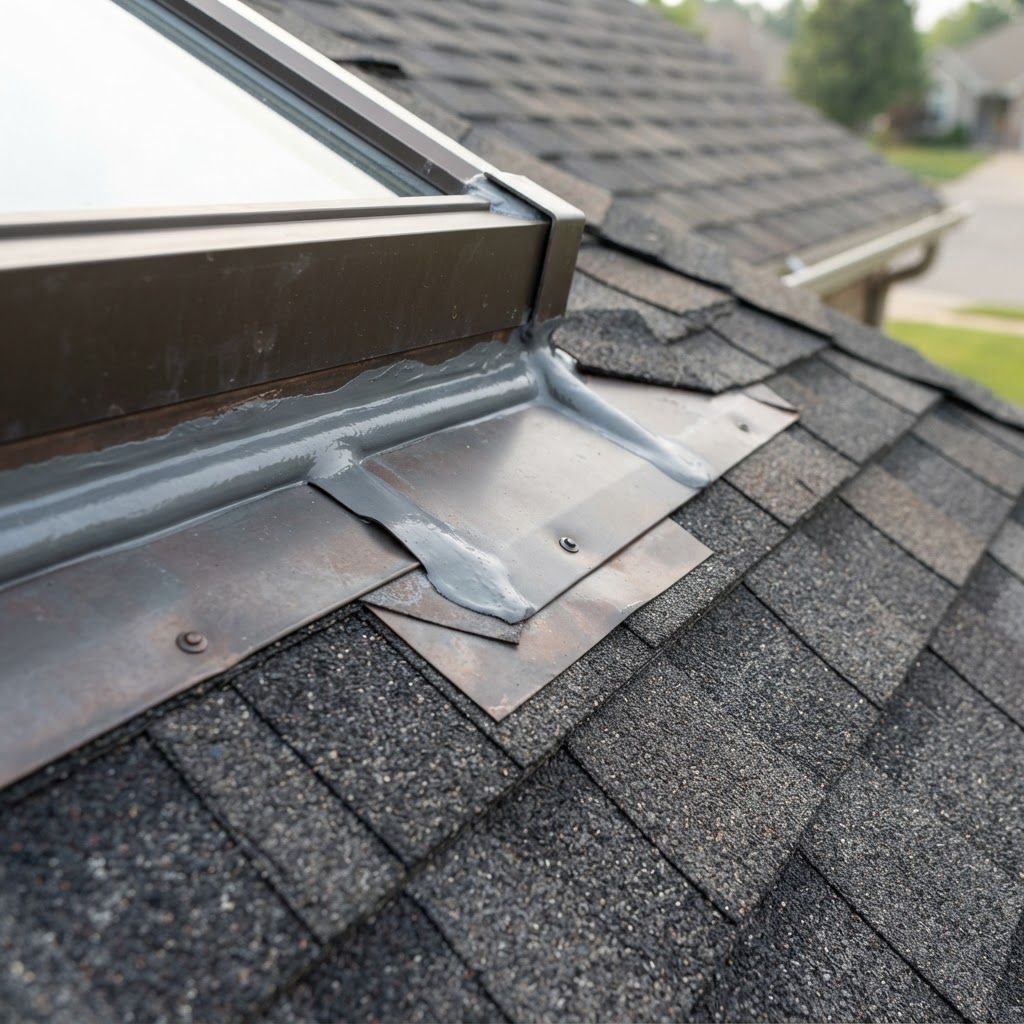
Skylights bring natural light into a home, but they're also a penetration through the roof, which makes them a common source of leaks when their flashing or seals fail. Because a skylight interrupts the roof's watertight surface, it depends on proper flashing and sealing to stay leak-free, and over time or after storm damage, those can fail. This page explains how skylights work, why they leak, and how we approach skylight installation, repair, and replacement across the Colorado Front Range — often as part of roofing work, since a skylight and the roof around it are intimately connected.
What skylights are and how they work.
A skylight is a window installed in the roof, bringing daylight and sometimes ventilation into the space below. While skylights offer real benefits — natural light can brighten a room, reduce the need for artificial lighting, and improve a space — they come with an inherent challenge: they're a hole in your roof. Every skylight interrupts the continuous watertight surface that a roof is supposed to be, and that interruption has to be sealed against water. This is accomplished through flashing — the metal and materials that integrate the skylight with the surrounding roofing and direct water around it — and the skylight's own seals. When the flashing and seals are properly installed and maintained, a skylight stays watertight. When they fail, the skylight becomes a leak.
Why skylights leak.
Skylights are one of the more common sources of roof leaks, and understanding why helps explain how to address them. The leak usually isn't the glass itself — it's the flashing and seals around the skylight. Over time, flashing can fail, seals can degrade, and the connection between the skylight and the roof can break down, allowing water in. Colorado's conditions accelerate this: the intense UV degrades seals, freeze-thaw works at flashing, and the general weathering of the roof affects the skylight's watertight integrity. Storm damage can also compromise a skylight — hail can damage the skylight or its flashing, and wind can stress the seals. Age is a factor too — an older skylight, or one installed with inadequate flashing, is more prone to leaking. Because the vulnerability is at the flashing and seals, a skylight leak is often addressed by repairing or replacing those rather than the whole unit, though sometimes the skylight itself needs replacement.
Skylight repair versus replacement.
When the problem is failed flashing or seals and the skylight itself is sound, repairing or replacing the flashing and reseating the skylight can resolve the leak. When the skylight itself is damaged, aged, or failing, or when it's leaking repeatedly, replacement of the unit along with proper new flashing may be the better solution. Importantly, if the roof is being replaced, it's generally the right time to address skylights too, since the flashing that integrates a skylight with the roof is best installed as part of the roofing work, and an old skylight left in a new roof can become the new roof's first leak. We assess the skylight and its flashing, determine whether repair or replacement makes sense, and coordinate with roofing work when appropriate.
The connection between skylights and roofing.
Skylights and roofing are closely connected, which is why skylight work often accompanies roof work. The skylight's watertight integrity depends on its flashing being properly integrated with the surrounding roofing, so the skylight and the roof function as one system. When a roof is replaced, the skylights and their flashing should be addressed as part of that work — reseating or replacing them with proper new flashing so they don't become leak points in the new roof. Leaving an old skylight untouched during a roof replacement is a common way for a new roof to develop a leak. Because of this intimate connection, we handle skylights as part of roofing work, ensuring the skylight and roof are properly integrated rather than treating the skylight as separate.
Types of skylights and what to consider.
It helps to understand that skylights come in different types, which affects both their benefits and their maintenance. Fixed skylights are sealed and don't open, providing light without ventilation and having fewer moving parts that can fail. Ventilating or operable skylights open to provide both light and airflow, which adds ventilation benefits but also adds mechanical components and seals that can wear. Tubular skylights are small tube-based units that channel light into interior spaces, often used where a full skylight isn't practical. Each type has its own profile of benefits and potential issues. Beyond type, considerations include the glazing material, the quality of the unit, and — critically — the flashing system, since as noted, the flashing is where watertight integrity lives or dies. When you're choosing a skylight or replacing one, it's worth considering not just the unit but how it will be flashed and integrated with your roof. We can walk through the options and what makes sense for your home and roof, so you get both the light you want and a skylight that stays watertight in Colorado's demanding climate.
The value of addressing skylights during a roof replacement.
One point bears repeating, because it saves homeowners from a frustrating and avoidable problem: if you're replacing your roof, address your skylights at the same time. The reason is straightforward — the flashing that keeps a skylight watertight is integrated with the surrounding roofing, so it's best installed fresh as part of the roofing work. If an old skylight is simply left in place while the roof around it is replaced, its aging flashing and seals — which may already be near the end of their life — become a weak point in an otherwise new roof. It's genuinely common for a new roof to develop its first leak at an old skylight that wasn't addressed during the replacement. Reseating or replacing skylights with proper new flashing during the roof work avoids this, and it's far easier and more cost-effective to do it then than to come back and fix a leak later. When we replace a roof with skylights, we address them as part of the work, so your new roof is watertight everywhere, including around the skylights.
Colorado considerations for skylights.
The intense high-altitude UV degrades skylight seals and the surrounding roofing over time, making seal and flashing failure more likely. Freeze-thaw cycles work at the flashing and can drive water intrusion. Hail can damage skylights and their flashing, making them part of storm damage assessments. Snow and ice around a skylight can contribute to leaks, especially with ice dams. And the general aging that Colorado's climate accelerates affects skylights along with the rest of the roof. These conditions mean skylights in Colorado need attention to their flashing and seals and should be checked when the roof is inspected or replaced, since they're a common leak point in this climate.
Why choose us for skylights.
We diagnose skylight leaks correctly, identifying whether the problem is the flashing, seals, or the unit itself rather than guessing. We handle skylight repair and replacement with attention to the flashing that determines whether a skylight stays watertight. We address skylights as part of roofing work, integrating them properly with the roof so they don't become leak points, especially during a roof replacement. When a skylight is part of storm damage, we document it as part of the claim, honest that we document rather than promise claim outcomes. And we're licensed, insured, local, and committed to our workmanship warranty.
Getting started with skylights.
Whether your skylight is leaking, was storm-damaged, or you're addressing skylights as part of a roof replacement, we assess the skylight and its flashing and diagnose any problem. We provide a clear scope and honest recommendation on repair or replacement and coordinate with roofing work when appropriate. From there, we resolve your skylight issue and ensure it's properly integrated with your roof.
Properly flashed skylight integrated with the surrounding roof on a Colorado home.
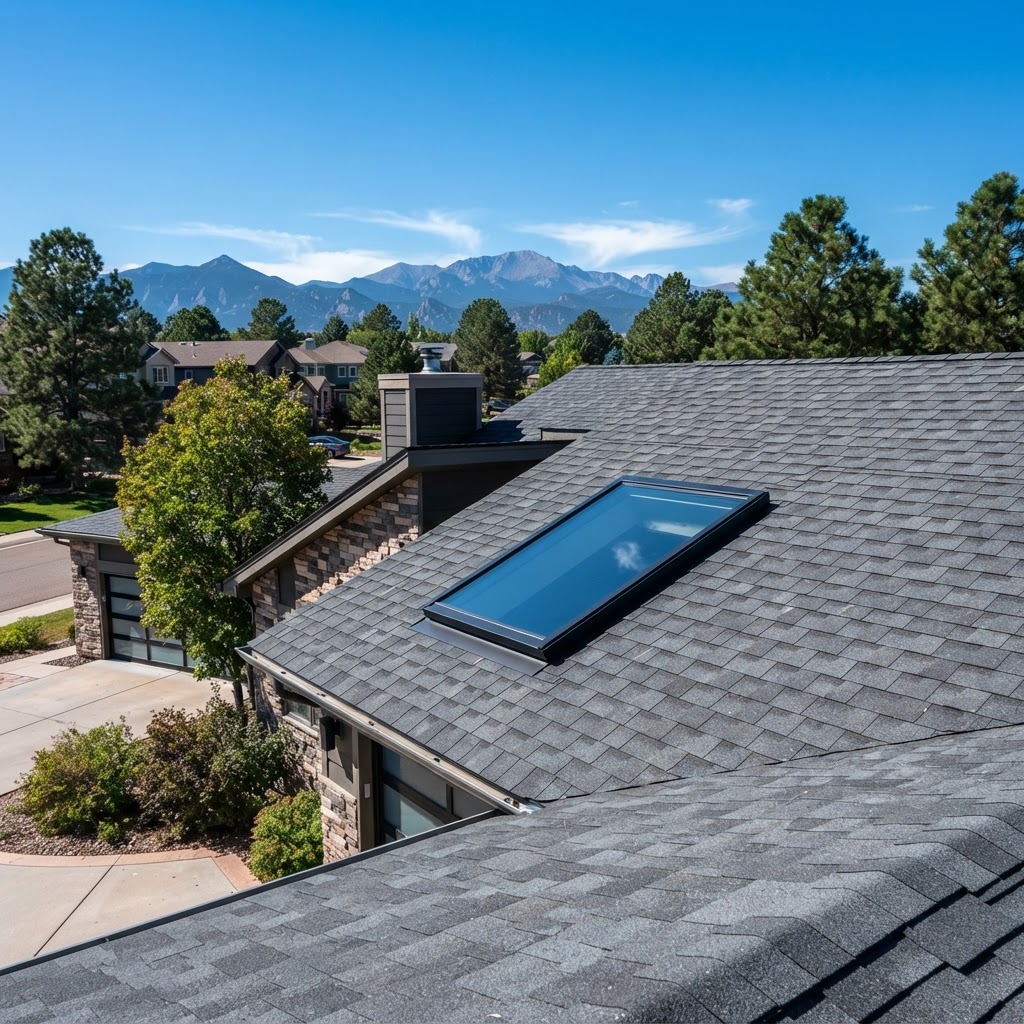
Properly flashed skylight integrated with the surrounding roof on a Colorado home.
Frequently Asked Questions
Related Pages
Written by Peter Regalado, Operations Manager · Reviewed by Mason Pastorello, Managing Director · Last reviewed: July 2026
- Licensed & insured — documentation available on request
- Free, documented roof inspections
- Real emergency service available
- 5-year workmanship warranty (manufacturer warranties vary by product)
- 30 years of construction experience
- Serving Denver, Adams, Arapahoe, Douglas, Jefferson, and El Paso counties
Promise Keepers Restoration
9615 E. County Line Rd, Ste. B-477, Centennial, CO 80112
Hours: Mon–Sat 8:00 AM–5:00 PM