Commercial roof maintenance is the ongoing program of inspections, drainage care, and prompt repairs that protects a commercial roof, extends its life, and prevents the costly disruptions that roof failures cause a building and its operations — and for a property manager, it's one of the most valuable protective practices for the properties you oversee. Because a commercial roof protects a building, its contents, and often ongoing business operations, maintaining it proactively rather than reacting to failures makes both practical and financial sense. This article explains what commercial roof maintenance involves, why it matters for property managers and building owners, and how to approach it, so you can protect the roofs you're responsible for.
Why commercial roof maintenance matters. Commercial roof maintenance matters because a roof failure on a commercial building is costly and disruptive in ways that go beyond the roof itself. A leak or failure can damage the building interior, inventory, equipment, and finishes; disrupt business operations for the building's occupants; create tenant issues for a property manager; and lead to expensive emergency repairs. Proactive maintenance prevents these outcomes by catching and addressing issues before they become failures. For a property manager or building owner, maintenance is far preferable to reacting to failures, both protecting the building and its operations and avoiding the larger costs and disruptions that failures cause. This is why commercial roof maintenance is a valuable protective practice — modest ongoing attention that prevents costly, disruptive problems.
What commercial roof maintenance involves. Commercial roof maintenance involves several elements suited to commercial flat and low-slope roofs. Regular inspections to assess the roof's condition and catch developing issues. Drainage care — keeping drains, scuppers, and gutters clear and functioning, since drainage is critical on a flat roof. Attention to the vulnerable areas — seams, penetrations, flashing, and the rooftop equipment curbs where commercial roofs commonly develop problems. Prompt repairs, addressing issues found before they worsen. And documentation, maintaining records of the roof's condition and the maintenance performed. Together, these elements make up a maintenance program that keeps a commercial roof performing and catches issues early. For a property manager, overseeing this maintenance protects the roof and building.
The critical role of drainage. On a commercial flat or low-slope roof, drainage is critical to maintenance. Because a flat roof depends on proper drainage to shed water, and because ponding water stresses the membrane and accelerates deterioration, keeping the drainage functioning is one of the most important maintenance tasks. This means keeping drains, scuppers, and gutters clear of debris that would block them; checking that water drains properly rather than ponding; and addressing any drainage problems. Clogged drains and ponding water are among the more common and consequential commercial roof issues, making drainage care central to commercial roof maintenance. For a property manager, ensuring the roof drains properly — particularly keeping drains clear — is a key maintenance responsibility. We emphasize drainage in commercial roof maintenance because it's so critical to a flat roof's performance.
Attention to vulnerable areas. Commercial roof maintenance particularly attends to the vulnerable areas where flat roofs commonly develop problems. Seams, where membrane sheets join, are a common issue area. Penetrations — the many points where vents, pipes, equipment, and other elements penetrate the roof — are vulnerable. Flashing at edges, walls, curbs, and penetrations is a common leak source. And the rooftop equipment and its curbs create areas needing attention. These vulnerable areas are where commercial roofs most often develop leaks and problems, so maintenance focuses attention on them, checking their condition and addressing issues. For a property manager, understanding that these areas are the common trouble spots helps target maintenance attention effectively. We inspect and maintain these vulnerable areas because they're where commercial roof problems most often arise.
The value of regular inspections. Regular inspections are the foundation of commercial roof maintenance. Periodic inspections assess the roof's overall condition, catch developing issues, and track the roof's aging and condition over time. For commercial roofs, regular inspection is especially valuable because commercial roof problems can develop gradually, and because the consequences of an undetected problem — a leak damaging the building and operations — are significant. Inspections catch issues while they're still minor and addressable. For a property manager, scheduling regular commercial roof inspections is a key part of a maintenance program, providing the ongoing assessment that catches problems early. Post-event inspections after significant storms are also valuable in Colorado, given the hail. We provide the regular and post-storm inspections that anchor a commercial roof maintenance program.
The importance of documentation. For a property manager or building owner, documentation is a valuable part of commercial roof maintenance. Maintaining records of the roof's condition, inspections, findings, and maintenance performed serves several purposes: it tracks the roof's condition and history over time, it supports budgeting and planning for eventual repairs or replacement, it can support insurance matters, and it provides accountability and a record for the building's ownership. For a property manager who may report to owners and oversee multiple properties, this documentation is particularly valuable, providing a record of the roof's care and condition. We provide documented inspections and maintenance records that support a property manager's oversight and planning. This documentation is part of professional commercial roof management.
Maintenance and budgeting. Commercial roof maintenance connects to budgeting and financial planning for a property. Regular maintenance and inspection provide insight into the roof's condition and remaining life, which supports planning and budgeting for eventual repairs or replacement rather than being surprised by a sudden need. Knowing a roof's condition allows a property manager or owner to anticipate and budget for future roof expenses. Maintenance also protects the roof investment, extending its life and avoiding the larger costs of failures and emergency repairs. So maintenance is not just a protective practice but a financially sound one, supporting planning and protecting against larger unplanned expenses. For a property manager or owner managing a property's finances, the budgeting insight and cost protection maintenance provides are valuable. We help provide the condition insight that supports roof budgeting and planning.
The difference between proactive maintenance and reactive repair. A useful distinction for a property manager to understand is between proactive maintenance and reactive repair. Reactive repair means waiting until a problem manifests — often as a leak — and then responding to it. Proactive maintenance means regularly inspecting and caring for the roof to catch and address issues before they become failures. The difference matters because reactive repair on a commercial roof means dealing with problems after they've already caused damage and disruption — a leak that has already damaged the interior and disrupted operations — while proactive maintenance catches issues before that damage occurs. Proactive maintenance is both less costly (addressing small issues before they become big ones) and less disruptive (preventing the failures that interrupt operations). For a property manager, the shift from reactive to proactive roof management is one of the more valuable improvements in protecting a property, saving both money and disruption over time. This is why establishing a maintenance program, rather than simply reacting to roof problems as they arise, is worthwhile. We help property managers move from reactive roof management to proactive maintenance that prevents problems rather than just responding to them.
Coordinating maintenance with building operations. For a property manager, an aspect of commercial roof maintenance worth considering is coordinating it with building operations. Commercial buildings have ongoing operations and tenants, and roof maintenance and any repairs should be coordinated to minimize disruption to those operations. Scheduling inspections and maintenance work at appropriate times, coordinating with building occupants, and managing the work to minimize disruption are part of professional commercial roof maintenance. A good commercial roofing contractor understands the need to work around building operations and coordinates accordingly. For a property manager, this coordination is part of what makes a maintenance program work smoothly, protecting the roof without unduly disrupting the building's use. We coordinate commercial roof maintenance and repairs with building operations, understanding that the building continues to function and its operations and occupants need to be considered.
Establishing a maintenance program. For a property manager or building owner, establishing a commercial roof maintenance program means putting in place the regular inspections, drainage care, attention to vulnerable areas, prompt repairs, and documentation that make up maintenance. This can be a scheduled, ongoing program with periodic inspections and maintenance rather than ad hoc attention. Establishing such a program ensures the roof receives consistent care rather than being neglected until a problem arises. For a property manager overseeing one or more commercial properties, a maintenance program provides systematic protection for the roofs. We help property managers and building owners establish and carry out commercial roof maintenance programs, providing the inspections, care, and documentation that protect their roofs consistently over time.
Colorado context. In Colorado, commercial roof maintenance has particular relevance. The frequent hail makes post-storm inspections and attention to storm damage important for commercial roofs. The intense UV ages membranes, making the life-extending benefit of maintenance meaningful. The freeze-thaw and snow stress flat roofs and their drainage, making drainage care and winter attention important. And the demanding climate overall means Colorado commercial roofs benefit from consistent maintenance. For a property manager or building owner with commercial properties in Colorado, maintenance is especially worthwhile given these local stresses. We help protect Colorado commercial roofs through maintenance suited to the local conditions.
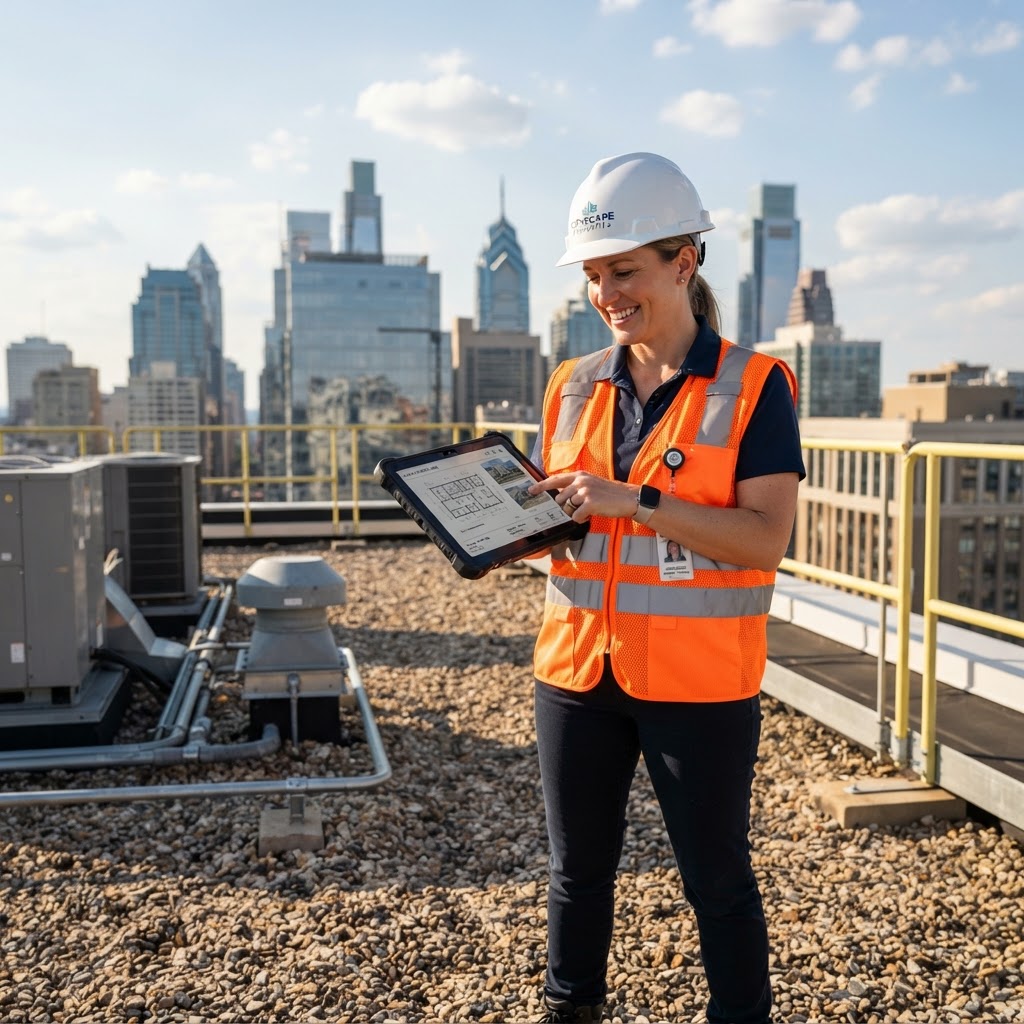
Property manager reviewing a documented commercial roof maintenance inspection.
Frequently Asked Questions
Related Pages
Written by Peter Regalado, Operations Manager · Reviewed by Mason Pastorello, Managing Director · Last reviewed: July 2026
- Licensed & insured — documentation available on request
- Free, documented roof inspections
- Real emergency service available
- 5-year workmanship warranty (manufacturer warranties vary by product)
- 30 years of construction experience
- Serving Denver, Adams, Arapahoe, Douglas, Jefferson, and El Paso counties
Promise Keepers Restoration
9615 E. County Line Rd, Ste. B-477, Centennial, CO 80112
Hours: Mon–Sat 8:00 AM–5:00 PM