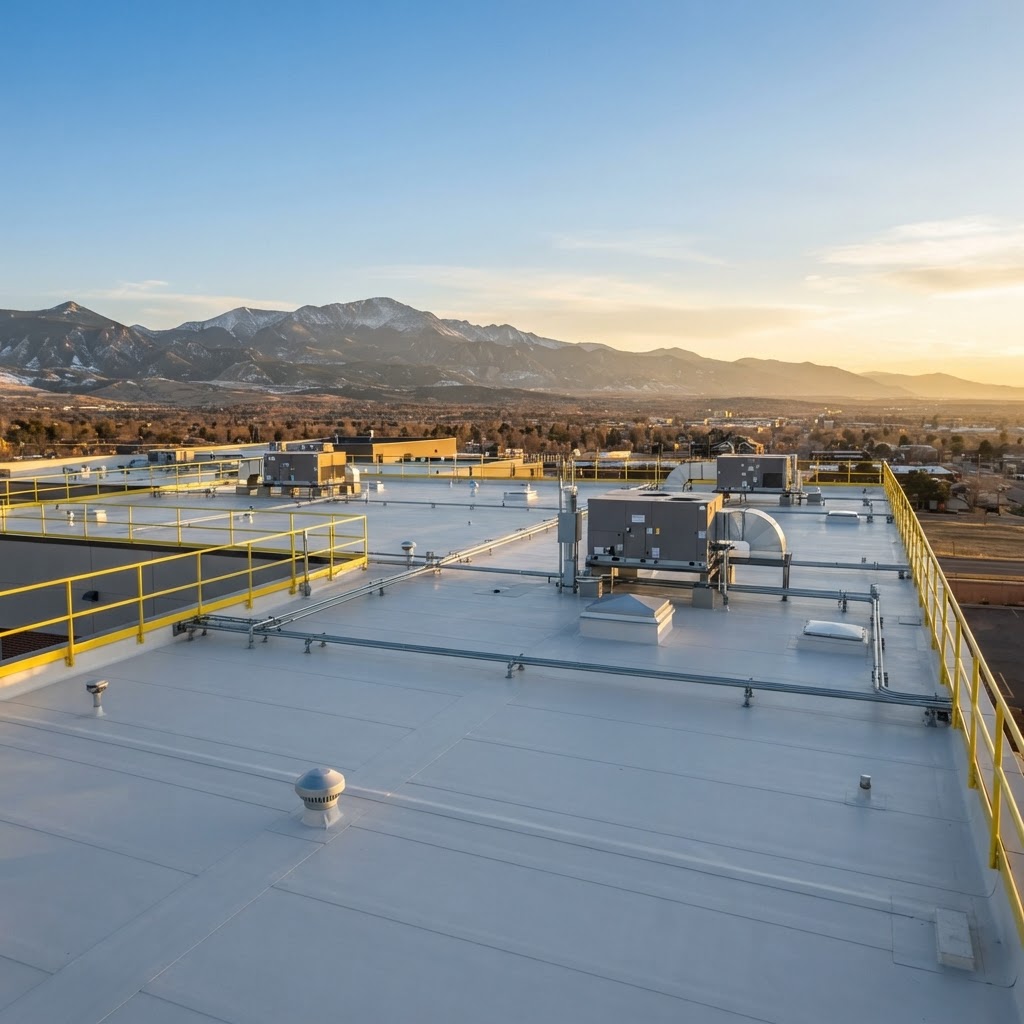
Flat and low-slope roofing covers the roofs found on most commercial buildings and some residential structures, and it works on entirely different principles from the steep pitched roofs on typical houses. A flat roof isn't truly flat — it has a slight slope — and it depends on membrane systems, proper drainage, and correct detailing to keep water out rather than the fast gravity runoff of a steep roof. This page explains how flat and low-slope roofs work, the systems used, the common problems they face, and how we approach flat roofing across the Colorado Front Range for commercial buildings and low-slope residential structures alike. Because we're not tied to one manufacturer, we help you choose the flat-roof system that fits rather than pushing a single product.
What flat and low-slope roofing is. A flat or low-slope roof is one with little pitch, as opposed to the steep slope of a typical residential roof. The term "flat" is slightly misleading — a properly built flat roof has a slight slope engineered into it to move water toward drains, because standing water is a flat roof's enemy. Low-slope roofs are common on commercial buildings — offices, retail, warehouses, and industrial structures — and on some residential and multifamily buildings, including certain modern homes, flat-roofed additions, and porches. Because water doesn't run off quickly, a low-slope roof relies on a continuous waterproof membrane and functioning drainage rather than overlapping shingles to stay watertight. This fundamental difference shapes everything about how these roofs are built and maintained.
How flat roofs differ from pitched roofs. The difference goes beyond appearance. A steep pitched roof sheds water almost instantly by gravity and uses overlapping shingles or panels that each shed water to the one below. A flat roof holds water longer, moving it slowly toward drains, and uses a continuous membrane that must be watertight across its whole surface with no gaps. This means flat roofs are far more sensitive to drainage, ponding water, membrane integrity, and the quality of details around penetrations and edges. A small flaw that a pitched roof might shed past can let water into a flat roof. This is why flat roofing is its own discipline, requiring different systems, techniques, and expertise from residential shingle work.
Flat and low-slope roofing systems. Single-ply membranes are the most common category, including TPO (valued for reflectivity and welded seams), EPDM (valued for proven rubber durability), and PVC (valued for chemical resistance). Built-up roofing consists of multiple layers of material and asphalt, a traditional long-used flat-roof approach. Modified bitumen is an asphalt-based membrane in sheet form. And metal can work for certain low-slope applications. For existing roofs, coatings can restore and extend the life of some membranes. The right system depends on your building, its use, your budget, and your existing roof, and we help you choose among them rather than assuming one is right.
Common flat-roof problems. Flat roofs face a characteristic set of problems, most related to their low slope. Ponding water is the signature issue — when drainage is inadequate or the slope insufficient, water stands on the roof, stressing the membrane and accelerating deterioration. Seam failures occur where membrane sections join, a common leak source on single-ply roofs. Penetration and flashing leaks develop around the many rooftop units, vents, drains, and curbs that flat commercial roofs carry. Membrane damage from punctures, tears, UV, and age compromises the waterproof surface. And drainage problems from clogged or inadequate drains let water accumulate. Because a flat roof depends so completely on its membrane and drainage, these problems directly threaten the building and need prompt attention.
Why drainage is everything on a flat roof. The single most important principle of flat roofing is drainage. A flat roof that drains properly sheds water before it can cause harm; a flat roof that ponds water invites trouble. Standing water stresses the membrane, accelerates aging, adds weight, and if it freezes — as it readily can in Colorado — can worsen damage. Proper drainage comes from adequate slope built into the roof, functioning drains and scuppers, and keeping those drains clear. When we assess or build a flat roof, drainage is a central concern, because a membrane is only as good as the drainage that keeps water moving off it. Many flat-roof problems trace back to drainage, which is why we pay it particular attention.
Flat roofing installation and repair. At installation, the membrane must be correctly applied, the seams properly made (whether welded or sealed depending on the system), and the details around every penetration, edge, and drain carefully executed, since these are where flat roofs leak — along with proper slope and drainage. At repair, the source of a problem must be correctly diagnosed (remembering that water travels on a flat roof) and then addressed, whether that's a seam repair, a patch, a flashing fix, or a drainage correction. Because flat roofing lives and dies by these details, experienced installation and repair matter. We install and repair flat and low-slope systems with attention to the membrane, seams, details, and drainage that keep them watertight.
Colorado considerations for flat roofs. Colorado's climate is hard on flat roofs. Snow load accumulates on flat roofs, which hold snow rather than shedding it, and the weight and the freeze-thaw of melting and refreezing snow stress the membrane and drainage. Ponding water that freezes is a particular concern, making drainage critical here. Intense high-altitude UV ages membranes, making UV resistance and reflective options worth considering. Hail damages flat-roof membranes as it does shingles, so post-storm assessment matters, and large flat roofs can take significant hail. And wind stresses membrane edges and flashing. These conditions make proper drainage, quality membranes, and correct installation especially important for a Colorado flat roof.
Why choose us for flat and low-slope roofing. We assess your flat roof's actual condition and recommend repair, coating, or replacement based on what it needs. We help you choose among flat-roof systems — TPO, EPDM, PVC, and others — based on your building rather than pushing one product, since we're not tied to a single manufacturer. We pay particular attention to drainage, the make-or-break factor on a flat roof. We provide the documentation commercial decisions and insurance claims require. And we're licensed, insured, local, and committed to our workmanship warranty. We're straightforward that we're an experienced installer, not a manufacturer-certified specialist, and we'll tell you honestly what we can do for your building.
Getting started with your flat roof. The path starts with an inspection. We assess your flat or low-slope roof's condition, identify any problems (including drainage) and their causes, and discuss your building's needs and budget. We provide a clear scope and honest recommendation — whether repair, coating, or replacement, and the right system for your situation.
Low-slope commercial membrane roof with proper drainage in Colorado.
Frequently Asked Questions
Related Pages
Written by Peter Regalado, Operations Manager · Reviewed by Mason Pastorello, Managing Director · Last reviewed: July 2026
- Licensed & insured — documentation available on request
- Free, documented roof inspections
- Real emergency service available
- 5-year workmanship warranty (manufacturer warranties vary by product)
- 30 years of construction experience
- Serving Denver, Adams, Arapahoe, Douglas, Jefferson, and El Paso counties
Promise Keepers Restoration
9615 E. County Line Rd, Ste. B-477, Centennial, CO 80112
Hours: Mon–Sat 8:00 AM–5:00 PM