Written by Peter Regalado, Operations Manager · Reviewed by Mason Pastorello, Managing Director · Last reviewed: July 2026
The difference between cosmetic and functional hail damage is whether it affects the roof's ability to protect your home. Functional damage — such as a fractured shingle mat or significant granule loss — genuinely shortens the roof's life and can lead to leaks, so it warrants action. Cosmetic damage — such as minor marks that don't compromise the shingle's performance — affects appearance but not function, so it may not require anything. Telling them apart is one of the most important, and most contested, judgments in roofing, and it takes an on-roof inspection by someone who knows what they're looking at. This article explains the distinction, why it matters so much, and why an honest assessment protects you in both directions.
What functional hail damage is.
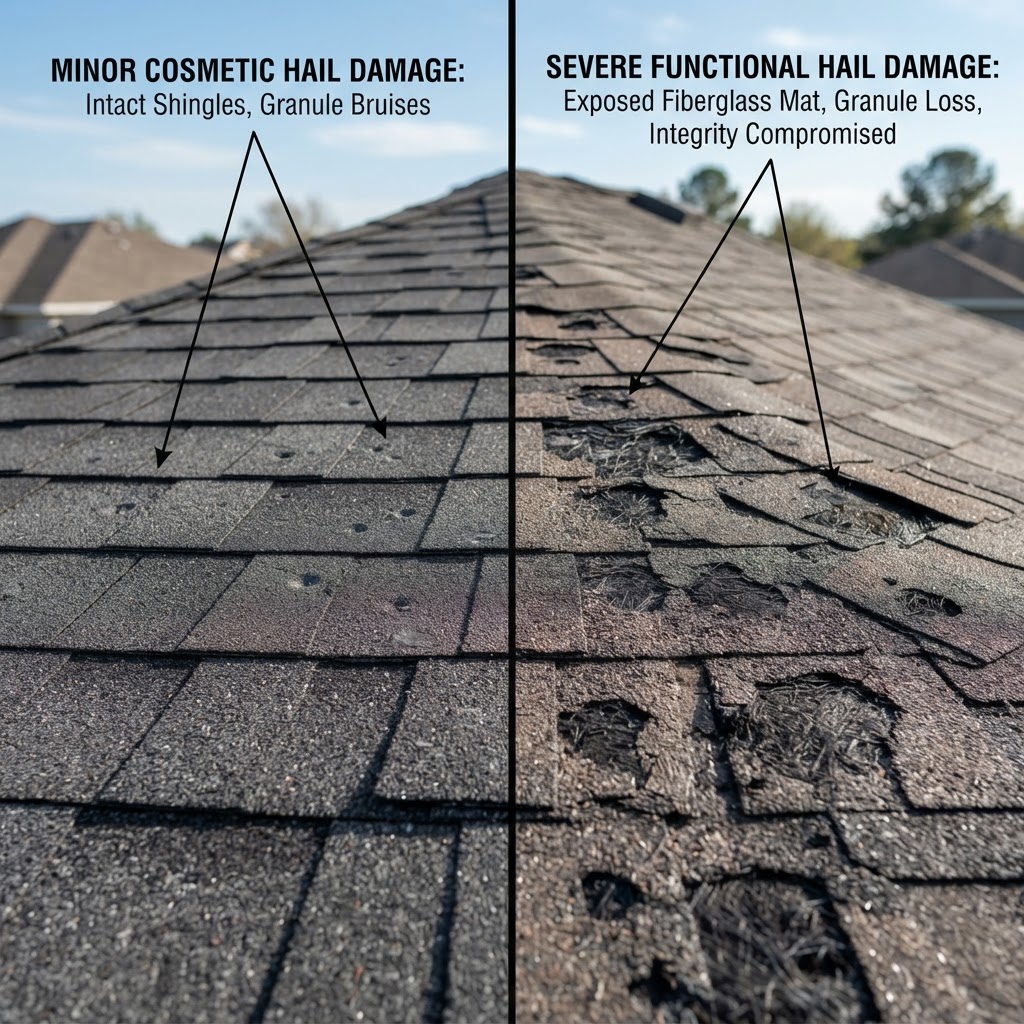
Functional hail damage is damage that impairs the roof's ability to do its job — protecting your home from the elements. The clearest example is a fractured mat: when hail bruises a shingle hard enough to crack the fiberglass mat beneath the surface, the shingle's structural integrity is compromised. Combined with significant granule loss that exposes the asphalt to UV, this kind of damage means the affected shingles will deteriorate faster and become failure points over time. Functional damage doesn't necessarily leak today, but it shortens the roof's remaining life and sets up future leaks. Because it affects performance, functional damage generally warrants action — whether a repair of affected areas or a replacement, depending on extent — and it's the kind of damage insurance is designed to address.
What cosmetic hail damage is.
Cosmetic hail damage affects how the roof looks but not how it performs. This might include minor surface marks or small impacts that didn't fracture the mat or cause meaningful granule loss. The shingle still protects your home and will still reach a normal lifespan — the damage is essentially aesthetic. On some materials, particularly metal, hail commonly causes cosmetic denting: the roof looks dimpled after a storm but functions perfectly well. Cosmetic damage may not require any action beyond an awareness that it's there, though whether you address it can come down to personal preference about appearance, especially on visible surfaces.
Why the distinction is contested.
Here's where it gets complicated: the line between cosmetic and functional isn't always obvious, and reasonable parties can disagree. A given impact might be borderline — did it fracture the mat or just mark the surface? Whether granule loss is significant enough to meaningfully shorten shingle life can be a judgment call. And there's a built-in tension: insurers generally pay for functional damage, not cosmetic, so the classification directly affects claims. This means the cosmetic-versus-functional determination is sometimes a point of negotiation between policyholders and insurers — and, unfortunately, it's also an area where some contractors overcall damage as functional to justify bigger jobs or a claim. The honesty of the assessment matters enormously here, which is exactly why it should be done carefully and documented.
Why an honest assessment protects you in both directions.
A trustworthy assessment of cosmetic versus functional damage protects you from two opposite mistakes. Overcalling damage — claiming cosmetic marks are functional to justify a replacement or a claim — can put you in a bad position: it may not hold up with your insurer, it can involve you in an inflated or fraudulent claim, and it means paying for or filing for work you may not need. Undercalling damage — dismissing real functional damage as merely cosmetic — leaves you with a roof that will fail sooner than it should, and possibly a missed opportunity to address it through a legitimate claim. The right approach is an accurate, honest classification, neither inflating nor minimizing what's actually there. This is why we show you what we find with photos and explain which category it falls into and why, rather than just delivering a verdict. You deserve to understand the reasoning.
How the assessment is actually made.
Determining whether hail damage is cosmetic or functional takes an on-roof inspection and experience. The inspector examines the impacts up close, assessing whether the mat is fractured — which can involve feeling the shingle for the soft, dented quality of a true bruise versus a surface mark. They evaluate the extent of granule loss and whether it's significant enough to affect the shingle's lifespan. They consider the material — metal denting is usually cosmetic, while a fractured asphalt mat is functional. They look at the overall pattern and density of damage. And they document representative examples with photos. This is a trained judgment, not a simple yes-or-no, which is why it can't be done reliably from the ground or by an untrained eye, and why two assessments can sometimes differ.
What it means for your insurance claim.
The cosmetic-versus-functional distinction is central to hail insurance claims, because insurers generally cover functional damage that impairs the roof, not purely cosmetic damage. This has practical implications. If your damage is genuinely functional, accurate documentation of the fractured mats and significant granule loss supports your claim. If an adjuster classifies damage as cosmetic that you or your roofer believe is functional, that disagreement is a real thing that happens, and there are usually processes for reinspection or dispute — though the coverage decision ultimately rests with your insurer. And crucially, you should be wary of any contractor who assures you that clearly cosmetic damage will be covered as functional, or who guarantees a claim outcome: no honest contractor can promise how an insurer will classify or decide. Our role is to document what's actually there accurately, not to promise a classification.
The metal roofing nuance.
Metal roofing deserves specific mention, because it's where the cosmetic-versus-functional distinction comes up most clearly. Hail frequently dents metal roofing, and those dents are usually cosmetic — the roof looks dimpled but continues to protect the home and reach its full lifespan. For metal roof owners, this raises a genuine question: whether cosmetic denting bothers you enough to address is a personal decision, and it also affects claims, since cosmetic denting may not be covered. Some metal roof owners don't mind the dimpled look; others do. Understanding that metal hail damage is often cosmetic rather than functional helps set realistic expectations, both for the roof's performance and for what insurance will and won't cover.
Questions to ask about a cosmetic-versus-functional assessment.
Because this determination matters so much and can be contested, it helps to know what to ask when a roofer or adjuster assesses your hail damage. Ask them to show you the specific impacts they're classifying as functional and explain why — for example, a fractured mat or significant granule loss. Ask to see photos of representative damage so you can understand the evidence. Ask what makes a given mark functional rather than cosmetic in their judgment; a clear answer reflects real expertise. If work or a claim is being recommended, ask specifically which damage is driving that recommendation. And be direct: if something is borderline or genuinely cosmetic, a trustworthy professional will say so rather than rounding everything up to functional. The quality of the answers tells you a lot — a professional who explains the distinction clearly and shows you evidence is one you can trust, while one who is vague or who guarantees an insurance outcome should give you pause.
Why we take the honest position on this.
We hold to accurate classification even when a more aggressive call might mean more work for us, and it's worth explaining why. Overcalling damage might win a bigger job in the short term, but it exposes homeowners to problems with their insurer, involves them in claims that may not be legitimate, and ultimately erodes the trust that a roofing relationship depends on. We would rather tell you that some of your hail damage is cosmetic and doesn't need action, or that your metal roof's dents are aesthetic rather than functional, than inflate the assessment to sell more. That honesty occasionally costs us a larger job, but it's the only way we're willing to work, and it's what makes our documentation credible when damage genuinely is functional. When we tell you damage warrants action, you can trust it precisely because we also tell you when it doesn't.
The bottom line on cosmetic versus functional.
The practical takeaway is this: the cosmetic-versus-functional distinction determines whether your hail damage needs action and whether insurance is likely to cover it, and getting that call right honestly matters in both directions. Don't accept a verdict without evidence, and don't let anyone pressure you toward a classification that serves their interest rather than the facts. Insist on a documented on-roof inspection that shows you what's actually there and explains which category it falls into and why. That's how you make a sound decision about your roof, and how you approach any insurance claim on solid factual footing rather than on someone's say-so.
Key Takeaways: Cosmetic vs. Functional Hail Damage
- The difference between cosmetic and functional hail damage is whether it affects the roof's ability to protect your home.
- Functional damage — fractured mats, significant granule loss — shortens the roof's life and warrants action; cosmetic damage affects appearance but not performance.
- The distinction can be contested and directly affects insurance claims, since insurers generally cover functional, not cosmetic, damage.
- An honest assessment protects you from both overcalling and undercalling damage.
- The determination takes a trained on-roof inspection and should be documented with photos.
Comparison of functional hail damage with a fractured mat versus a cosmetic surface mark.
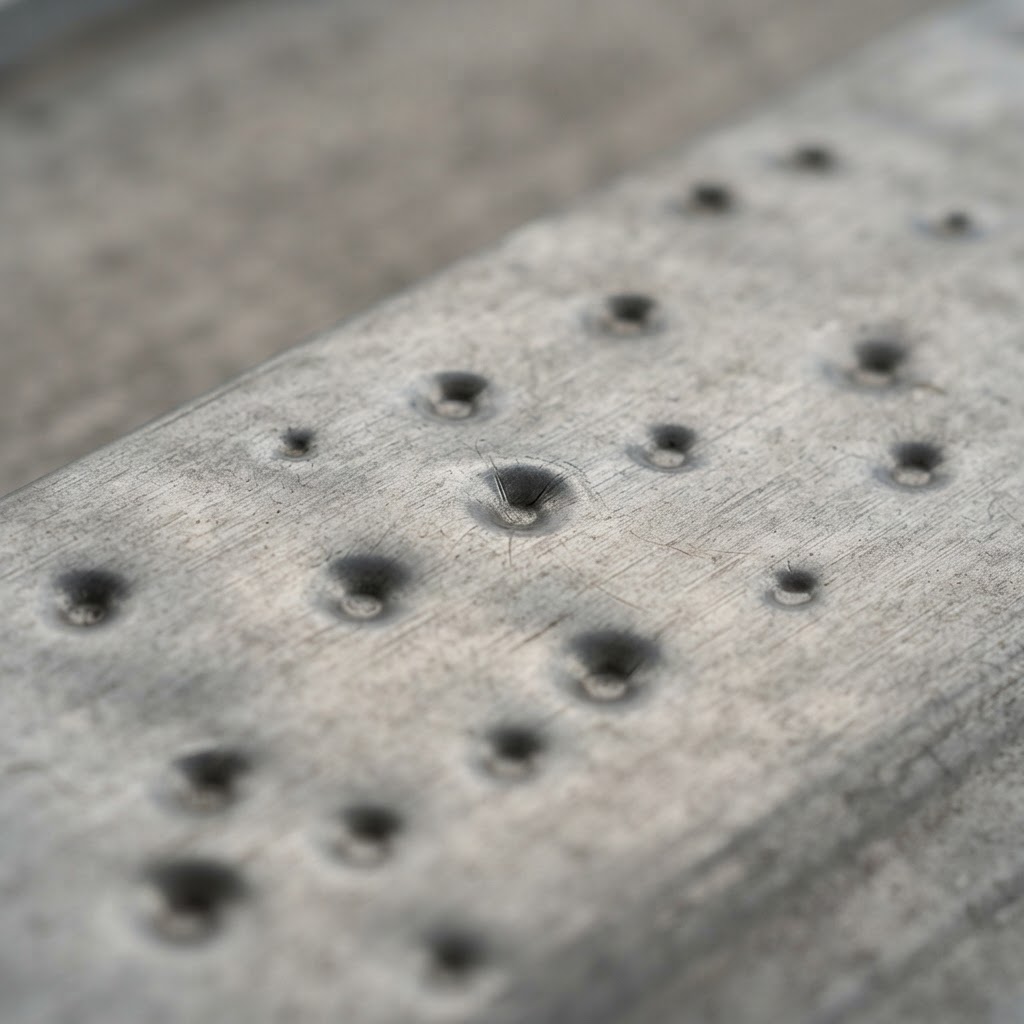
Close up photo showing cosmetic denting on a metal roof panel.
Frequently Asked Questions
- Licensed & insured — documentation available on request
- Free, documented roof inspections
- Real emergency service available
- 5-year workmanship warranty (manufacturer warranties vary by product)
- 30 years of construction experience
- Serving Denver, Adams, Arapahoe, Douglas, Jefferson, and El Paso counties
Promise Keepers Restoration
9615 E. County Line Rd, Ste. B-477, Centennial, CO 80112
Hours: Mon–Sat 8:00 AM–5:00 PM