Written by Peter Regalado, Operations Manager · Reviewed by Mason Pastorello, Managing Director · Last reviewed: July 2026
After a hailstorm, take these steps in order: first, make sure everyone is safe and stay off the roof; then document what you can see from the ground, including dented metals, granules, and any interior water stains; note the date of the storm; check on immediate concerns like active leaks; and then schedule a free professional roof inspection. If you have an active leak, call for emergency service to prevent further damage. What you should not do is rush to sign with the first contractor who knocks on your door. This article walks through the right post-storm steps in sequence, so you protect your home and your interests without making a hasty decision under pressure.
Step one: safety first. Before anything else, make sure your household is safe. Hail often comes with severe weather, so wait until the storm has fully passed. Check for any immediate hazards like downed branches or damaged property. Do not go onto your roof to inspect it — a wet or damaged roof is a serious fall hazard, and everything you need to check can be done from the ground. If hail was severe enough to break windows or cause structural concerns, address those safety issues first. Safety comes before any roof assessment.
Step two: check for active leaks or urgent damage. Look inside your home for signs of water intrusion — new stains on ceilings or walls, or dripping — which indicate the storm may have breached your roof. Check your attic, if it's safely accessible, for daylight or water. If you find an active leak, this is the one situation that needs prompt action to prevent water from damaging your decking, insulation, drywall, and belongings. In that case, call for emergency service — temporary measures like professional tarping can stop the water until a full repair or replacement happens. Most hail damage isn't an emergency, but an active leak is; treat it as one.
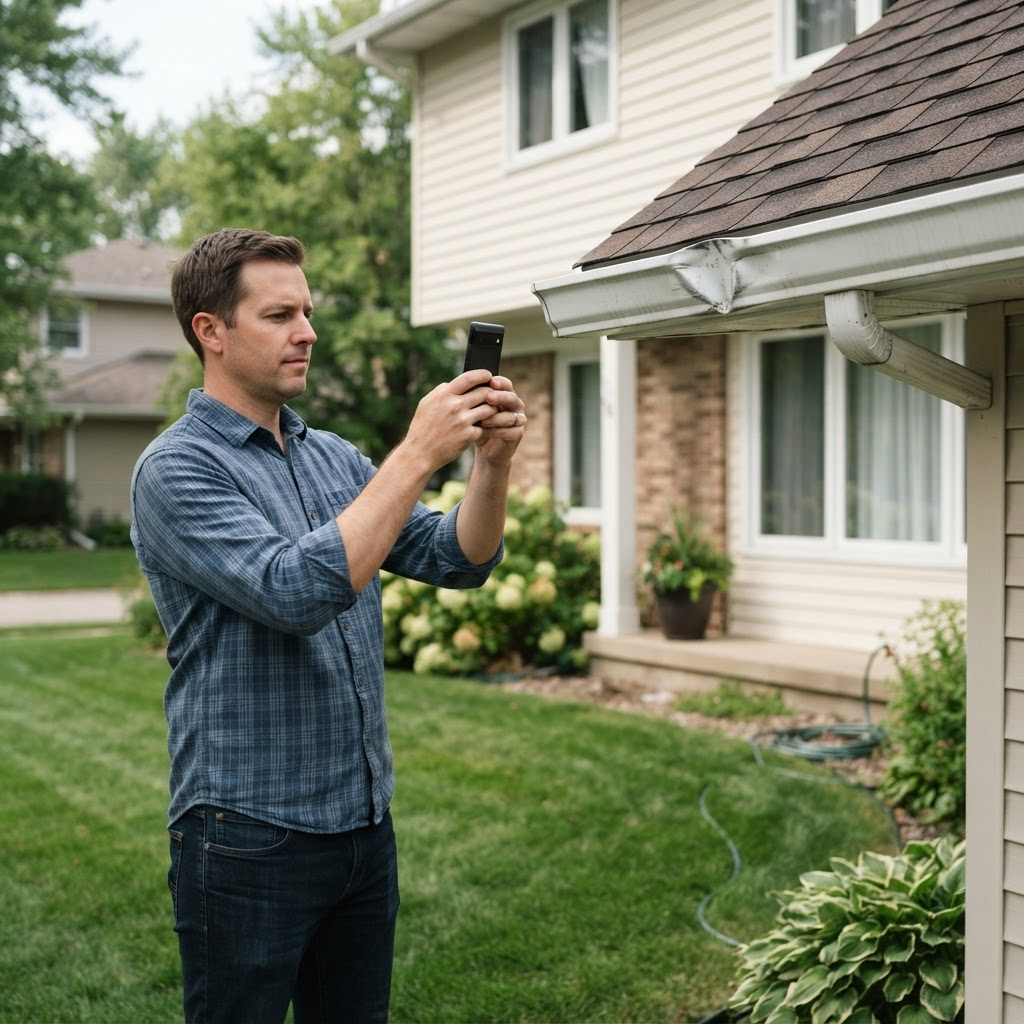
Step three: document what you can see from the ground. Once things are safe, document the visible evidence from ground level. Take photos of dented gutters, downspouts, vents, and flashing. Photograph dents on other items — your AC unit, mailbox, garage door, and any metal outdoor furniture — which show the storm's force. Collect and photograph any shingle pieces in your yard and granule accumulation at downspout outlets. Photograph any interior water stains. This documentation is useful for your own records, and if a claim becomes relevant later, it helps establish the storm's effects. Date your photos. You're not diagnosing the roof from the ground — you're recording what's visible, which supports the professional inspection to come.
Step four: note the storm date. Record the date of the hailstorm. This matters because insurance claims are tied to specific storm events, and knowing the date helps establish when damage occurred. You can later confirm storm details through weather records — the National Weather Service and NOAA are authoritative sources for storm dates and hail information. Having the date documented is helpful if you file a claim, and it also helps you and any inspector connect observed damage to the specific event.
Step five: schedule a professional inspection. The key step is scheduling a free professional roof inspection. This is the only way to know whether your roof actually sustained functional damage, since the most serious hail damage is invisible from the ground. A trained inspector safely assesses the roof, documents any damage with photos, and tells you whether you have functional damage that warrants action and whether a claim makes sense. Schedule this reasonably promptly after the storm, both because delayed damage is harder to attribute to a specific event and so you can address any real damage before it worsens. A professional inspection turns your ground-level observations into a real assessment.
Step six: understand your insurance before filing. Before you file a claim, it helps to understand your own policy. Know your deductible, since for minor damage the repair cost might be near or below it, making a claim not worthwhile; and know whether your policy pays actual cash value or replacement cost value, which affects what you'd receive. A professional inspection helps here too, by telling you the extent of damage so you can make an informed decision about whether filing a claim makes sense. You don't have to decide instantly — take the time to understand your coverage and the actual damage before filing. Our insurance articles explain how claims work and what these terms mean.
The critical "don't": don't sign under pressure. Here's the most important cautionary step after a hailstorm: neighborhoods that take hail are immediately flooded with contractors, many of them out-of-state storm chasers who knock on doors, promise free roofs, and pressure homeowners to sign right away. Do not sign a contract or authorization with anyone under this kind of pressure. A legitimate company gives you time to think, doesn't use high-pressure tactics, and doesn't need you to sign on the spot. Be especially wary of anyone who offers to waive or cover your deductible, which is a red flag in Colorado and a sign of a company to avoid. Take your time, choose a reputable, established local company, and never let urgency push you into a hasty commitment.
Why choosing the right contractor matters. The contractor you choose after a storm handles a significant investment and, if a claim is involved, represents your interests in documenting the damage. An established, licensed, insured local company will be around to honor its workmanship warranty, unlike a storm chaser who disappears after the season. They document damage honestly rather than inflating it to sell bigger jobs. And they don't make promises about insurance outcomes they can't keep. Taking a little time to choose well, rather than signing with the first door-knocker, protects both your home and your claim.
A post-storm timeline: what to do when. Putting the steps into a rough timeline helps you act without either rushing or delaying too long. In the first hours after the storm, focus on safety — wait for weather to clear, check for hazards, and look for active leaks, calling for emergency tarping if water is coming in. In the first day or two, document what you can see from the ground, photograph dented metals, granules, and any interior stains, and note the storm date. Within the first days to a couple of weeks, schedule a professional inspection reasonably promptly, so any real damage is assessed and documented while it's clearly connected to the storm. Around the same time, review your insurance policy so you understand your deductible and coverage before deciding about a claim. Throughout, resist pressure from door-knocking contractors and take the time to choose a reputable company. This timeline balances the two risks: acting too hastily under pressure, and waiting so long that damage worsens or becomes hard to attribute to the storm.
What to have ready for your inspection and claim. To make the process smoother, it helps to gather a few things. Have your storm-date documentation and any ground-level photos you took. Have your insurance policy information accessible, including your deductible and whether you have actual cash value or replacement cost value coverage. If you've had previous roof work or inspections, having those records can be useful for establishing the roof's history. When the inspector comes, you'll receive their documentation of any damage, which combined with your records gives you a complete picture. If you decide to file a claim, this documentation supports it. Being organized doesn't change the outcome of an inspection, but it makes the whole process, from assessment through any claim, more straightforward and less stressful.
Common post-storm mistakes to avoid. A few mistakes trip up homeowners after hailstorms. Getting on the roof to check yourself, which is dangerous and unnecessary. Signing with the first contractor who knocks, under pressure, before understanding your situation. Filing a claim before understanding your deductible and coverage, which can lead to filing for damage below your deductible. Assuming you have no damage because nothing looks wrong from the ground, when the worst damage is invisible from below. Assuming you definitely have major damage and panicking before a real inspection. And trusting a contractor who guarantees an insurance outcome or offers to waive your deductible. The thread through all of these is the same: take measured, informed steps rather than either rushing or ignoring the situation.
Key takeaways. After a hailstorm, proceed in order: safety first, then check for active leaks, document from the ground, note the storm date, and schedule a professional inspection. Call for emergency service only if you have an active leak; most hail damage isn't an emergency. Understand your deductible and coverage before deciding whether to file a claim. Do not sign with a contractor under high-pressure door-knocking tactics, and avoid anyone offering to waive your deductible. Choose an established, licensed local company that will stand behind its work. This article is general information; a free inspection gives you a real assessment of your roof after a storm.
Homeowner documenting hail-dented gutters from the ground after a storm.
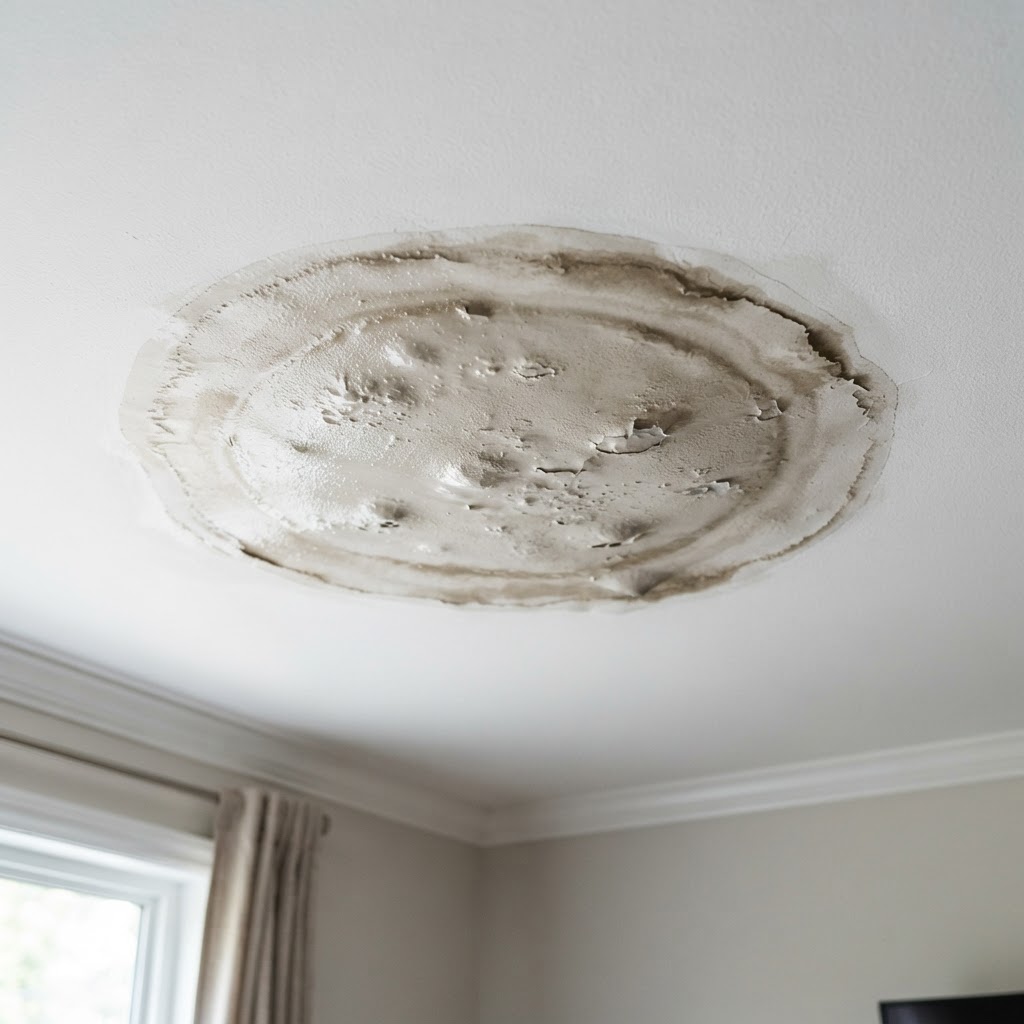
interior water stain
Frequently Asked Questions
- Licensed & insured — documentation available on request
- Free, documented roof inspections
- Real emergency service available
- 5-year workmanship warranty (manufacturer warranties vary by product)
- 30 years of construction experience
- Serving Denver, Adams, Arapahoe, Douglas, Jefferson, and El Paso counties
Promise Keepers Restoration
9615 E. County Line Rd, Ste. B-477, Centennial, CO 80112
Hours: Mon–Sat 8:00 AM–5:00 PM