Written by Peter Regalado, Operations Manager · Reviewed by Mason Pastorello, Managing Director · Last reviewed: July 2026
No — hail does not always mean you need a new roof. Whether hail damage requires a replacement, a repair, or nothing at all depends on how much functional damage there is and how widespread it is, which only a proper inspection can determine. Sometimes hail causes damage extensive enough to warrant replacement; sometimes it causes isolated damage that a repair handles; and sometimes it causes only cosmetic marks that need no action. Any contractor who tells you that you need a full replacement without a thorough inspection — or right after a storm at your door — should make you skeptical. This article explains what actually determines whether hail means replacement, so you can respond to a storm with realistic expectations rather than assuming the worst.
Why hail doesn't automatically mean replacement
It's a common assumption that any hail means a new roof, but that's not how it works. Hail affects roofs across a wide spectrum, from no meaningful damage to total. A brief fall of small hail might leave a roof essentially untouched. A severe storm with large hail might genuinely destroy a roof's remaining life. And everything in between is possible.
When hail damage does warrant replacement
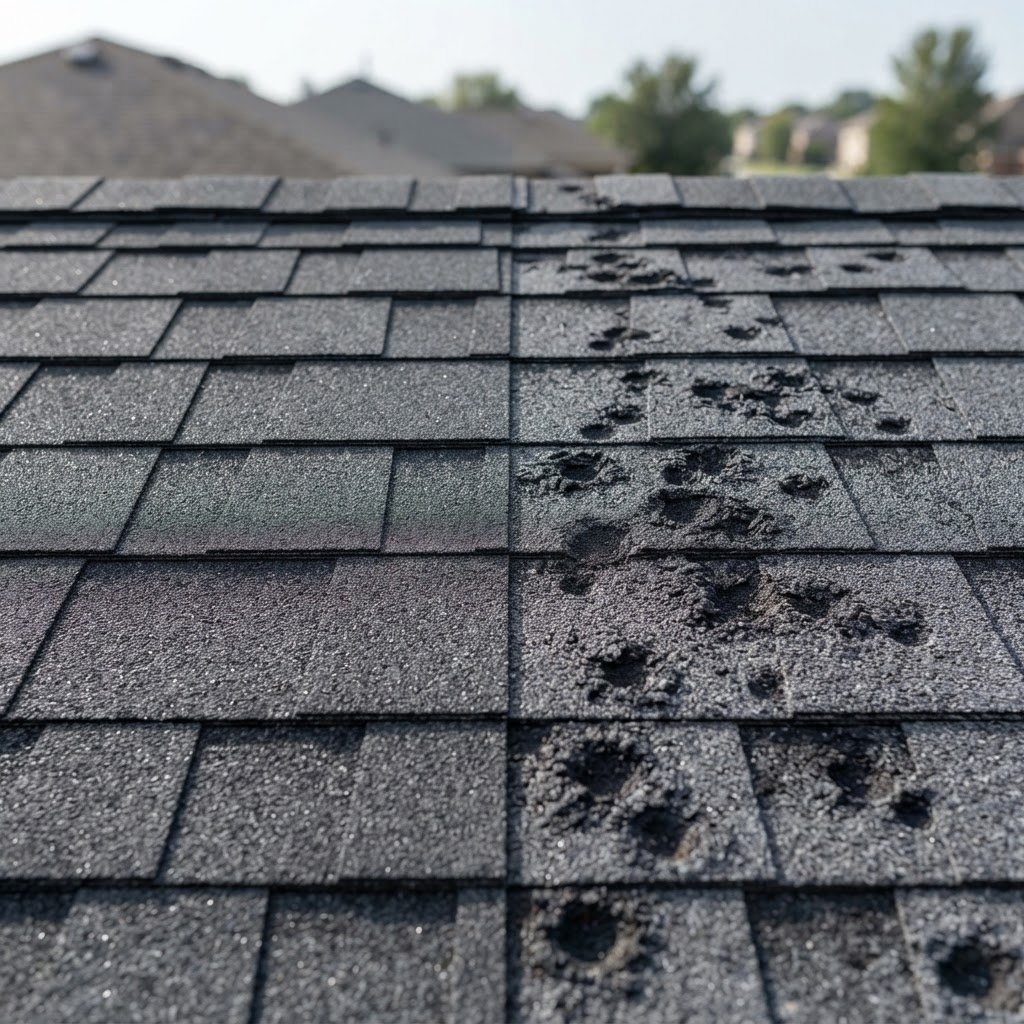
Replacement becomes the appropriate response when hail has caused functional damage that's extensive across the roof. This might mean widespread fractured mats and significant granule loss across multiple slopes, such that repairing individual areas isn't practical or effective.
When a repair is enough
In many cases, hail causes damage that a repair handles. If the functional damage is isolated to certain areas or slopes while the rest of the roof is sound, repairing or replacing the affected sections can be the right and more economical solution.
When hail means no action needed
Sometimes hail causes only cosmetic damage, or damage minor enough that no action is warranted. Minor surface marks that didn't fracture the mat, cosmetic dents on metal, or granule loss too limited to meaningfully affect the roof's life may not require anything beyond awareness.
What determines which outcome applies
- Storm severity: Larger, denser hail causes more damage.
- Roof age and condition: An older, brittle roof is more vulnerable.
- Roofing material: Impact-resistant shingles resist hail better than standard.
- Extent and distribution: Widespread functional damage leans toward replacement.
Why skepticism toward automatic replacement claims is healthy
If a contractor tells you, right after a storm, that you definitely need a full replacement — especially before doing a thorough, documented inspection — that's a reason for skepticism. A contractor whose answer is always replacement isn't assessing — they're selling.
Comparison of isolated repairable hail damage versus widespread damage warranting replacement.
Frequently Asked Questions
- Licensed & insured — documentation available on request
- Free, documented roof inspections
- Real emergency service available
- 5-year workmanship warranty (manufacturer warranties vary by product)
- 30 years of construction experience
- Serving Denver, Adams, Arapahoe, Douglas, Jefferson, and El Paso counties
Promise Keepers Restoration
9615 E. County Line Rd, Ste. B-477, Centennial, CO 80112
Hours: Mon–Sat 8:00 AM–5:00 PM