Written by Peter Regalado, Operations Manager · Reviewed by Mason Pastorello, Managing Director · Last reviewed: July 2026
Roof decking, also called sheathing, is the structural surface the rest of the roof is built on — typically wood panels that form the solid base to which the underlayment and roofing material are attached — and it's a fundamental part of the roof that homeowners should understand, particularly because decking can have hidden damage discovered during a roof replacement. Though hidden beneath the roofing, the decking is the foundation of the roof. This article explains what roof decking is, its role, why decking condition matters, and how decking is addressed in roofing, so you understand this fundamental part of your roof.
What roof decking is
Roof decking, or sheathing, is the structural layer of the roof — the solid surface, typically made of wood panels such as plywood or oriented strand board, that forms the base of the roof. The decking is attached to the roof's structural framing (the rafters or trusses) and provides the solid, continuous surface onto which the rest of the roof (the underlayment and the roofing material) is installed. So the decking is the foundation surface of the roof, beneath everything else.
The role of decking
The decking plays a fundamental role in the roof, providing the solid structural surface for the roofing. The underlayment is applied to the decking, and the roofing material is attached to it, so the decking is what holds the roof together structurally as a surface.
Why decking condition matters
Decking condition matters because the decking is the foundation the roofing depends on, and damaged decking can compromise the roof. If the decking is damaged, rotted, or deteriorated, it doesn't provide the sound surface the roofing needs, and this can affect the roof.
Hidden decking damage and roof replacement
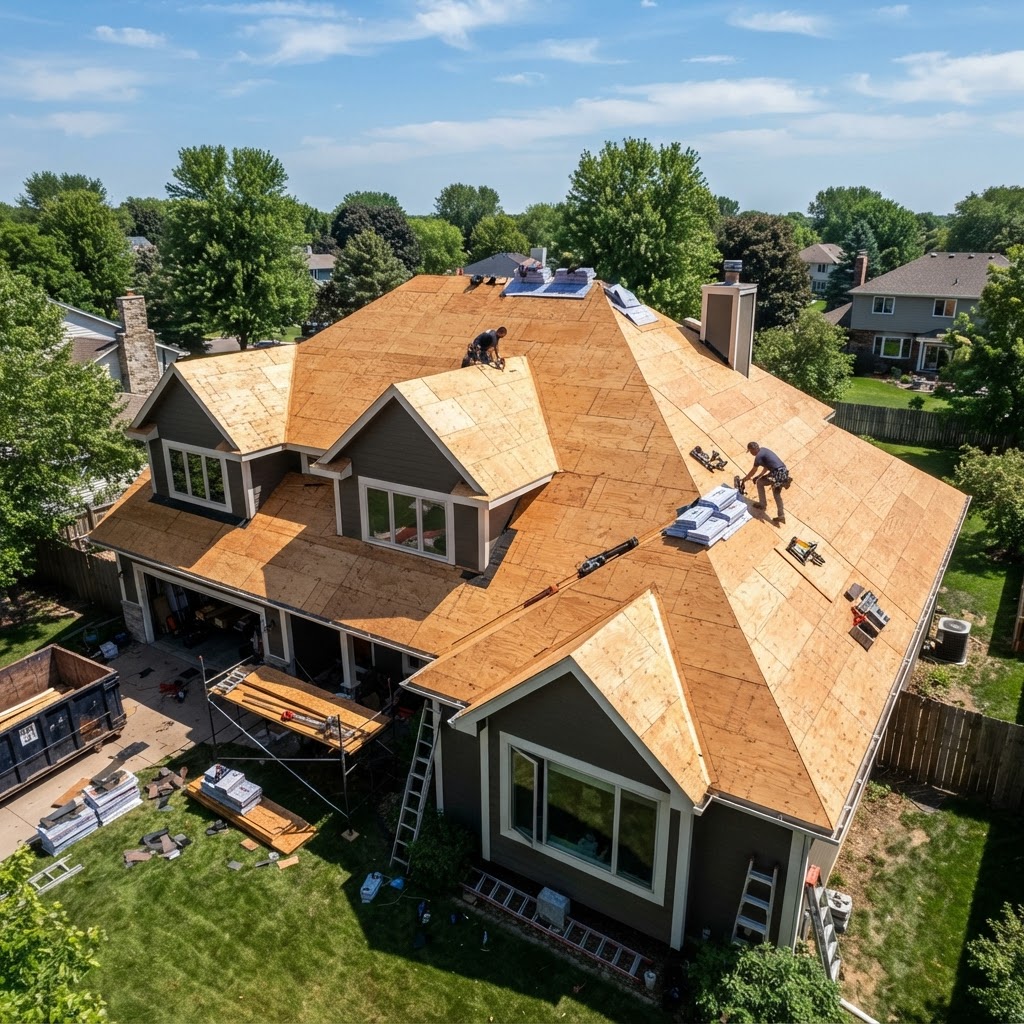
A key point about decking is that decking damage is often hidden and discovered during a roof replacement. Because the decking is beneath the roofing, its condition isn't visible from outside, and damage such as rot or deterioration may be hidden until the roofing is removed. During a roof replacement, when the old roofing is torn off, the decking is exposed and can be inspected, and any hidden damage discovered.
Decking repair during replacement
Because roof replacement can reveal decking damage, decking repair is sometimes part of a roof replacement. When the tear-off exposes damaged decking, such as rot or deterioration, that decking needs to be repaired or replaced to provide a sound base for the new roofing.
Decking types and materials
- Plywood: Engineered wood panels.
- Oriented Strand Board (OSB): Engineered wood panel.
- Plank decking: Older board-based systems.
Decking and structural soundness
Beyond the decking panels themselves, the decking connects to the roof's structural framing — the rafters or trusses that support the roof.
Decking and the roof as a system
Decking is best understood as part of the roof as a system — the foundation layer of the complete roof system.
Why homeowners should understand decking
Knowing that decking is the structural base and that it can have hidden damage helps you understand why decking repair sometimes comes up during a replacement and why it may be an item in a replacement.
Decking and roof soundness
The theme throughout is that sound decking is essential to a sound roof. Because the decking is the foundation the roofing depends on, its soundness underlies the roof's soundness.
Colorado Context: Roof Decking & Sheathing
In Colorado, the demanding climate and the water intrusion that can result from storm damage or leaks can contribute to decking damage over time.
Key Takeaways: Roof Decking & Sheathing
Roof decking, or sheathing, is the structural surface (typically wood panels) that forms the base of the roof, to which the underlayment and roofing are attached. It's the foundation the rest of the roof depends on, making its soundness essential to a sound roof. Decking damage is often hidden until a roof replacement exposes it, so decking repair is sometimes part of a replacement.
Exposed roof decking during a tear-off, being inspected for hidden damage on a Colorado home.
Frequently Asked Questions
- Licensed & insured — documentation available on request
- Free, documented roof inspections
- Real emergency service available
- 5-year workmanship warranty (manufacturer warranties vary by product)
- 30 years of construction experience
- Serving Denver, Adams, Arapahoe, Douglas, Jefferson, and El Paso counties
Promise Keepers Restoration
9615 E. County Line Rd, Ste. B-477, Centennial, CO 80112
Hours: Mon–Sat 8:00 AM–5:00 PM