Written by Peter Regalado, Operations Manager · Reviewed by Mason Pastorello, Managing Director · Last reviewed: July 2026
Roof underlayment is the water-resistant layer installed on the roof deck beneath the visible roofing material, serving as a critical secondary barrier against water and an important part of a complete roof system that many homeowners don't realize is there. Though hidden beneath the shingles, underlayment plays a real role in keeping your home dry. This article explains what roof underlayment is, what it does, the types, and why it matters, so you understand this important but often overlooked part of your roof.
What underlayment is.
Roof underlayment is a layer of material installed on the roof deck — the structural surface beneath the visible roofing material such as shingles. It sits between the decking and the roofing material, forming a layer within the roof system. Underlayment is water-resistant, serving as a barrier against water that gets past or beneath the primary roofing.
What underlayment does.
Underlayment serves several important functions. Its primary role is as a secondary water barrier — if water gets past the primary roofing material through wind-driven rain, damage, or other means, the underlayment provides another layer of protection, helping keep water from reaching the decking and entering the home.
Why the secondary barrier matters.
The secondary water barrier underlayment provides matters because the primary roofing, while designed to shed water, isn't infallible. Wind-driven rain can get beneath shingles, damage can compromise the primary roofing, and various situations can allow water past the primary layer.
Types of underlayment.
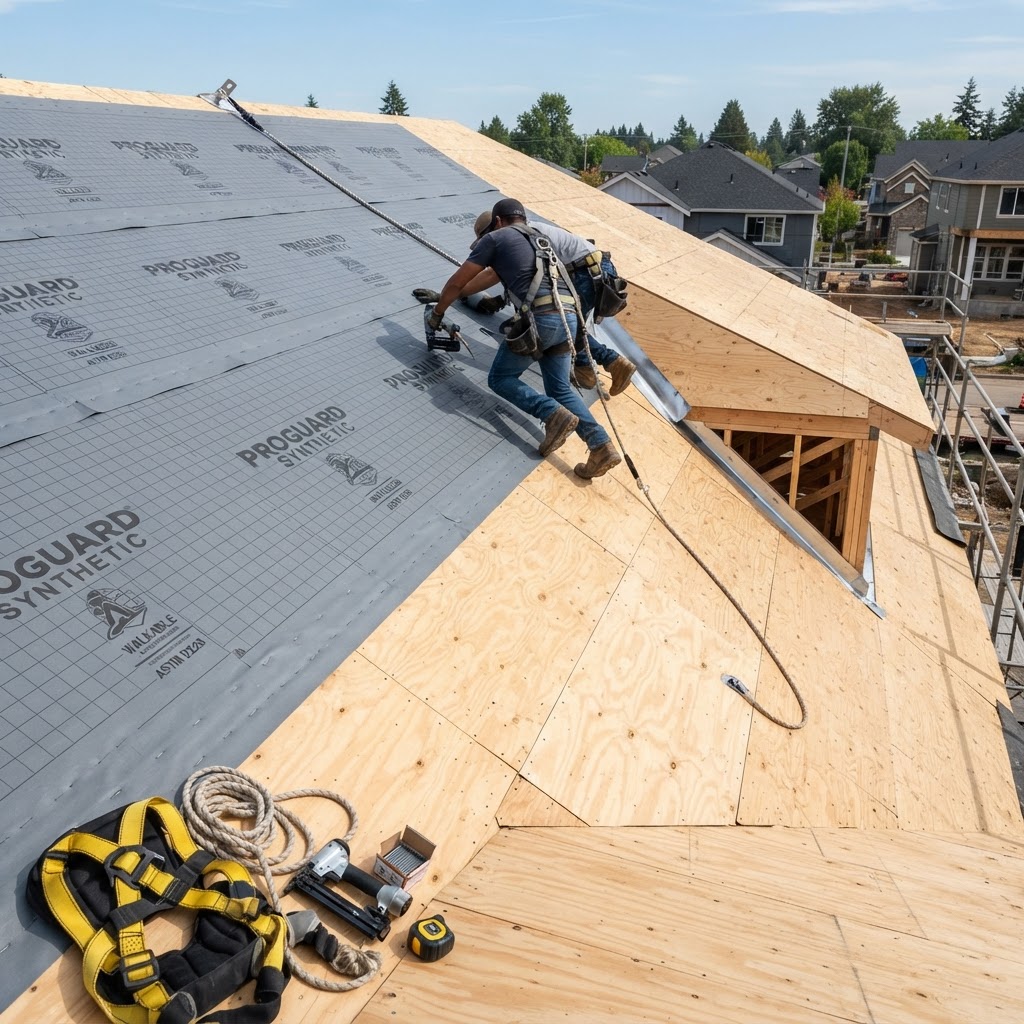
Underlayment comes in different types with different characteristics. Traditional felt underlayment, an asphalt-saturated felt, has long been used and provides water resistance. Synthetic underlayment, a more modern engineered material, offers advantages such as durability, lighter weight, and performance.
The move toward synthetic underlayment.
A notable development in underlayment is the move toward synthetic underlayment. While traditional felt underlayment has long been used, synthetic underlayment has become widely used, offering advantages such as greater durability, lighter weight, resistance to tearing, and good performance.
Underlayment and quality installation.
An important point about underlayment is that, like the rest of a roof system, its proper installation matters. Underlayment must be properly installed — correctly applied to the decking and properly integrated with the flashing and roofing — to provide its protective function.
Underlayment as part of a complete roof system.
Underlayment is best understood as part of a complete roof system rather than in isolation. A quality roof is a system of components — the decking, the underlayment, the flashing, the primary roofing material, the ventilation, and the details — working together.
Underlayment and roof replacement.
Underlayment relates to roof replacement in that new underlayment is part of a roof replacement. When a roof is replaced, the old roofing is removed and a new roof system is installed, including new underlayment on the decking beneath the new roofing.
Underlayment in special areas.
Underlayment, or specialized underlayment products, can be particularly important in certain areas of a roof. Valleys, where water flow concentrates, and other vulnerable areas may benefit from specialized underlayment or extra attention.
Why homeowners should know about underlayment.
Knowing that a quality roof includes proper underlayment helps you understand that a roof is more than just shingles and that a quality installation and estimate address the underlayment among other components.
Colorado Context: Roof Underlayment
In Colorado, roof underlayment has relevance to the demanding climate. The secondary water barrier underlayment provides is valuable given Colorado's storms, wind-driven rain, and weather that can drive water at a roof.
Synthetic roof underlayment installed on the decking beneath shingles on a Colorado home.
Frequently Asked Questions
- Licensed & insured — documentation available on request
- Free, documented roof inspections
- Real emergency service available
- 5-year workmanship warranty (manufacturer warranties vary by product)
- 30 years of construction experience
- Serving Denver, Adams, Arapahoe, Douglas, Jefferson, and El Paso counties
Promise Keepers Restoration
9615 E. County Line Rd, Ste. B-477, Centennial, CO 80112
Hours: Mon–Sat 8:00 AM–5:00 PM