Written by Peter Regalado, Operations Manager · Reviewed by Mason Pastorello, Managing Director · Last reviewed: July 2026
Understanding common roofing terms helps you communicate with contractors, understand estimates, and make informed decisions, and this glossary explains the key terms every homeowner encounters — from a roofing square to underlayment, flashing, decking, and more. Roofing has its own vocabulary, and knowing the basic terms makes navigating a roofing project much easier. This article defines the common roofing terms homeowners are likely to encounter, so you can understand what your contractor and estimate are talking about.
Roofing square
A roofing square is a unit of area used in roofing, equal to one hundred square feet. Roofers measure and price roofs in squares, so a roof might be described as a certain number of squares.
Underlayment
Underlayment is a layer installed on the roof deck beneath the visible roofing material, providing an additional water-resistant layer of protection.
Decking
Decking, also called sheathing, is the structural surface the roofing is installed on, typically wood panels forming the base of the roof.
Flashing
Flashing is material, typically metal, installed at the vulnerable areas of a roof — valleys, penetrations, edges, walls, and transitions — to seal these areas and direct water away.
Fascia and soffit
Fascia and soffit are parts of the roof edge area. The fascia is the board running along the roof edge, often where gutters are attached. The soffit is the underside of the roof overhang.
Eaves and rake
The eaves and rake refer to roof edges. The eaves are the lower edges of the roof where it overhangs the walls. The rake is the sloped edge of the roof at the gable ends.
Ridge and valley
The ridge is the peak line where two roof planes meet. The valley is where two roof planes meet at an angle, forming a channel that carries water.
Pitch and slope
A roof's pitch or slope describes how steep it is, which affects how it sheds water and the installation process.
Ventilation terms
Intake ventilation (at the soffits) lets air into the attic, while exhaust ventilation (at the ridge) lets air out.
Impact resistance and Class 4
Class 4 is the highest impact resistance rating for shingles, highly valued in hail-prone areas.
Warranty and Insurance Terms
- Workmanship Warranty: Covers the contractor's installation.
- Manufacturer Warranty: Covers the materials.
- ACV vs RCV: Insurance methods for valuing claims.
Repair and Replacement
Terms like 'tear-off' (removing old material) and 'roof-over' (installing over existing) are critical for cost and performance decisions.
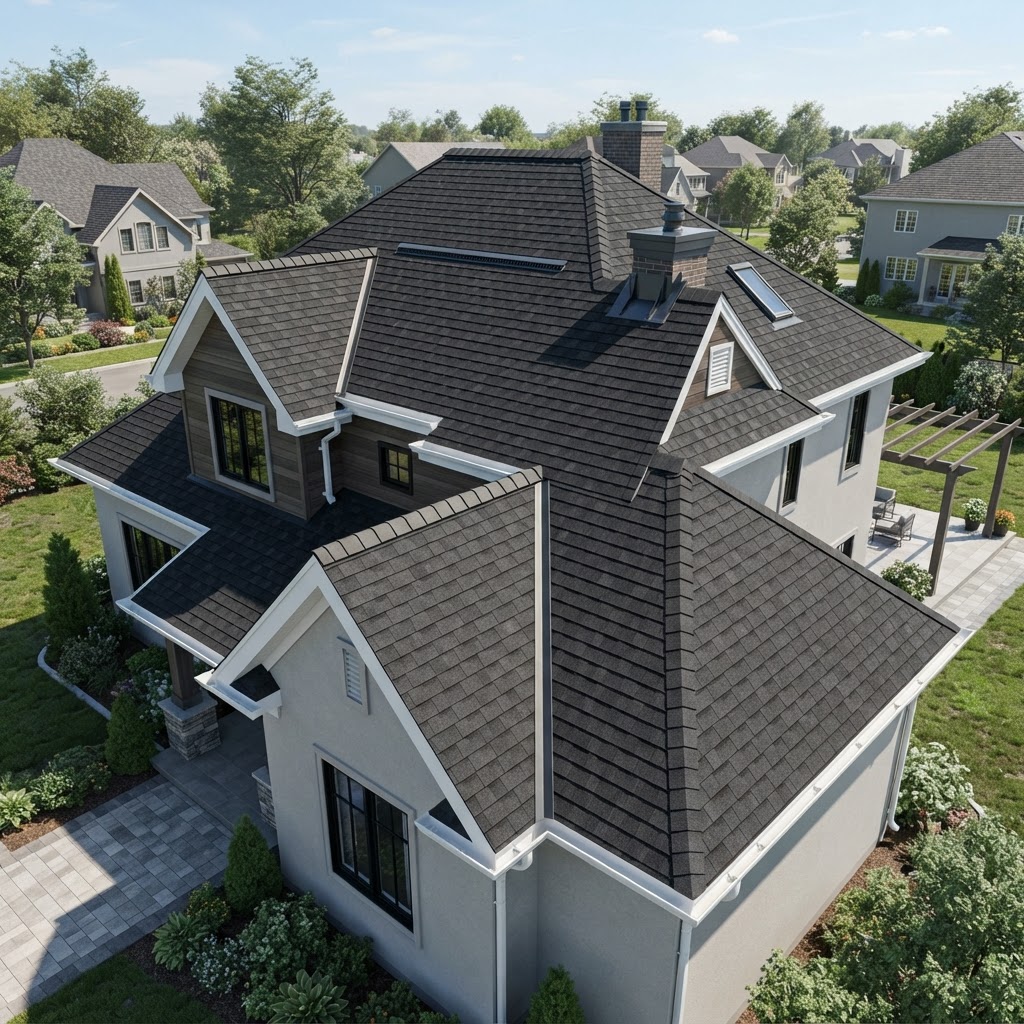
A labeled diagram of roof anatomy showing squares, decking, underlayment, flashing, ridge, and valley.
Frequently Asked Questions
- Licensed & insured — documentation available on request
- Free, documented roof inspections
- Real emergency service available
- 5-year workmanship warranty (manufacturer warranties vary by product)
- 30 years of construction experience
- Serving Denver, Adams, Arapahoe, Douglas, Jefferson, and El Paso counties
Promise Keepers Restoration
9615 E. County Line Rd, Ste. B-477, Centennial, CO 80112
Hours: Mon–Sat 8:00 AM–5:00 PM