Written by Peter Regalado, Operations Manager · Reviewed by Mason Pastorello, Managing Director · Last reviewed: July 2026
What affects roof replacement cost comes down to the size and complexity of your roof, the materials you choose, the condition of what's underneath, the labor involved, and factors specific to your situation like accessibility and any storm or insurance context. Rather than a single price, a roof replacement cost is built from these factors, which is why quotes vary and why understanding the factors helps you make sense of your own. This article explains what drives roof replacement cost so you understand the factors behind your quote. Importantly, this covers the factors that affect cost, not specific prices, which depend on your particular roof and situation and are best determined by an inspection and quote.
Why there is no single price
The first thing to understand about roof replacement cost is that there is no single price, because every roof and situation is different. A roof replacement cost is built from multiple factors — the roof size and complexity, the materials, the condition underneath, the labor, and situational factors — and these vary from home to home.
Roof Size and Complexity: What Affects Roof Replacement Cost
One of the biggest factors is the size and complexity of your roof. Size is straightforward — a larger roof requires more materials and labor than a smaller one, so it costs more. Roofing is often measured in "squares," a roofing unit of area, and more squares means more cost.
Material choice
The materials you choose are a major cost factor. Different roofing materials have very different costs — standard asphalt shingles are the most affordable, impact-resistant Class 4 shingles cost somewhat more, metal roofing costs significantly more, and premium materials cost more still.
The condition underneath
A significant and sometimes unpredictable cost factor is the condition of what's underneath your existing roof, particularly the decking. The roof deck — the surface the roofing is installed on — can have hidden damage, rot, or deterioration that isn't fully known until the old roof is removed.
Labor
Labor is a major component of roof replacement cost. Replacing a roof is labor-intensive, involving tearing off the old roof, preparing the surface, installing the new roofing and all its components, and cleanup.
Situational factors
Several situational factors can affect cost. Accessibility — how easy or difficult it is to access and work on your roof affects labor; a hard-to-access roof costs more. The number of existing roof layers to tear off affects the tear-off cost.
The insurance and storm context
In Colorado, a common context for roof replacement is storm damage and insurance, which affects how cost works. When a roof is being replaced due to covered storm damage, the insurance claim, rather than a straightforward out-of-pocket payment, shapes the financial picture.
Why the cheapest quote is rarely the best value
It's natural to want to minimize a significant expense, but with roofing, an unusually low quote often signals something — cheaper materials that won't last as long, skipped components like proper underlayment or flashing, less experienced labor, a scope that leaves out things you'll need.
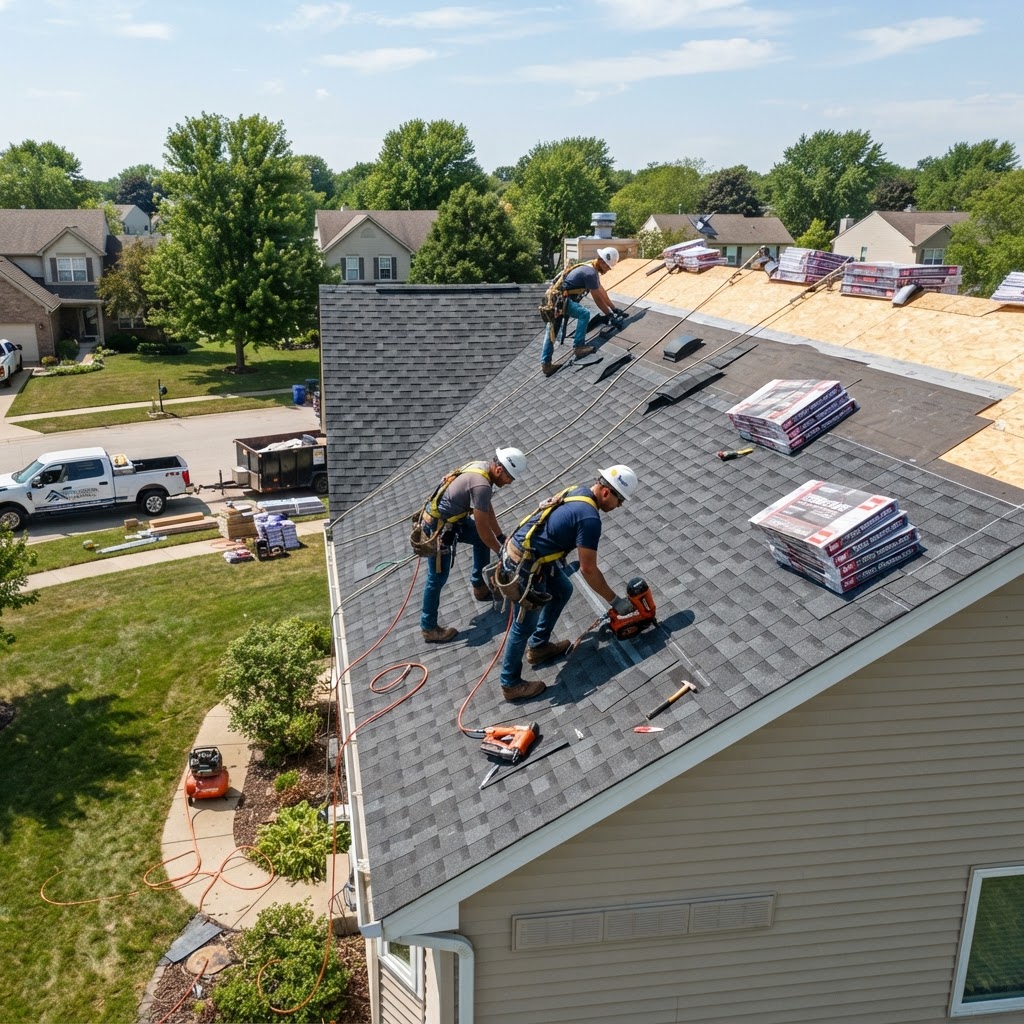
Roof replacement in progress on a Colorado home, showing decking and new materials.
Frequently Asked Questions
- Licensed & insured — documentation available on request
- Free, documented roof inspections
- Real emergency service available
- 5-year workmanship warranty (manufacturer warranties vary by product)
- 30 years of construction experience
- Serving Denver, Adams, Arapahoe, Douglas, Jefferson, and El Paso counties
Promise Keepers Restoration
9615 E. County Line Rd, Ste. B-477, Centennial, CO 80112
Hours: Mon–Sat 8:00 AM–5:00 PM