Written by Peter Regalado, Operations Manager · Reviewed by Mason Pastorello, Managing Director · Last reviewed: July 2026
A roofing estimate is shaped by your roof's size, pitch, and complexity; the material you choose; the condition of the decking underneath; the components included (underlayment, flashing, and ventilation); the tear-off required; and access to the roof. Understanding these factors helps you read an estimate, know what you're paying for, and compare bids fairly rather than just looking at the bottom-line number. This article breaks down what goes into a roofing estimate so you can be an informed buyer, whether you're replacing a roof or evaluating storm-damage work.
The most important thing to understand about a roofing estimate is that the total number matters less than what's behind it. Two estimates for the same roof can differ significantly — not because one roofer is overcharging, but because they include different scopes of work. A thorough estimate that includes quality underlayment, proper flashing, a decking allowance, and balanced ventilation will cost more than a bare-bones one that skips those things, and the difference shows up years later in how long the roof lasts. Learning to read what's in an estimate is how you avoid paying for a cut-rate job.
The core components of a roofing estimate
- Material and quantity: The estimate should specify the roofing material and reflect the area of your roof. Material choice, from standard asphalt to Class 4 to metal, is a major cost driver, and the quantity is based on your roof's actual size and shape.
- Tear-off and disposal: Removing the existing roof and disposing of it is part of the job. If you have multiple old layers to remove, that adds labor and disposal cost, which a complete estimate accounts for.
- Decking allowance: A good estimate includes an allowance or a stated approach for replacing any damaged decking found during tear-off. Since hidden rot can't be fully known until the roof is opened, a transparent estimate addresses how this is handled so it's not a surprise.
- Underlayment and ice-and-water shield: These water-resistant layers are part of a proper roof, and in Colorado, ice-and-water shield at eaves and valleys matters for freeze-thaw and ice dams.
- Flashing: New or properly reused flashing at chimneys, walls, valleys, and penetrations is where most leaks are prevented.
- Ventilation: Proper intake and exhaust ventilation protects the roof from the inside, and a thorough estimate accounts for confirming and correcting ventilation as needed.
- Labor and access: The labor reflects the roof's pitch, complexity, and accessibility.
- Cleanup: A complete job includes thorough cleanup and a magnetic nail sweep.
Why estimates for the same roof differ
When you collect multiple estimates and they vary, you're usually seeing differences in scope, not just price. A lower estimate might use a more basic shingle, skip ice-and-water shield, reuse old flashing, omit a decking allowance, or cut corners on ventilation. A higher estimate might include better materials and all the components that make a roof last.
Breakdown of the components included in a complete roofing estimate.
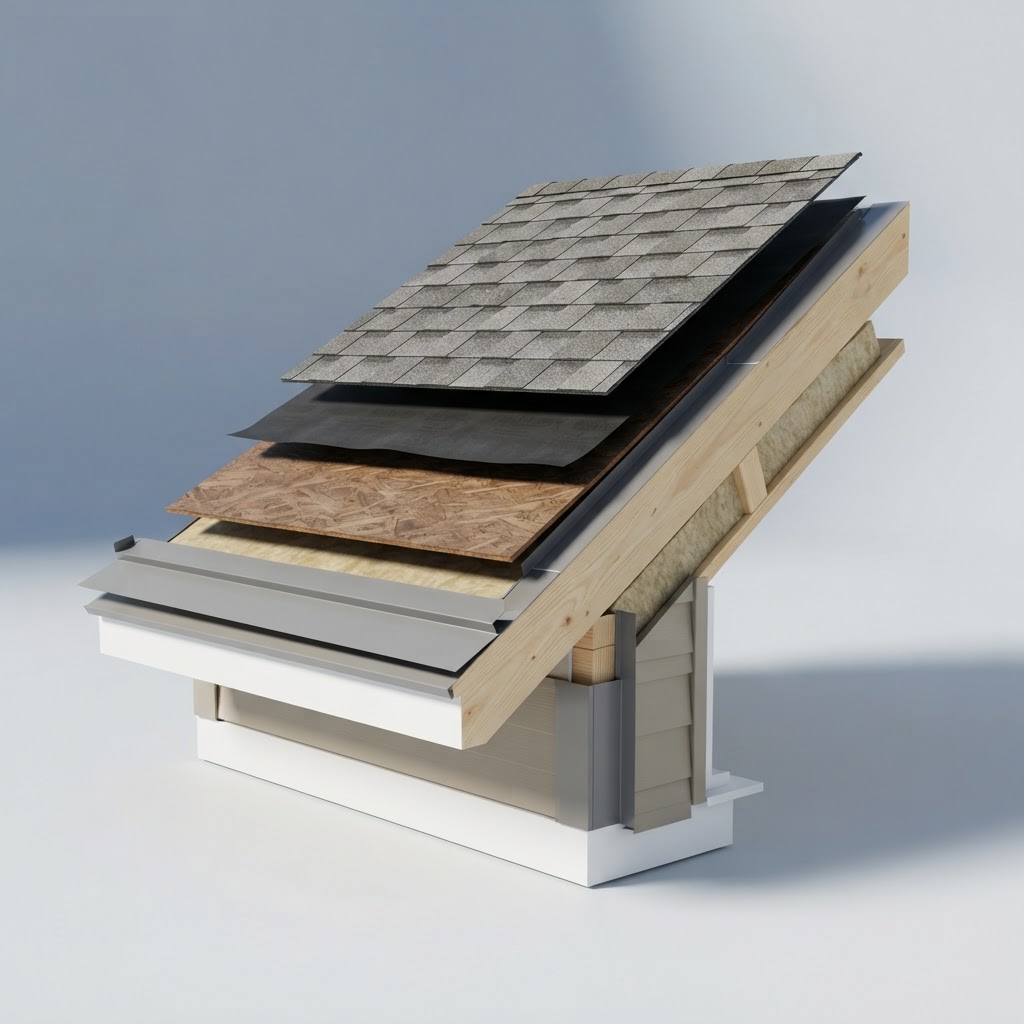
Breakdown of the components included in a complete roofing estimate.
Frequently Asked Questions
- Licensed & insured — documentation available on request
- Free, documented roof inspections
- Real emergency service available
- 5-year workmanship warranty (manufacturer warranties vary by product)
- 30 years of construction experience
- Serving Denver, Adams, Arapahoe, Douglas, Jefferson, and El Paso counties
Promise Keepers Restoration
9615 E. County Line Rd, Ste. B-477, Centennial, CO 80112
Hours: Mon–Sat 8:00 AM–5:00 PM