Written by Peter Regalado, Operations Manager · Reviewed by Mason Pastorello, Managing Director · Last reviewed: July 2026
If you're considering solar panels for your home, the condition and age of your roof matter, because panels are installed on and penetrate the roof — so it's wise to address any needed roof work before or in coordination with solar installation and to understand how solar interacts with your roof. Solar and roofing are connected, and thinking about them together rather than separately avoids problems down the line. This article explains what to know about your roof before installing solar, how solar interacts with the roof, and why coordinating the two matters, so you can approach solar with your roof in mind.
Why your roof matters for solar. Your roof matters for solar because solar panels are installed on your roof — mounted to it and penetrating it — and they're meant to stay there for a long time. This connection between the panels and the roof means the roof's condition and remaining life directly affect the solar installation. If panels are installed on a roof that soon needs replacement, the panels must be removed and reinstalled to replace the roof — an added cost and complication. And the panel mounting involves penetrating the roof, which must be done properly to avoid leaks. So the roof isn't just an incidental surface for solar — it's integral to the installation, and its condition and proper handling matter. Understanding that your roof and solar are connected is the starting point for approaching solar wisely.
Address roof condition before solar. A key principle is to address any needed roof work before or in coordination with installing solar. Because panels are installed on the roof and are difficult and costly to remove and reinstall, you generally don't want to install solar on a roof that will soon need replacement. If your roof is aging, worn, or will need replacement in the foreseeable future, it's generally wise to replace it before installing solar, so the new roof and the solar are installed in a sensible sequence and the roof has plenty of life ahead under the panels. Installing solar on an old roof only to need to replace the roof shortly after means removing and reinstalling the panels — an avoidable cost and hassle. So assessing your roof's condition and addressing any needed replacement before solar is a wise principle. We can assess your roof's condition to inform solar planning.
The value of a roof assessment before solar. Given the importance of roof condition, getting a roof assessment before installing solar is valuable. A roof assessment determines your roof's condition and remaining life, informing whether it makes sense to install solar on the current roof or whether roof replacement should come first. This assessment helps you avoid the mistake of putting solar on a roof that soon needs replacement. For a homeowner considering solar, a roof assessment is a sensible early step, ensuring the roof is in appropriate condition for a long-term solar installation. Knowing your roof's condition and remaining life lets you sequence roof work and solar sensibly. We provide roof assessments that can inform solar planning, helping you understand whether your roof is ready for solar or should be addressed first.
How solar interacts with the roof. Understanding how solar interacts with the roof helps you approach it properly. Solar panels are mounted to the roof with a mounting system that penetrates the roof to attach securely. These penetrations must be properly flashed and sealed to prevent leaks, just like any roof penetration. So a solar installation involves creating and sealing roof penetrations, which must be done properly. The panels also cover part of the roof and add weight, though modern panels' weight is generally manageable for a sound roof. The interaction between solar and the roof, particularly the penetrations for mounting, means the installation must be done in a way that respects and protects the roof. Understanding this interaction underscores why solar and roofing should be coordinated and why proper installation of the roof penetrations matters.
The importance of proper installation for the penetrations. Because solar mounting penetrates the roof, proper installation of those penetrations is important to prevent leaks. Like any roof penetration, solar mounting points must be properly flashed and sealed so water can't enter around them. Improperly installed solar penetrations can leak, causing the water intrusion any roof penetration leak causes. So the quality of how the solar mounting penetrations are installed and sealed matters for your roof's integrity. This is a point of coordination between solar and roofing — the penetrations must be done properly to protect the roof. For a homeowner, this means the solar installation should be done in a way that properly handles the roof penetrations. Coordinating solar and roofing considerations helps ensure the penetrations are handled properly, protecting the roof from leaks.
Coordinating roof work and solar. The theme throughout is coordinating roof work and solar rather than treating them as entirely separate. If your roof needs replacement, replacing it before solar makes sense. If you're replacing your roof and considering solar, coordinating the timing makes sense. And the solar installation should handle the roof penetrations properly. This coordination avoids the problems of missequencing — solar on a soon-to-be-replaced roof, or improperly handled penetrations. For a homeowner, the practical takeaway is to think about solar and your roof together — assessing the roof, considering the sequence, and ensuring proper handling of the roof aspects of solar. We can help with the roofing side of this coordination, assessing your roof and handling any roof work in sensible sequence with solar plans.
What happens if you already have solar and need roof work. A situation worth addressing is what happens if you already have solar panels and then need roof work or replacement. Because the panels are installed on the roof, roof work — particularly replacement — generally requires removing the panels, doing the roof work, and reinstalling the panels. This is an added cost and complication of roof work on a home with existing solar, which is exactly why addressing roof condition before installing solar is wise — it avoids this situation. If you do have solar and need roof work, it requires coordination between removing and reinstalling the panels and the roofing work. This underscores the value of the sequencing principle: addressing roof needs before solar avoids the added complication of roof work under existing panels. For a homeowner who already has solar and faces roof work, understanding that the panels must be removed and reinstalled helps you anticipate the process. We can discuss roofing work on homes with existing solar, including the coordination it requires.
The long-term view of roof and solar together. The overarching principle is to take a long-term view of your roof and solar together. Solar is a long-term installation meant to stay on your roof for many years, and your roof needs to support it soundly for that duration. Taking a long-term view means ensuring the roof under the solar has the life and soundness to serve for the solar's lifespan, avoiding the need to disturb the panels for roof work prematurely. This long-term perspective is why assessing roof condition and addressing any needed replacement before solar is wise — it sets up the roof and solar to coexist soundly for the long term. For a homeowner, this long-term view of roof and solar together, rather than treating solar as separate from the roof, leads to the best outcome. We help homeowners take this long-term view of the roofing side of their solar plans, ensuring the roof is ready to support solar for the long term.
What this means for your solar plans. For a homeowner planning solar, the practical steps are these. Have your roof assessed to understand its condition and remaining life. If your roof needs replacement or will soon, consider replacing it before installing solar. Ensure the solar installation properly handles the roof penetrations to prevent leaks. And think about roof and solar together in terms of timing and coordination. Following these steps helps you approach solar in a way that respects your roof and avoids the problems of poor coordination. Solar can be a great addition, and approaching it with your roof in mind ensures it's done sensibly. We help homeowners with the roofing considerations of solar planning.
A note on the scope of this guidance. It's worth noting that this article addresses the roofing considerations of solar, not the solar installation itself, its costs, benefits, or specifics, which are the domain of solar providers. Our focus is helping you understand how solar relates to your roof and ensuring the roof is in appropriate condition and properly handled. For the solar system itself — its performance, economics, and specifics — a solar provider is the appropriate resource. We focus on the roofing side, ensuring your roof is ready for and properly handled in a solar installation. This division reflects that we are roofing experts addressing the roofing aspects of solar rather than solar installers.
Colorado context. In Colorado, solar and roofing coordination has particular relevance. Colorado's abundant sunshine makes solar appealing to many homeowners. The frequent hail is a consideration for both roofs and potentially solar panels, making roof condition and durability relevant. And the demanding climate makes a sound, properly handled roof important under solar. For a Colorado homeowner considering solar, the principles of assessing roof condition, sequencing roof work before solar if needed, and ensuring proper penetration handling apply and are worth following, given the investment solar represents and Colorado's conditions. We help Colorado homeowners with the roofing considerations of their solar plans.
Key takeaways. If you're considering solar, your roof's condition and age matter because panels are installed on and penetrate the roof and are costly to remove and reinstall. It's wise to address any needed roof replacement before or in coordination with solar, so you don't install panels on a soon-to-be-replaced roof. The solar mounting penetrations must be properly flashed and sealed to prevent leaks. Coordinating roof work and solar avoids problems.
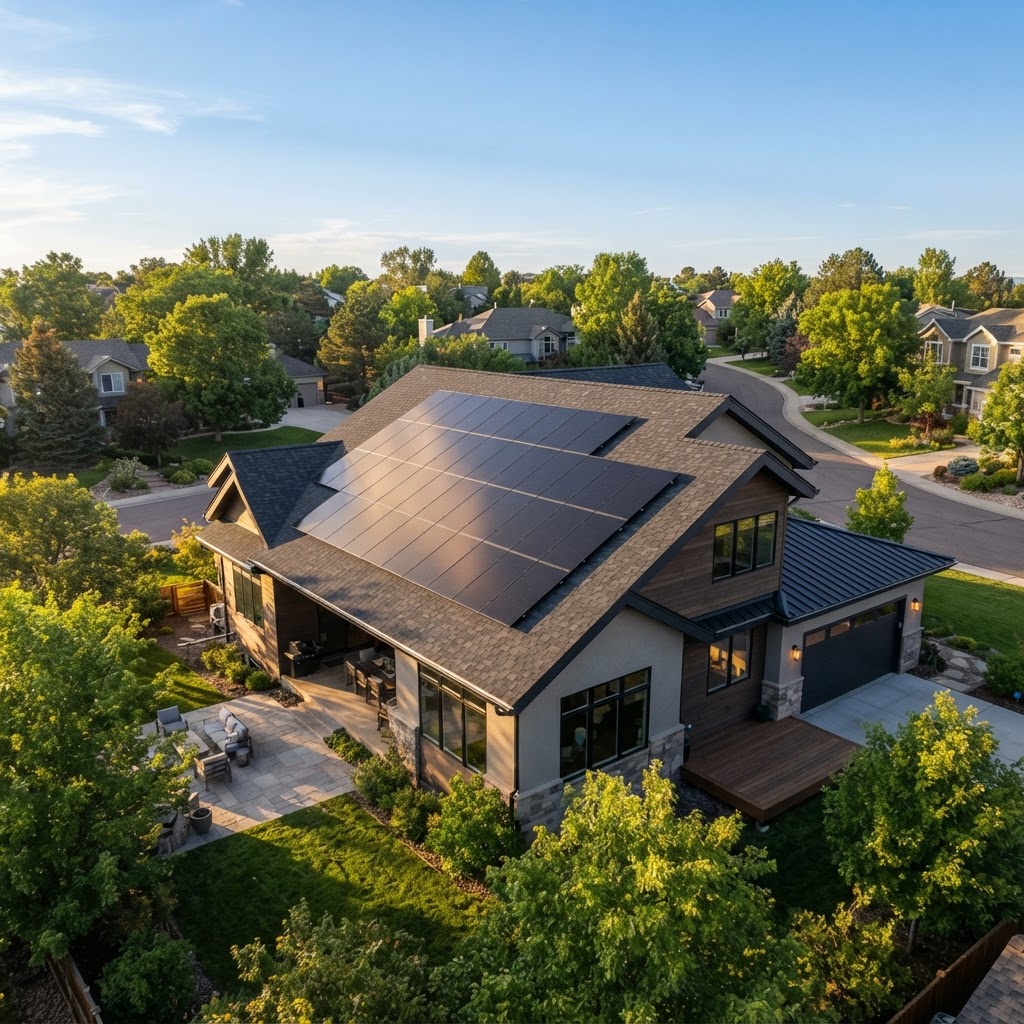
Solar panels mounted on a sound residential roof in Colorado, with properly sealed penetrations.
Frequently Asked Questions
- Licensed & insured — documentation available on request
- Free, documented roof inspections
- Real emergency service available
- 5-year workmanship warranty (manufacturer warranties vary by product)
- 30 years of construction experience
- Serving Denver, Adams, Arapahoe, Douglas, Jefferson, and El Paso counties
Promise Keepers Restoration
9615 E. County Line Rd, Ste. B-477, Centennial, CO 80112
Hours: Mon–Sat 8:00 AM–5:00 PM