Written by Peter Regalado, Operations Manager · Reviewed by Mason Pastorello, Managing Director · Last reviewed: July 2026
The best shingles for Colorado hail are Class 4 impact-resistant shingles, which have earned the highest rating in the standard impact test and resist the hail damage that plagues standard shingles across the Front Range. In a region where hail is frequent and often severe, choosing shingles built to withstand impact is one of the most practical roofing decisions a Colorado homeowner can make. This article explains why hail resistance matters so much in Colorado, what makes a shingle hail-resistant, how to choose among the options, and the insurance angle, so you can select shingles suited to Colorado's defining roofing challenge.
Why hail resistance matters in Colorado
Colorado's Front Range sits in one of the more hail-prone regions in the country. Storms building over the mountains and the Palmer Divide regularly bring damaging hail through the warmer months, and this hail is the single biggest threat to roofs in the region. Standard asphalt shingles are exactly what hail damages — bruising the shingles, fracturing the mat, and stripping the protective granules, leading to functional damage that shortens the roof's life.
What makes a shingle hail-resistant
The key measure of hail resistance is the impact rating, specifically the Class 1 through Class 4 scale from the standard industry impact test. Class 4 is the highest rating, meaning the shingle withstood the most severe standardized impact without cracking.
Class 4 shingles: the top choice for hail
For Colorado hail, Class 4 impact-resistant shingles are the top asphalt choice. They resist hail far better than standard shingles, meaning fewer bruises, less granule loss, and a roof more likely to survive storms without functional damage.
The metal alternative
While Class 4 asphalt shingles are the top asphalt choice for hail, metal roofing is another hail-resistant option worth mentioning. Metal is durable and can resist hail, though some metal dents cosmetically under impact.
Choosing among Class 4 products
Not all Class 4 shingles are identical — while they share the top impact rating, they vary by manufacturer and product in their specific construction, appearance, and other features.
The insurance discount angle
A major reason Class 4 shingles make sense in Colorado is the insurance angle. Many Colorado insurers offer a premium discount for impact-resistant roofing, reflecting the reduced claim risk of a hail-resistant roof in this hail-prone region.
When to upgrade to hail-resistant shingles
The best time to choose hail-resistant shingles is when you're replacing your roof anyway. At replacement, the incremental cost of upgrading from standard to Class 4 shingles is small relative to the whole job, making it an easy and sensible upgrade.
Honest limitations
While Class 4 shingles are the best shingles for Colorado hail, honesty requires noting they're not hail-proof. Class 4 shingles resist hail far better than standard shingles, but severe enough hail can still cause damage.
The Palmer Divide and Colorado hail geography
Understanding where hail is worst in Colorado helps explain why hail-resistant shingles matter so much in certain areas. The Palmer Divide — the higher ground between Denver and Colorado Springs — is one of the more hail-active zones in the region.
Combining hail resistance with proper installation
A point worth emphasizing is that hail-resistant shingles perform best as part of a properly installed roof. Class 4 shingles provide impact resistance, but the overall roof's performance in a storm also depends on correct installation.
Key Takeaways: Best Shingles for Colorado Hail
- The best shingles for Colorado hail are Class 4 impact-resistant shingles.
- Hail resistance matters enormously in Colorado.
- Class 4 shingles resist bruising and granule loss.
- Many Colorado insurers offer discounts for impact-resistant roofing.
- Class 4 shingles greatly reduce but don't eliminate hail damage risk.
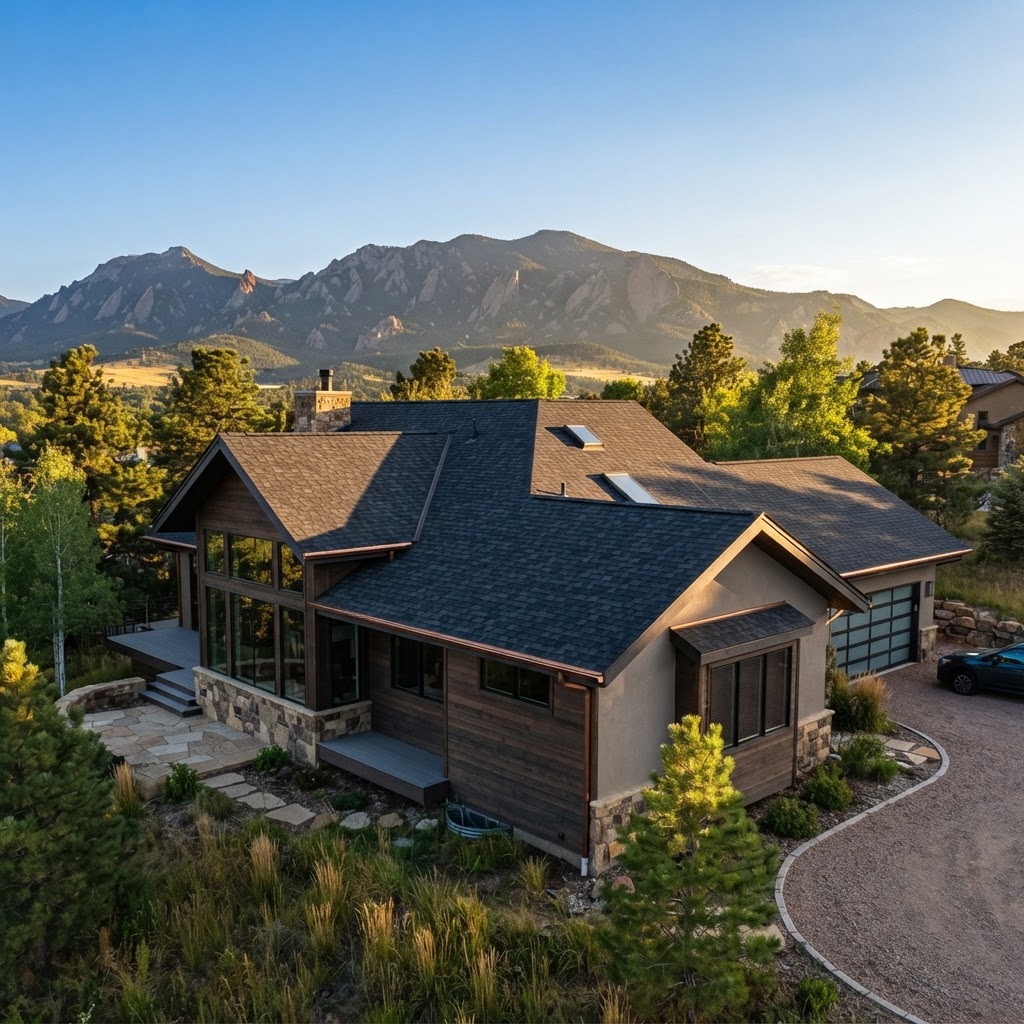
Class 4 impact-resistant shingles installed on a hail-prone Colorado Front Range home.
Frequently Asked Questions
- Licensed & insured — documentation available on request
- Free, documented roof inspections
- Real emergency service available
- 5-year workmanship warranty (manufacturer warranties vary by product)
- 30 years of construction experience
- Serving Denver, Adams, Arapahoe, Douglas, Jefferson, and El Paso counties
Promise Keepers Restoration
9615 E. County Line Rd, Ste. B-477, Centennial, CO 80112
Hours: Mon–Sat 8:00 AM–5:00 PM