Written by Peter Regalado, Operations Manager · Reviewed by Mason Pastorello, Managing Director · Last reviewed: July 2026
Storm-chaser roofing scams follow a recognizable pattern: out-of-state crews flood an area after a hailstorm, knock on doors, create urgency, promise free roofs or offer to waive your deductible, pressure you to sign immediately, and then do fast, low-quality work — or disappear, taking your money or leaving you with a roof and no one to stand behind it. Recognizing the red flags — high pressure, door-knocking, deductible-waiving, promises about insurance outcomes, and demands for large upfront payments — protects you from these operators. This article explains how storm-chasing scams work, the specific red flags to watch for, and how to protect yourself, so a storm doesn't cost you twice.
What storm chasers areStorm chasers are transient roofing operations that follow major storms from area to area, doing high-volume work and then moving on. After a significant hailstorm in Colorado, affected neighborhoods are often flooded with these crews going door to door. Not every out-of-area contractor is a scammer, and not all storm-response work is illegitimate — but the storm-chasing model is built around volume, speed, and moving on, which creates the conditions for poor work and scams. The fundamental problem is that a company built to leave after the season has no stake in the long-term quality of its work, or in being there if something goes wrong. This is why the storm-chaser pattern is worth recognizing and approaching with caution.
The basic scam patternThe typical storm-chaser approach follows a script. It starts with door-knocking soon after a storm, often claiming to have noticed damage on your roof or to be "working in the neighborhood already." It creates urgency, insisting you need to act now, that the damage is severe, or that they can only offer a deal today. It makes attractive-sounding offers — a "free roof," "no cost to you," or waiving your deductible. It pushes you to sign immediately, often a contract or an authorization to deal with your insurance. And then, depending on the operation, it does fast, low-quality work, collects payment or insurance money, and leaves — or, in worse cases, takes a deposit and never returns. Understanding this pattern helps you recognize it when it shows up at your door.
Red flag: high-pressure tacticsThe clearest red flag is high pressure. Storm chasers rely on urgency and pressure to get you to sign before you've had time to think, verify their legitimacy, or get other opinions. Pressure to sign today, a deal that expires immediately, insistence that you must act now — these are hallmarks of an operation that doesn't want you looking too closely. A legitimate contractor understands a roof is a significant decision and gives you time to consider, verify, and compare.
Red flag: offers to waive your deductibleA specific and serious red flag is an offer to waive, cover, or "eat" your insurance deductible. This is a common storm-chaser pitch — "pay nothing, we'll cover your deductible" — but it's a red flag and not a legitimate practice in Colorado. When a contractor offers to waive your deductible, it often signals a willingness to engage in improper or fraudulent practices, such as inflating the claim to cover the deductible amount, and it can expose you to liability in an insurance fraud situation.
Red flag: promises about insurance outcomesBe wary of any contractor who guarantees or promises what your insurance will do — promising your claim will be approved, that they'll get you a new roof "for free," or that they can guarantee a specific outcome. No honest contractor can promise what an insurer will decide; the coverage determination rests with your insurance company based on the actual damage and your policy.
Red flag: large upfront paymentsBe cautious of a contractor who demands a large payment upfront, especially before any work begins. While some deposit may be normal, a demand for a large portion or all of the cost upfront is a warning sign, particularly from a company you can't verify.
How to protect yourselfProtecting yourself comes down to a few practices. Don't sign anything under pressure — take your time. Verify the contractor is licensed and insured with documentation, and has a real local address and track record. Get the scope and contract in writing. Never work with anyone offering to waive your deductible or promising insurance outcomes. Choose an established local company.
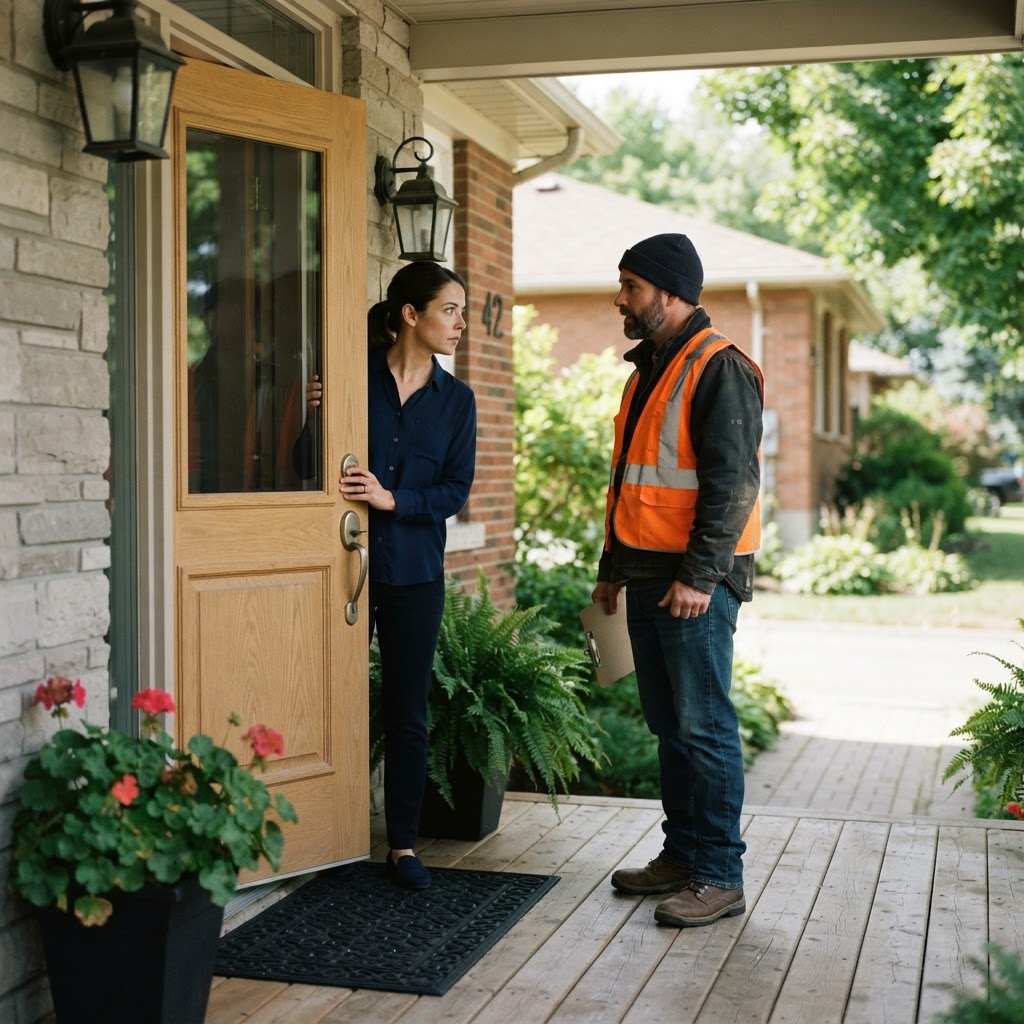
Homeowner cautious of a door-to-door roofing solicitor after a Colorado hailstorm.
Frequently Asked Questions
- Licensed & insured — documentation available on request
- Free, documented roof inspections
- Real emergency service available
- 5-year workmanship warranty (manufacturer warranties vary by product)
- 30 years of construction experience
- Serving Denver, Adams, Arapahoe, Douglas, Jefferson, and El Paso counties
Promise Keepers Restoration
9615 E. County Line Rd, Ste. B-477, Centennial, CO 80112
Hours: Mon–Sat 8:00 AM–5:00 PM