Written by Peter Regalado, Operations Manager · Reviewed by Mason Pastorello, Managing Director · Last reviewed: July 2026
Ice dams form when heat escaping into the attic melts snow on the roof, which then refreezes at the colder eaves, creating a ridge of ice that traps water behind it, forcing it under the shingles and into the home. In Colorado's snowy areas, particularly the foothills and mountains, ice dams are a real concern that can cause significant water damage. The keys to preventing ice dams are proper attic insulation, ventilation, and air sealing that keep the roof cold and uniform. This article explains how ice dams form, the damage they cause, and how to prevent them, so you can protect your home from this winter roofing hazard.
How ice dams form
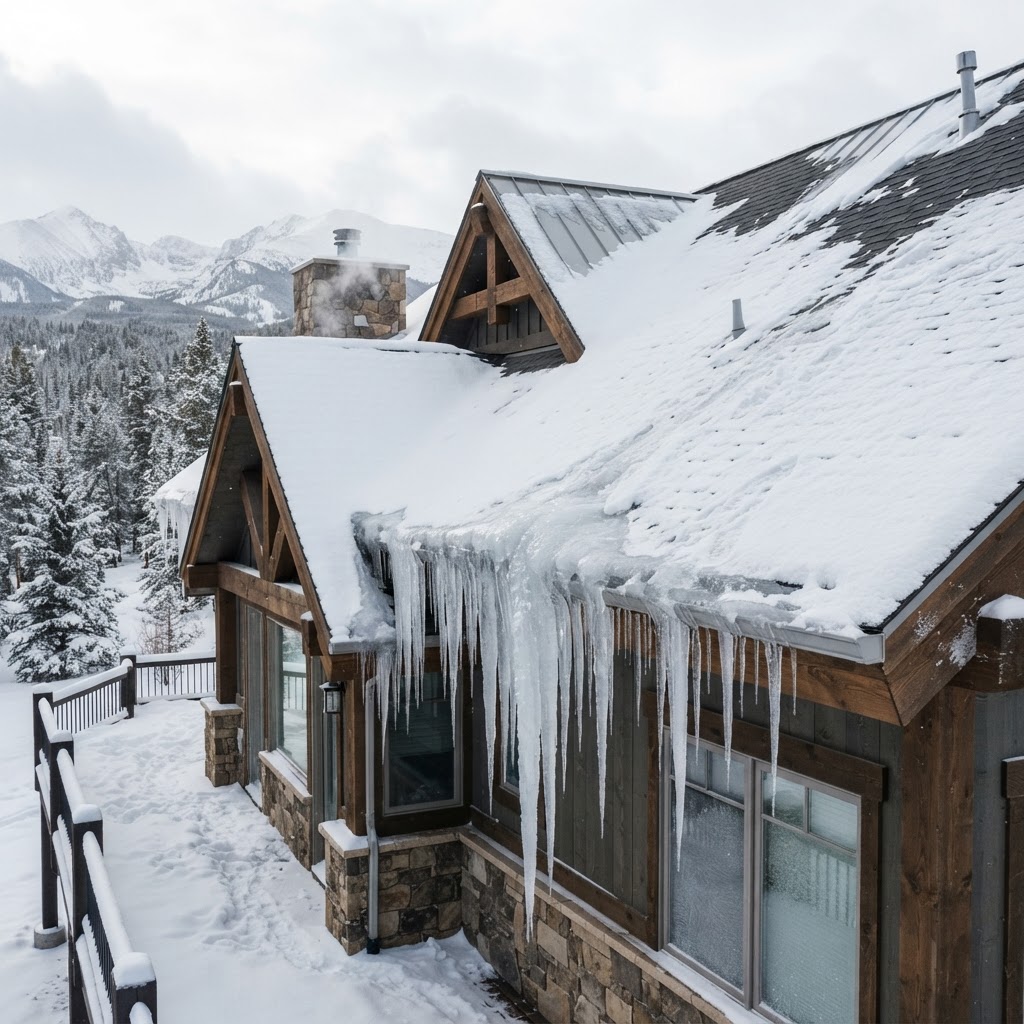
Ice dams form through a cycle driven by uneven roof temperature. It starts when heat escapes from the living space into the attic and warms the roof deck. This warmth melts the snow on the upper part of the roof. The meltwater then runs down the roof until it reaches the eaves and overhangs, which are colder because they extend beyond the heated part of the house. At the cold eaves, the water refreeses, forming a ridge or dam of ice.
The damage ice dams cause
Ice dams can cause significant damage. The water that backs up behind the dam and works under the shingles can leak into the attic and down into the living space, damaging insulation, ceilings, walls, and belongings. The moisture can cause the rot and mold that come with any water intrusion.
The role of insulation, ventilation, and air sealing
- Insulation: Reduces the heat escaping from the living space into the attic.
- Ventilation: Flows cold outdoor air through the attic to keep the roof deck close to outdoor temperature.
- Air sealing: Prevents warm, moist air from leaking into the attic through gaps and penetrations.
Ice dam formed at the eave of a Colorado roof, trapping water behind ridged ice.
Frequently Asked Questions
- Licensed & insured — documentation available on request
- Free, documented roof inspections
- Real emergency service available
- 5-year workmanship warranty (manufacturer warranties vary by product)
- 30 years of construction experience
- Serving Denver, Adams, Arapahoe, Douglas, Jefferson, and El Paso counties
Promise Keepers Restoration
9615 E. County Line Rd, Ste. B-477, Centennial, CO 80112
Hours: Mon–Sat 8:00 AM–5:00 PM