Written by Peter Regalado, Operations Manager · Reviewed by Mason Pastorello, Managing Director · Last reviewed: November 2026
Attic moisture is one of the most common reasons a ceiling or roof deck looks like it is leaking when the roof itself is sound. Warm, moist air rises into the attic, meets a cold surface, and condenses — and the result can look a lot like a roof leak. This guide explains what causes attic moisture and condensation, the problems it causes, how to tell condensation from a roof leak, and how to prevent it.
What causes attic moisture and condensation
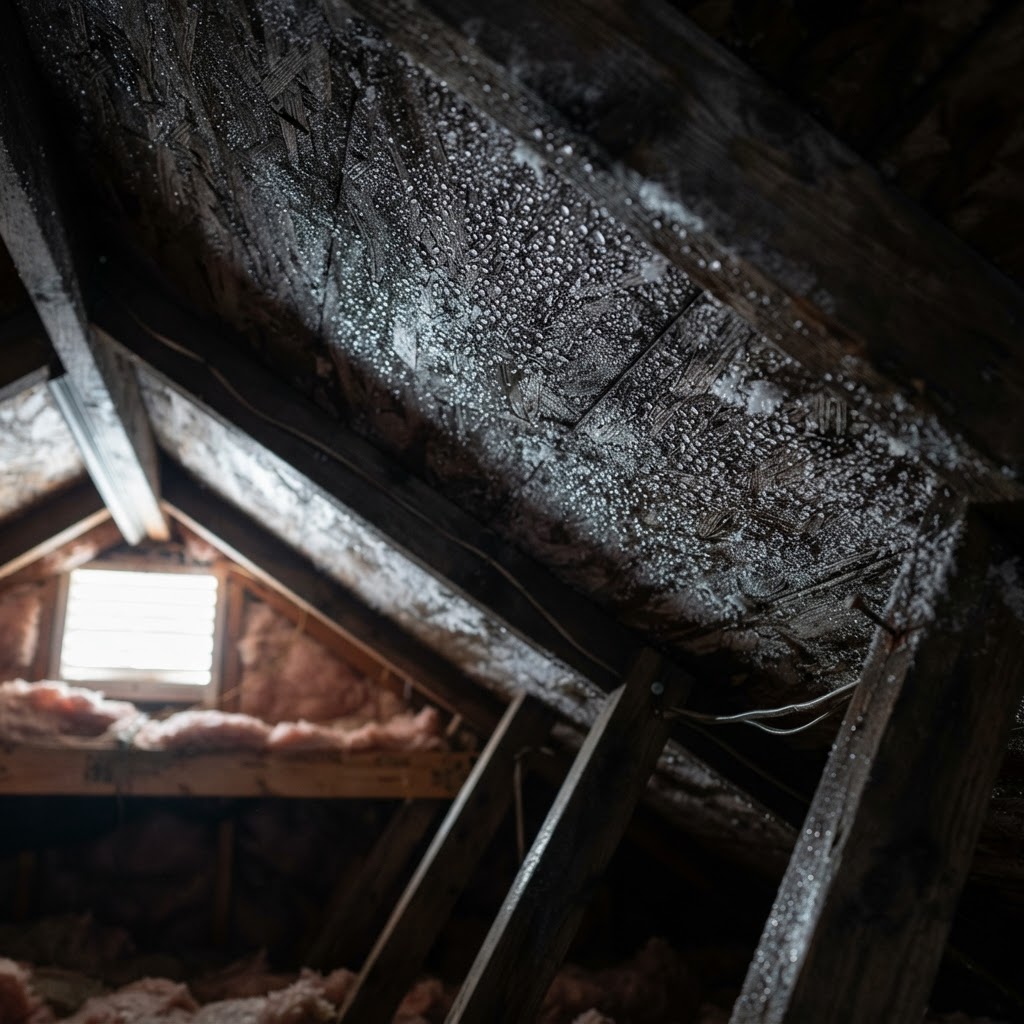
Warm air holds more moisture than cold air. Everyday activities — cooking, showering, laundry, even breathing — add moisture to the air inside your home, and that warm, moist air rises. When it reaches the cold underside of the roof deck or another cold attic surface, especially in winter, the moisture condenses into water droplets or frost. Poor ventilation, air leaks between the house and attic, and inadequate insulation all make the problem worse.
Condensation vs. a roof leak: how to tell the difference
Both can leave stains or dampness, but they behave differently:
- Pattern. A roof leak is usually localized — water and staining concentrated around a specific point, often following a path. Condensation tends to be more general, with dampness, frost, or moisture spread across attic surfaces.
- Timing and weather. A roof leak is tied to rain or snowmelt. Condensation is tied to cold weather and indoor humidity, and can appear even when it has not rained.
- Frost. Frost in the attic is a strong sign of condensation, not a leak; a leak produces liquid water.
- Both can happen. A roof can have a small leak and a condensation problem at the same time, which is one reason an on-roof inspection matters.
Why attic moisture is a problem
Attic moisture may look minor, but over time it can:
- Rot wood — weakening decking and framing.
- Grow mold — affecting structural integrity and indoor air quality.
- Damage insulation — reducing thermal performance.
- Deteriorate the roof system — shortening the roof's life.
How to prevent attic condensation
Prevention comes down to three pillars working together:
| Strategy | What it does |
|---|---|
| Ventilation | Carries moist air out of the attic. |
| Air sealing | Stops warm, moist indoor air from escaping into the attic. |
| Insulation | Maintains temperature differentials without blocking intake vents. |
When to get it assessed
If you see frost, damp sheathing, staining, or mold in the attic, get it looked at before the next season. An inspection can confirm whether the source is condensation, a roof leak, or both, and tell you whether the fix is ventilation and air sealing, a roof repair, or a combination.
Condensation and frost on the underside of a roof deck from attic moisture.
Frequently Asked Questions
- Licensed & insured — documentation available on request
- Free, documented roof inspections
- Real emergency service available
- 5-year workmanship warranty (manufacturer warranties vary by product)
- 30 years of construction experience
- Serving Denver, Adams, Arapahoe, Douglas, Jefferson, and El Paso counties
Promise Keepers Restoration
9615 E. County Line Rd, Ste. B-477, Centennial, CO 80112
Hours: Mon–Sat 8:00 AM–5:00 PM