Written by Peter Regalado, Operations Manager · Reviewed by Mason Pastorello, Managing Director · Last reviewed: July 2026
Roof ventilation is the system of intake and exhaust vents that allows air to flow through your attic, regulating temperature and moisture, and it's one of the most overlooked yet important parts of a healthy roof. Proper ventilation extends roof life, reduces energy costs, prevents moisture problems, and helps avoid ice dams, while poor ventilation can shorten roof life and cause a range of problems. This article explains how roof ventilation works, why it matters, what proper ventilation looks like, and the problems that inadequate ventilation causes, so you understand this essential but often ignored part of your roof system.
How roof ventilation works
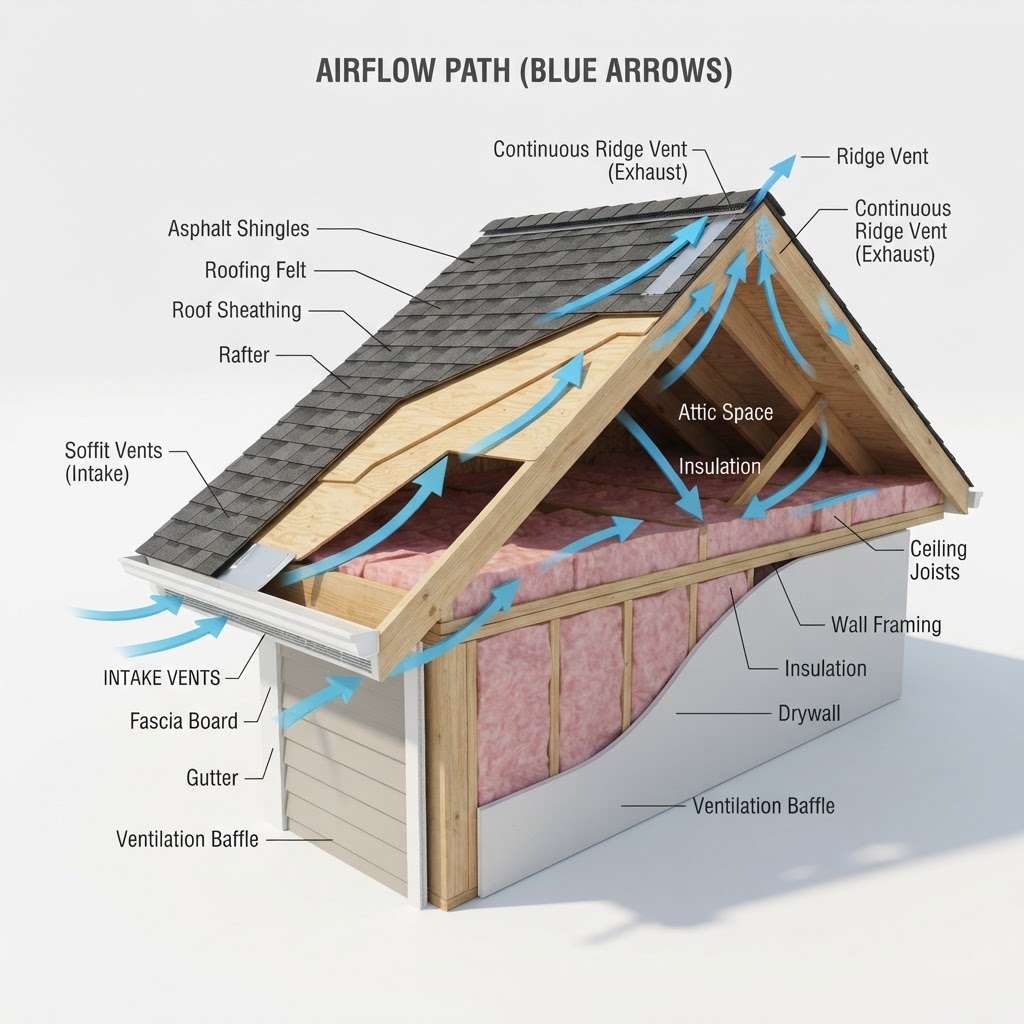
Roof ventilation works on a simple principle: air enters through intake vents, typically low on the roof at the eaves or soffits, and exits through exhaust vents, typically high on the roof at or near the ridge. This creates a continuous flow of air through the attic space. As air enters low and exits high, it carries away heat and moisture that would otherwise build up in the attic. The system relies on both intake and exhaust working together — intake without exhaust, or exhaust without intake, doesn't create proper flow.
Why ventilation matters for roof life
One of the main reasons ventilation matters is roof longevity. Without proper ventilation, heat builds up in the attic, especially under Colorado's intense sun, reaching high temperatures. This trapped heat ages the roof from beneath, baking the shingles and their underside, accelerating their deterioration.
Why ventilation matters for energy and comfort
Ventilation also affects energy costs and comfort. In summer, a poorly ventilated attic traps heat, which radiates into the living space below, making the home harder and more expensive to cool. In winter, proper ventilation helps prevent the warm, moist conditions that lead to condensation and ice dams.
Ventilation and moisture problems
A critical function of ventilation is managing moisture. Everyday activities in a home generate moisture that rises into the attic, and without proper ventilation, that moisture becomes trapped. Trapped moisture leads to condensation on the underside of the roof deck and structure, which over time causes wood rot, mold, and deterioration.
Ventilation and ice dams
Ventilation plays a key role in preventing ice dams, which are a real Colorado concern. Ice dams form when heat escaping into the attic warms the roof, melting snow, which then refreezes at the colder eaves, forming a dam of ice that can force water under the shingles.
What proper ventilation looks like
Proper roof ventilation has a few characteristics:
- It's balanced: with adequate intake and exhaust working together.
- It's sized appropriately: following established guidelines for the attic space.
- It uses appropriate vent types: such as soffit and ridge vents.
- It's free of blockages: intake vents are clear of insulation.
Signs of ventilation problems
- Excessive attic heat in summer.
- Moisture, condensation, or frost in the attic.
- Mold or musty odors.
- Deteriorating or rotting roof decking.
- Ice dams forming in winter.
- Higher-than-expected cooling costs.
The connection between ventilation and your roof warranty
Proper ventilation can relate to your roofing warranty. Some shingle manufacturers specify ventilation requirements as a condition of their material warranties. If a roof lacks the ventilation the manufacturer requires, it could potentially affect warranty coverage.
Diagram of roof ventilation airflow from soffit intake to ridge exhaust.
Frequently Asked Questions
- Licensed & insured — documentation available on request
- Free, documented roof inspections
- Real emergency service available
- 5-year workmanship warranty (manufacturer warranties vary by product)
- 30 years of construction experience
- Serving Denver, Adams, Arapahoe, Douglas, Jefferson, and El Paso counties
Promise Keepers Restoration
9615 E. County Line Rd, Ste. B-477, Centennial, CO 80112
Hours: Mon–Sat 8:00 AM–5:00 PM