Written by Peter Regalado, Operations Manager · Reviewed by Mason Pastorello, Managing Director · Last reviewed: July 2026
Signs of a roof ventilation problem include excessive attic heat, attic moisture or condensation, frost in the attic in winter, a musty attic, mold or mildew, higher energy bills, ice dams in winter, and premature roof aging — and recognizing these signs helps you catch and address ventilation problems that can harm your roof and attic. Because proper ventilation is important to a healthy attic and roof, knowing the warning signs of a ventilation problem lets you address it before it causes lasting damage. This article explains the signs and symptoms of roof ventilation problems, what they mean, and why addressing them matters, so you can recognize a ventilation issue in your own home.
Why ventilation problems matter
Before the signs, it helps to understand why ventilation problems matter. Proper roof and attic ventilation allows air to flow through the attic, managing heat and moisture. When ventilation is inadequate or not working properly, heat and moisture build up in the attic, and this causes problems — it can damage the roof from the inside, contribute to attic moisture and mold, raise energy costs, shorten roof life, and contribute to ice dams.
Sign: excessive attic heat
One sign of a ventilation problem is excessive attic heat. A properly ventilated attic allows hot air to escape, but when ventilation is inadequate, heat builds up, making the attic excessively hot, particularly in summer.
Sign: attic moisture or condensation
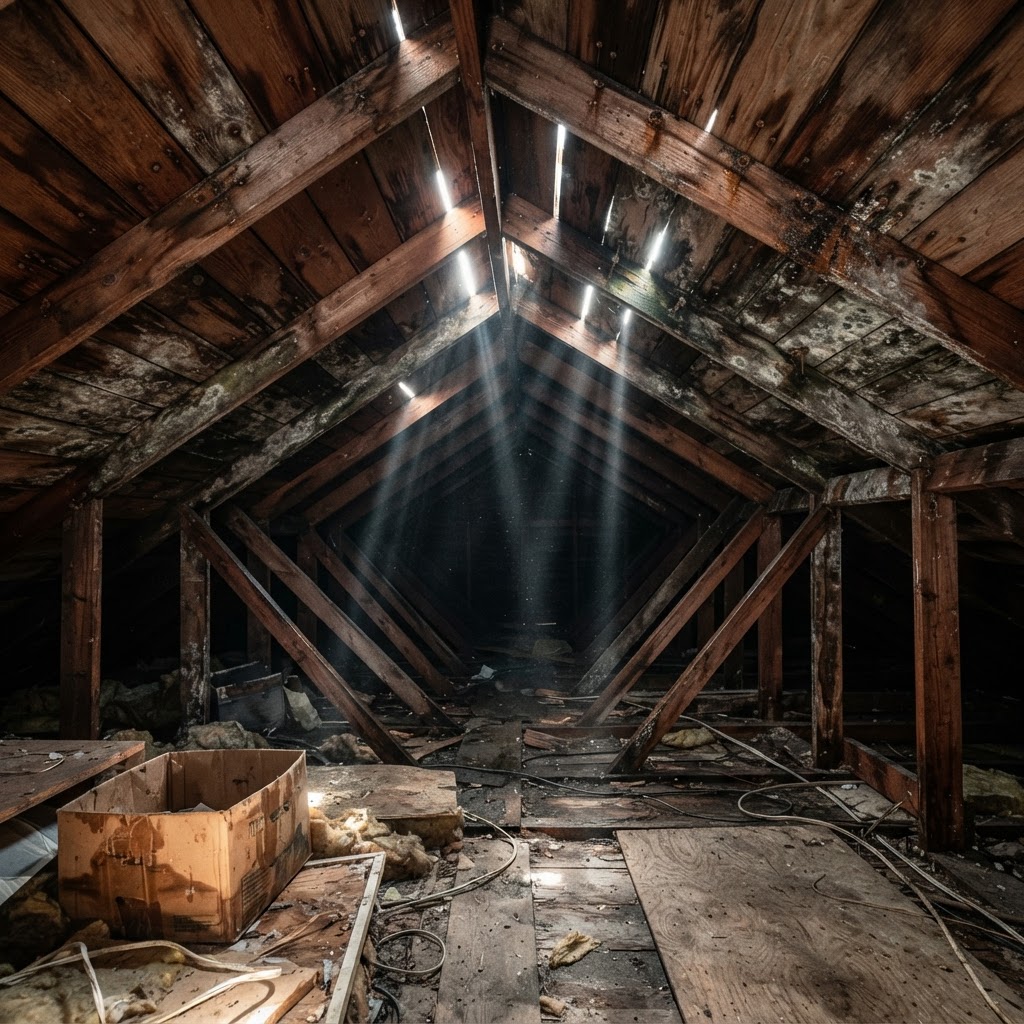
A significant sign of a ventilation problem is attic moisture or condensation. Proper ventilation helps manage moisture in the attic, carrying it away, but when ventilation is inadequate, moisture can build up and condense in the attic.
Sign: frost in the attic in winter
A winter-specific sign of a ventilation problem is frost in the attic. In cold weather, if moist air is trapped in an inadequately ventilated attic, that moisture can freeze, forming frost on the underside of the roof or attic surfaces.
Sign: a musty attic, mold, or mildew
A sign of a ventilation problem that engages multiple senses is a musty attic or visible mold or mildew. When inadequate ventilation allows moisture to build up in the attic, it creates conditions for mold and mildew, which produce a musty smell and visible growth.
Sign: higher energy bills
A sign of a ventilation problem that shows up in your wallet is higher energy bills. Inadequate ventilation allowing heat to build up in the attic can raise cooling costs, as the trapped attic heat affects your home and cooling load.
Sign: ice dams in winter
Ice dams in winter can be a sign related to ventilation. Ice dams form when heat warms the roof, melting snow that then refreezes at the eaves, and inadequate ventilation, along with insulation issues, contributes to the roof warming that drives ice dam formation.
Sign: premature roof aging
A longer-term sign of a ventilation problem is premature roof aging. Inadequate ventilation allowing excessive heat and moisture in the attic can age the roof faster from the inside, potentially shortening its life.
An attic showing signs of a ventilation problem such as moisture on the underside of the roof deck.
Frequently Asked Questions
- Licensed & insured — documentation available on request
- Free, documented roof inspections
- Real emergency service available
- 5-year workmanship warranty (manufacturer warranties vary by product)
- 30 years of construction experience
- Serving Denver, Adams, Arapahoe, Douglas, Jefferson, and El Paso counties
Promise Keepers Restoration
9615 E. County Line Rd, Ste. B-477, Centennial, CO 80112
Hours: Mon–Sat 8:00 AM–5:00 PM