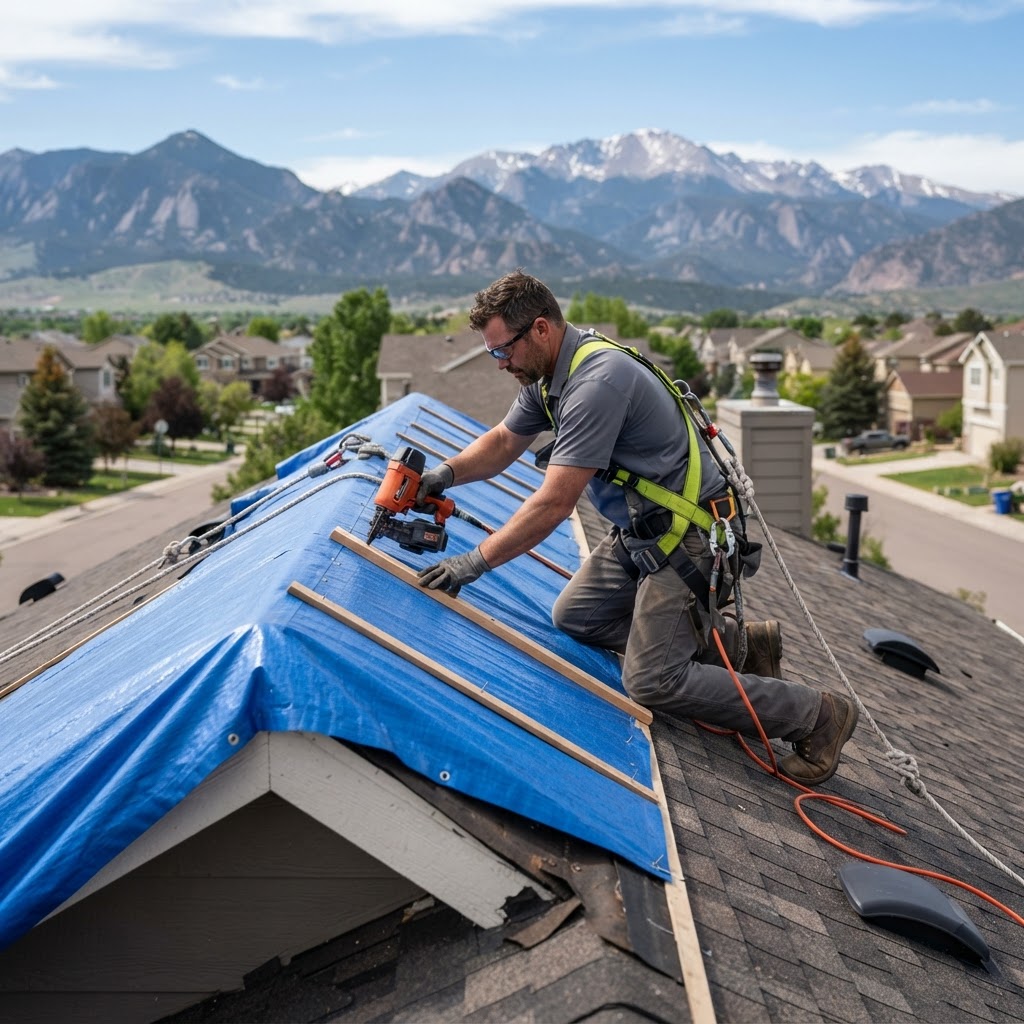
When a storm opens up your roof, the clock starts. Every hour that water gets inside means more damage to insulation, drywall, framing, and belongings — and the cost climbs the longer it goes. Emergency roof tarping is the fast, temporary fix that stops the bleeding: a properly installed tarp that keeps water out until a permanent repair or replacement can be scheduled and, if a claim is involved, the damage properly documented.
We provide emergency tarping for homeowners across the Denver metro, Douglas County, the foothills, and the Colorado Springs area. If you have water coming in or an exposed section of roof, the first priority is protecting your home — call 720-650-1116.
When you need emergency tarping
Tarping is the right call when the roof can't wait for a scheduled repair. Common situations:
- Active water intrusion — water dripping or running into the home during or after a storm.
- Missing or torn-open shingles exposing the underlayment or decking to the next rain or snow.
- Wind-torn roof sections where a portion of the roofing has lifted or blown away.
- Tree limbs or debris that have punctured or crushed part of the roof.
- Hail-shattered areas on older, brittle roofs where the surface has failed outright.
If you're not sure whether your situation qualifies, call and describe it. Some damage genuinely needs same-day protection; some can safely wait a day or two for a scheduled inspection. We'll tell you honestly which one you're dealing with rather than rushing out for something that doesn't need it.
What emergency tarping actually does — and doesn't
A tarp is a temporary measure, and it's important to understand it as one. Done right, a tarp is securely fastened over the damaged area, overlapped and anchored so wind and water can't get under it, and positioned to shed water rather than pool it. That buys you time — often days or weeks — to arrange the permanent fix without further interior damage.
What a tarp is not is a repair. It doesn't restore the roof, it isn't a long-term solution, and a tarp left up for months will eventually degrade in Colorado's sun and wind. The point is to stabilize the situation so the real work — repair or replacement — can be done properly, and so an insurance claim (if there is one) can be documented before the evidence is disturbed.
Why fast protection saves money
Water damage compounds. A roof leak that's tarped within hours might mean a modest repair. The same leak left open through a few more storms can soak insulation (which then has to be replaced), stain and collapse drywall, warp framing, delaminate roof decking, and create conditions for mold. What started as a roofing problem becomes a roofing and interior restoration problem — often several times the cost.
Prompt tarping also matters for insurance. Most homeowners policies expect you to take reasonable steps to prevent further damage after a covered loss. Tarping is exactly that kind of step. (Every policy differs — confirm your own carrier's expectations — but mitigating further damage is generally in your interest.)
What to do in the first hour after you find roof damage
If you've just discovered water coming in or storm damage to your roof, a calm sequence in the first hour limits the damage and sets you up for whatever comes next:
- Contain the water inside. Move furniture, electronics, and valuables away from the leak, and put down buckets, bins, or towels to catch it. Cover what you can't move with plastic sheeting.
- Relieve trapped water safely. If a section of ceiling is bulging and holding water, place a bucket underneath and pierce the low point with a small hole to let it drain in a controlled way. A sagging ceiling can hold a lot of water and fail suddenly, so this actually reduces damage.
- Shut off electricity to affected areas. If water is near light fixtures, outlets, or the panel, turn off power to those areas at the breaker and stay away from anything wet and energized.
- Document everything. Take clear photos and video of the damage inside — and any exterior damage you can see safely from the ground — before anything is moved or covered. Dated documentation helps if you file a claim.
- Make the calls. Call us at 720-650-1116 to arrange emergency tarping, and if you plan to file, report the loss to your insurer. Keep receipts for anything you buy to mitigate damage.
- Stay off the roof. Everything on this list can be done from inside or from the ground. The roof itself waits for professionals.
Handled in this order, the first hour protects your home, your safety, and your claim all at once — and then the tarp takes over until the permanent repair.
How our emergency tarping works
When you call with an emergency, here's what happens. We get the details of your situation and prioritize based on severity. We come out and install a secure, properly anchored tarp over the damaged area to stop water intrusion. We document the damage with photos — which protects you if an insurance claim follows, since the tarp will cover the evidence. Then we schedule the permanent repair or replacement and, if a claim is involved, provide our inspection findings and scope to support it.
The tarp stabilizes things; the follow-up fixes them. We handle both, so you're not juggling one company for the emergency and another for the real work.
Safety first — please don't DIY a storm-damaged roof
We understand the instinct to get up there and throw a tarp on yourself, especially in the middle of a storm. Please don't. Wet, damaged roofs are extremely dangerous, and storm conditions — wind, lightning, hail — make it worse. Every year people are seriously injured falling from roofs they were trying to protect. From the ground, you can do the things that actually help: move belongings out of the way, put down buckets, relieve a bulging ceiling over a bucket, photograph the damage, and call for professional help. Leave the roof itself to a crew with the equipment and training to be up there safely.
Colorado's storm reality and emergency response
The Front Range sees frequent hail and strong wind, which means emergencies cluster right after big storms — sometimes hundreds of damaged roofs across the metro in a single afternoon. That's worth knowing for two reasons. First, calling promptly gets you in the queue before demand spikes. Second, big storms also draw out-of-state operators who show up offering fast "emergency" work and disappear afterward. Working with an established, licensed, insured local company means the crew that tarps your roof is the same one that will still be here to complete the permanent repair and stand behind it.
Emergency mistakes that make damage worse
- Climbing onto a wet or storm-damaged roof yourself — the most dangerous and least helpful response.
- Waiting to see if the leak "gets worse" — by then it usually has, and inside your home.
- Letting an unvetted door-knocker tarp your roof in the chaos after a storm without checking who they are.
- Removing or disturbing damage before it's documented, which can complicate an insurance claim.
- Treating the tarp as the finish line — it's temporary protection, not a repair.
After the tarp: the permanent fix
Once your home is protected, we move to the actual solution. That starts with a full roof inspection to assess the complete extent of the damage, followed by a repair or replacement depending on what we find. If the damage stems from a storm and a claim is warranted, our insurance restoration process provides the documentation and scope your insurer needs. All permanent work is backed by our 5-year workmanship warranty.
Securely anchored emergency tarp installed over storm damage on a Colorado roof
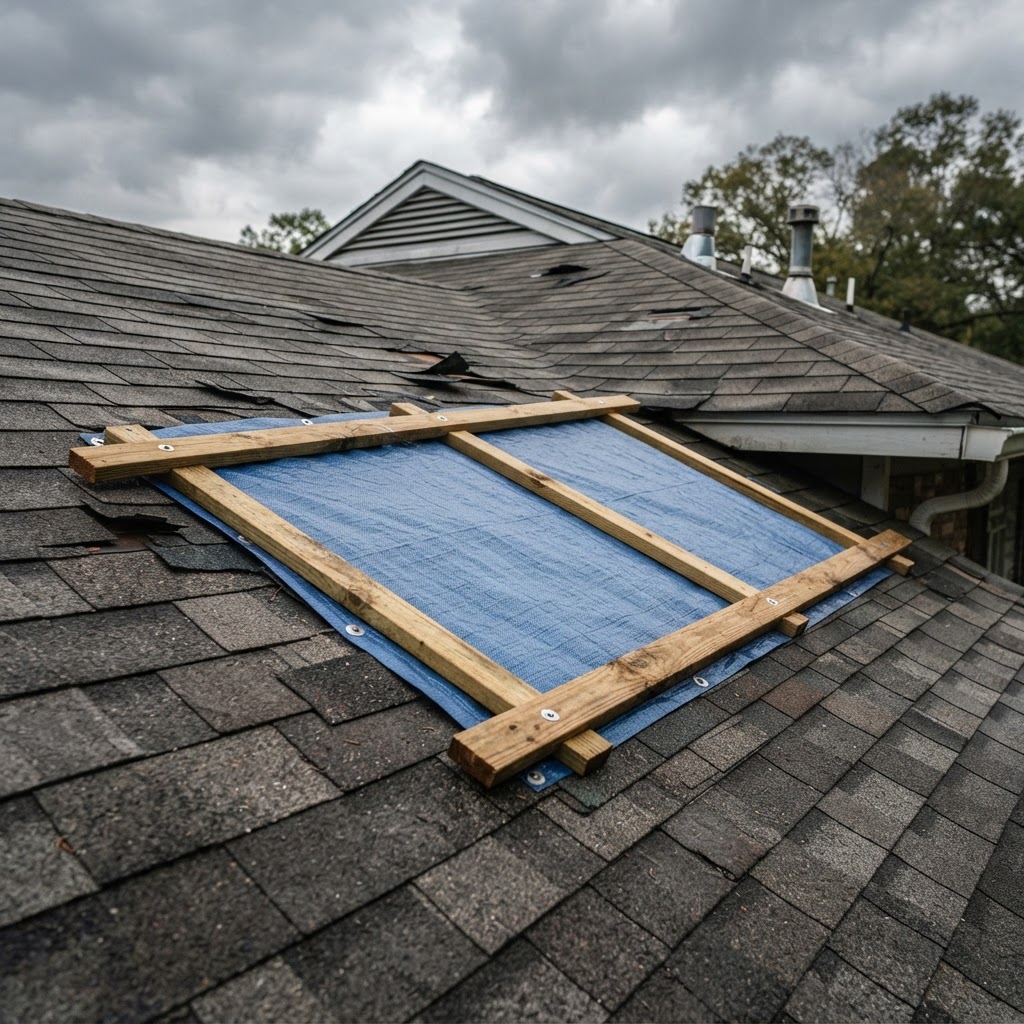
Temporary roof tarp protecting a home's interior after wind damage.
Frequently Asked Questions
Related Pages
Written by Peter Regalado, Operations Manager · Reviewed by Mason Pastorello, Managing Director · Last reviewed: July 2026
- Licensed & insured — documentation available on request
- Free, documented roof inspections
- Real emergency service available
- 5-year workmanship warranty (manufacturer warranties vary by product)
- 30 years of construction experience
- Serving Denver, Adams, Arapahoe, Douglas, Jefferson, and El Paso counties
Promise Keepers Restoration
9615 E. County Line Rd, Ste. B-477, Centennial, CO 80112
Hours: Mon–Sat 8:00 AM–5:00 PM