Written by Peter Regalado, Operations Manager · Reviewed by Mason Pastorello, Managing Director · Last reviewed: July 2026
You can spot possible hail damage from the ground by checking a few telltale signs after a storm: granules collecting in gutters and downspouts like coarse black sand, dents on soft metals such as vents, gutters, and downspouts, dents on other outdoor items like your AC unit and mailbox, and shingle pieces or unusual wear visible from below. But the most serious hail damage often isn't visible from the ground, which is why these signs are reasons to schedule a professional inspection, not a substitute for one. This article walks you through what you can safely check yourself, what those signs mean, and when to call for a real on-roof inspection. Importantly, everything here can be done from the ground — you should never climb onto a roof to check for hail damage yourself.
Why hail damage is hard to see
The reason hail damage is tricky is that it usually doesn't look dramatic. Hail rarely punches holes in a roof. Instead, it bruises shingles — fracturing the mat beneath the surface — and knocks away the protective granules that shield the asphalt from the sun. From the ground, a bruised shingle can look completely normal, and even up close the damage can be subtle. This is why a roof can pass a glance from the driveway and still have real functional damage that will shorten its life.
What you can safely check from the ground
Here's what to look for after a hailstorm, all from ground level:
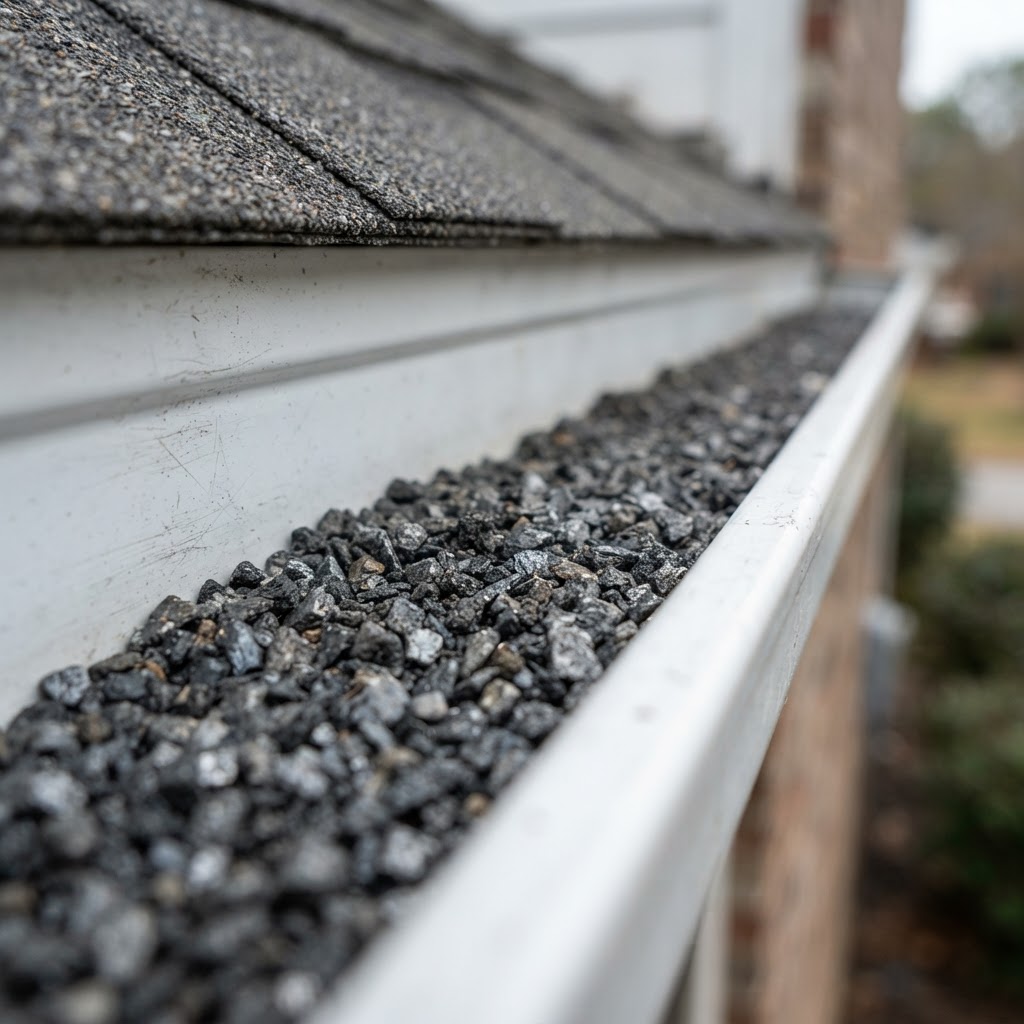
- Granules in gutters and downspouts. After a hailstorm, check your gutters and the ground at your downspout outlets for a buildup of granules that look like coarse black sand.
- Dents on soft metals. Look at metal surfaces you can see safely from the ground — your gutters, downspouts, and any visible vents or flashing.
- Dents on other outdoor items. Check your air conditioner's fins, your mailbox, garage door, downspouts, and any metal patio furniture for fresh dents.
- Shingle debris or displacement. Walk your yard for shingle pieces, and look up at the roofline from several angles for shingles that appear cracked, displaced, or unusually worn.
- Interior signs. Inside your home, check ceilings and, if accessible, your attic for new water stains.
Why you shouldn't get on the roof yourself
We can't stress this enough: do not climb onto your roof to check for hail damage. It's dangerous, and a recently stormed roof may be wet or damaged. Walking on shingles, especially in Colorado's UV-aged, brittle condition, can cause damage that wasn't there before.
When to call for a professional inspection
Schedule a free professional inspection when you've had a significant hailstorm and see any of the ground-level signs above — or any time your area takes notable hail even if you don't see obvious signs. A professional inspection is the only way to confirm whether your roof has functional hail damage, how extensive it is, and whether it warrants a repair or replacement.
Roofing granules collected in a gutter after a hailstorm, a ground-level sign of hail damage.
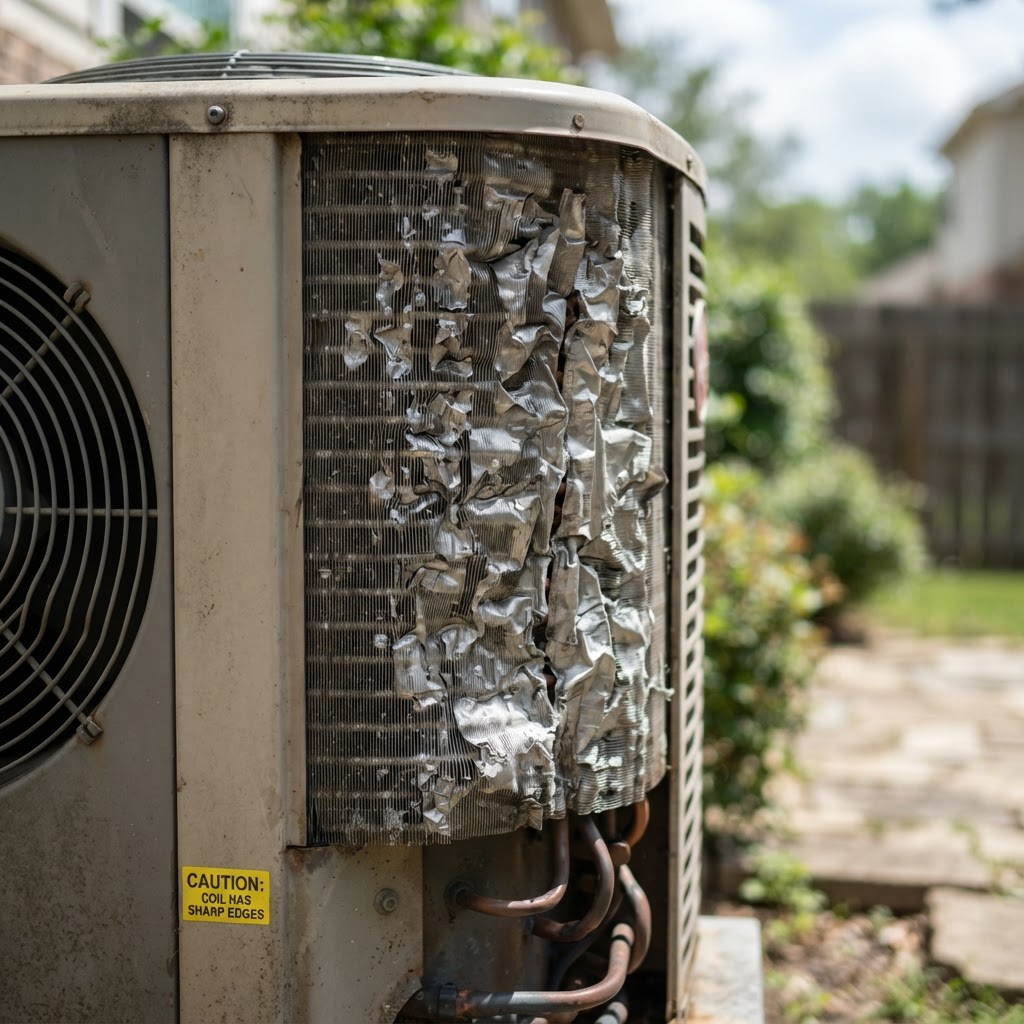
Dented AC fins indicating potential hail impact.
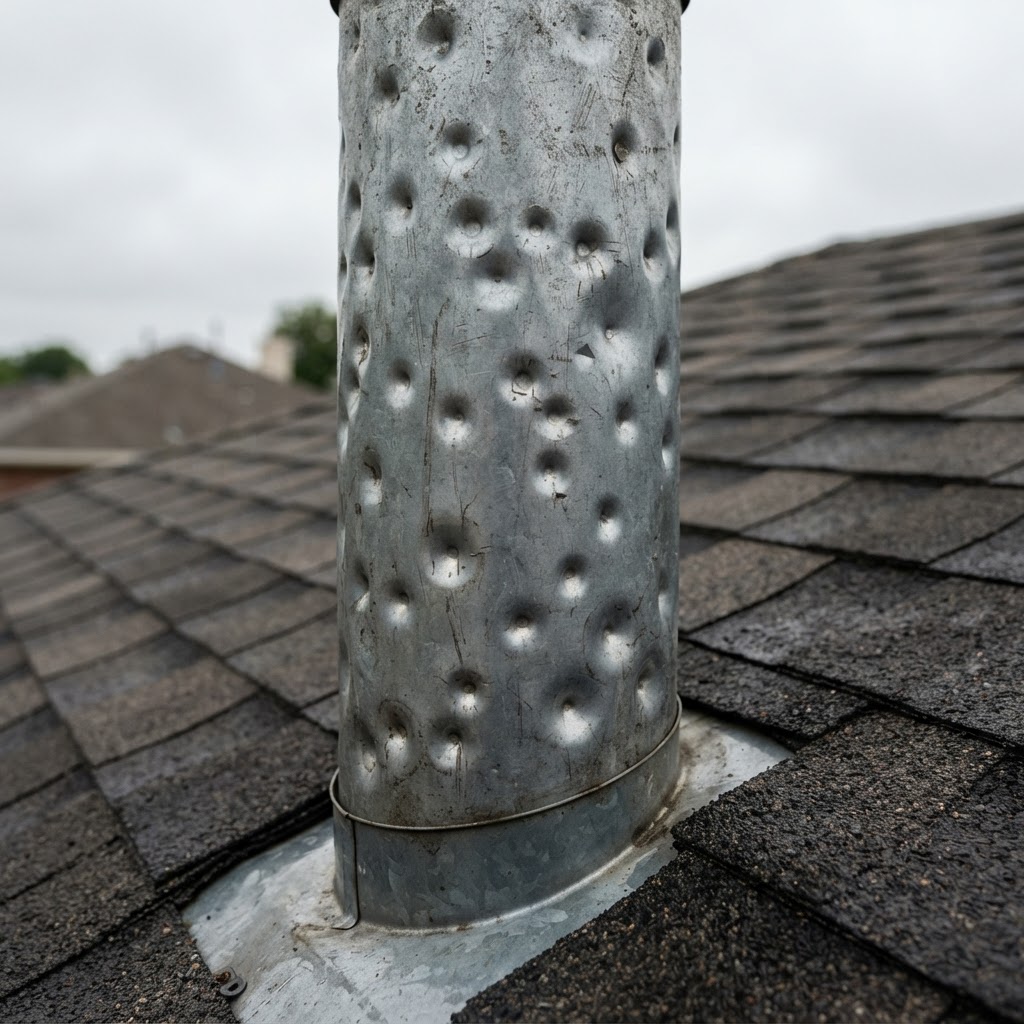
Dented metal vent cap showing signs of hail.
Frequently Asked Questions
- Licensed & insured — documentation available on request
- Free, documented roof inspections
- Real emergency service available
- 5-year workmanship warranty (manufacturer warranties vary by product)
- 30 years of construction experience
- Serving Denver, Adams, Arapahoe, Douglas, Jefferson, and El Paso counties
Promise Keepers Restoration
9615 E. County Line Rd, Ste. B-477, Centennial, CO 80112
Hours: Mon–Sat 8:00 AM–5:00 PM