Written by Peter Regalado, Operations Manager · Reviewed by Mason Pastorello, Managing Director · Last reviewed: July 2026
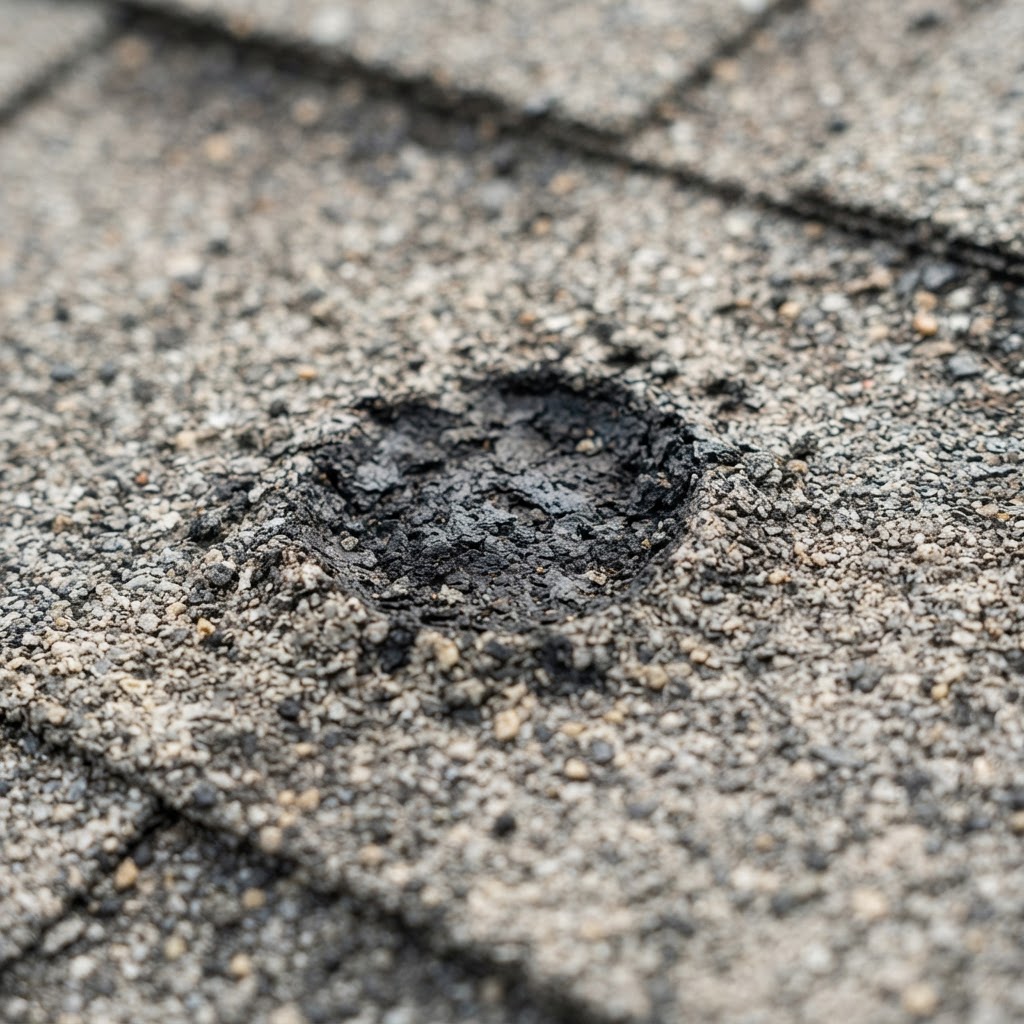
Hail damage on asphalt shingles looks like round, dark, bruised spots where granules have been knocked away, exposing the black asphalt underneath — often with a soft, dented feel and sometimes a fractured mat you can detect by touch. It usually appears as random, scattered impacts rather than a uniform pattern, and is frequently accompanied by dents on nearby soft metals like vents and gutters. Unlike wind damage, which lifts and creases shingles, hail damage is about impact marks and granule loss on the shingle surface. This article is a visual field guide to what hail damage actually looks like on shingles, so you can understand what an inspector is looking for — though confirming it still requires an on-roof inspection, which you should never attempt yourself.
The signature look of hail damage
When hail strikes an asphalt shingle, it leaves a distinctive mark. The classic appearance is a roughly circular impact spot where the granules — the sandy protective surface — have been knocked loose, revealing the darker asphalt or mat beneath. These spots are often described as bruises, and for good reason: like a bruise on skin, the damage includes something beneath the surface — the impact can fracture the fiberglass mat that gives the shingle its structure. A hail bruise typically has a soft, dented quality if you press it, and the granule loss gives it a darker, discolored appearance against the surrounding shingle. The impacts are usually random and scattered across the roof, reflecting how hail falls, rather than forming neat rows or a uniform pattern.
Granule loss: the key visual sign
The most visible sign of hail damage is granule loss. Shingle granules serve as the roof's sunscreen, protecting the asphalt from UV, so when hail knocks them away, it both signals impact and creates a spot that will age faster. On the roof, this looks like patches or spots where the surface color is broken by darker areas of exposed asphalt. In the gutters and at downspout outlets, it shows up as an accumulation of the granules themselves, resembling coarse black sand. A roof with significant hail damage often has both visible bruise spots on the shingles and a corresponding buildup of lost granules below. This granule loss isn't just cosmetic — the exposed asphalt degrades faster under Colorado's intense UV, which is how a hail bruise becomes a future leak.
What hail damage looks like versus normal wear
One reason a trained eye matters is that hail damage has to be distinguished from other things that affect shingles. Normal aging causes gradual, even granule loss across the whole roof rather than distinct, scattered impact spots. Blistering appears as small raised bumps or pockmarks from trapped moisture or manufacturing, which can superficially resemble hail but has a different pattern and cause. Manufacturing defects and general weathering have their own appearances. The hallmark of true hail damage is the combination of random, scattered, circular impacts with granule loss and often a detectable soft spot or mat fracture, together with corroborating dents on soft metals. An inspector reads these features together to confirm hail rather than relying on any single sign.
What hail does to different roofing materials
While asphalt shingles are the most common and show hail damage as bruising and granule loss, it's worth noting hail affects other materials differently. On metal roofs and metal accessories, hail leaves dents, which are often cosmetic rather than functional. On older or more brittle shingles, hail is more likely to actually crack or shatter the shingle rather than just bruise it, since aged shingles have lost flexibility. On soft metals throughout the roof — vents, gutters, downspouts, and flashing — hail leaves the telltale dents that inspectors check first, because they confirm the storm was forceful enough to damage shingles. Understanding that hail shows up differently on different surfaces is part of reading a roof accurately.
Why soft metals matter for identification
Experienced inspectors often look at soft metals before the shingles, and understanding why helps you understand hail identification. Soft metals — vents, gutters, downspouts, and flashing — dent visibly when hail hits them, while shingle bruising can be subtle. So dents on soft metals serve as confirmation that the roof was struck hard enough to potentially bruise shingles. If the soft metals show clear hail dents, an inspector knows to look carefully for corresponding shingle damage. If the soft metals are pristine, significant shingle hail damage is less likely. This is why the presence and pattern of soft-metal dents is a key part of what an inspector reads alongside the shingle surface itself.
Why you can't reliably identify it from the ground or yourself
Even with this field guide, identifying hail damage reliably requires being on the roof, which is a job for a professional, not a homeowner. From the ground, bruises and granule loss are usually invisible — you might see dented gutters or shingle debris, but not the actual impact marks on the shingle field. And getting on the roof yourself is both dangerous and counterproductive: you could miss real damage, misread normal wear, or even cause damage by walking on brittle shingles. Identifying hail damage accurately combines visual assessment, touch, and experience distinguishing it from look-alikes, which is exactly what a trained inspector provides. This field guide helps you understand what's being looked for; it doesn't replace the trained on-roof assessment.
How inspectors document hail damage
Understanding how a professional documents hail damage helps you know what a thorough inspection looks like and what you should receive. On the roof, an inspector typically examines the field of each slope, looking for the scattered bruise pattern and marking or noting impact locations. They often use a test area — sometimes chalking a section to count impacts within a defined area, which helps establish the density and extent of damage. They photograph representative impacts close up, showing the granule loss and any mat fracture. They document the soft-metal dents that corroborate the shingle damage. And they note the direction and pattern of impacts, which can indicate the storm's characteristics. This documentation matters for two reasons: it gives you a clear, evidence-based picture of your roof's condition, and if a claim is involved, it provides the factual record your insurer needs to evaluate the damage. When you get an inspection, you should expect to see this documentation, not just hear a verdict — a trustworthy inspector shows you the evidence.
The difference between fresh and old hail damage
One thing inspectors assess is whether hail damage is recent or older, which matters for both roof condition and insurance. Fresh hail damage tends to have a certain appearance: the exposed asphalt at impact points is darker and cleaner, and the mat fracture is recent. Older hail damage weathers over time — the exposed spots collect dirt and further degrade, and surrounding granules may continue to loosen. This distinction matters because insurance claims are generally tied to a specific storm event, so an insurer wants damage consistent with a recent covered storm. It also matters for understanding your roof's history: a roof may show damage from a previous storm that was never addressed. An experienced inspector considers the age and condition of the damage as part of the assessment, which is another reason accurate professional identification beats a homeowner's ground-level guess.
Why accurate identification matters
Correctly identifying hail damage matters for real reasons. It determines whether your roof needs action — functional hail damage shortens a roof's life, while cosmetic marks may not require anything. It affects insurance — an accurate, documented identification of hail damage supports a legitimate claim, while misidentification helps no one. And it protects you from both directions: from missing real damage that will cause problems later, and from being told you have damage you don't by someone looking to sell a roof. This is why identification should be done by a trained inspector who documents what they find with photos, so you can see the evidence yourself.
What to do if you think you see hail damage
If you believe you're seeing signs of hail damage — whether granules in the gutter, dented metals, or what look like impact marks visible from below — the right response is straightforward: schedule a free professional inspection. Don't try to confirm it by getting on the roof, and don't assume the worst or dismiss it based on what you can see from the ground. A professional inspection will confirm whether the marks are actually hail damage, assess how extensive and how functional it is, document it properly, and tell you whether it warrants a repair, a replacement, or no action. And if you're dealing with a possible insurance claim, the professional documentation is what supports it, far better than a homeowner's photos from the yard.
Key Takeaways: What Hail Damage Looks Like on Shingles
Hail damage on shingles looks like random, scattered, circular bruises where granules are knocked away, exposing darker asphalt, often with a soft, dented feel. Granule loss — both on the shingles and accumulating in gutters — is the key visible sign. Hail damage must be distinguished from normal wear, blistering, and manufacturing defects, which is where a trained eye matters. Soft-metal dents help confirm the roof was struck hard enough to damage shingles. Reliable identification requires an on-roof inspection by a professional; never attempt it yourself.
Close-up of a hail bruise on an asphalt shingle with granules knocked away.
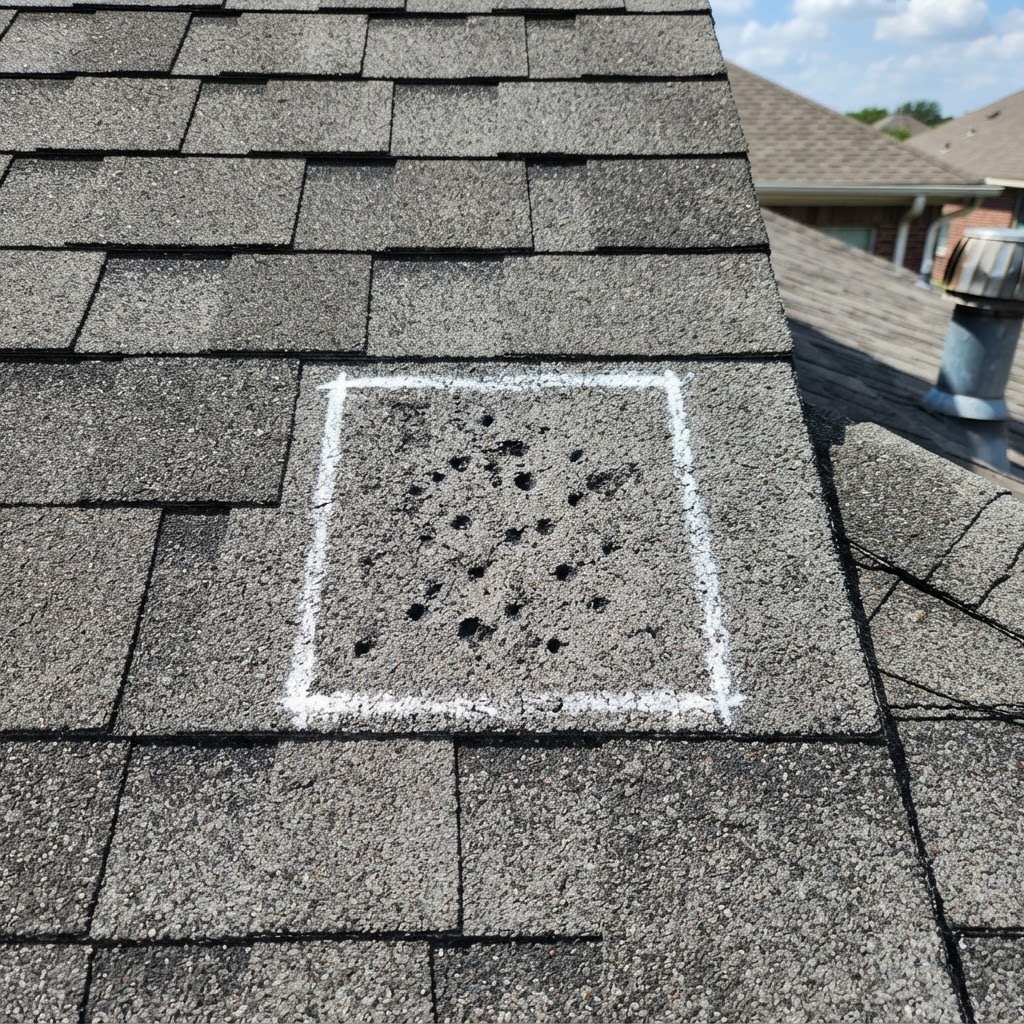
Close-up of a hail bruise on an asphalt shingle with granules knocked away.
Frequently Asked Questions
- Licensed & insured — documentation available on request
- Free, documented roof inspections
- Real emergency service available
- 5-year workmanship warranty (manufacturer warranties vary by product)
- 30 years of construction experience
- Serving Denver, Adams, Arapahoe, Douglas, Jefferson, and El Paso counties
Promise Keepers Restoration
9615 E. County Line Rd, Ste. B-477, Centennial, CO 80112
Hours: Mon–Sat 8:00 AM–5:00 PM