Written by Peter Regalado, Operations Manager · Reviewed by Mason Pastorello, Managing Director · Last reviewed: July 2026
Metal roofing cost factors include the type and quality of metal, the complexity of your roof, the installation (which requires specialized skill), and the fact that metal costs significantly more upfront than asphalt while lasting much longer. Understanding what drives metal roofing cost, and how to think about its higher upfront cost against its long lifespan, helps you evaluate whether metal makes sense for your situation. This article explains the factors that affect metal roofing cost and how to weigh metal's cost against its value. As with any roofing, this covers cost factors, not specific prices, which depend on your particular roof and are best determined by a quote.
Metal costs more upfront than asphalt
The starting point for understanding metal roofing cost is that metal costs significantly more upfront than asphalt shingles, both in materials and typically in installation. This higher upfront cost is the main consideration that gives homeowners pause about metal, and the reason asphalt remains more common. However, this upfront cost comparison is only part of the picture, because metal lasts much longer than asphalt, which changes the long-term calculation, as discussed below. But taken at face value, the upfront cost of metal roofing is notably higher than asphalt, which is simply a fact of choosing metal. Understanding this upfront difference, and then weighing it against metal's longevity and benefits, is how to think about metal roofing cost.
The type and quality of metal
A significant cost factor is the type and quality of the metal roofing. Metal roofing comes in different types and materials and quality levels, and these affect cost. Different metals and different products within them have different costs, and premium metal roofing costs more than more basic options. The style of metal roofing, such as standing seam versus other profiles, also affects cost. So within metal roofing, there's a range of costs depending on the specific type, quality, and style you choose.
Roof Size and Complexity: Metal Roofing Cost Factors
As with any roofing, the size and complexity of your roof affect metal roofing cost. A larger roof requires more material and labor than a smaller one. A complex roof with many angles, valleys, penetrations, and details takes more labor and skill to roof in metal than a simple one.
The specialized installation
A notable cost factor specific to metal is that metal roofing installation requires specialized skill. Installing metal roofing properly is different from installing asphalt shingles and requires specific expertise and techniques, particularly for standing seam and complex roofs.
Metal's longevity changes the calculation
The crucial context for metal roofing cost is that metal's much longer lifespan changes the cost calculation. While metal costs significantly more upfront, it lasts much longer than asphalt, often by decades. This means the higher upfront cost is spread over a much longer service life.
Comparing metal to Class 4 asphalt for colorado
In Colorado, the metal decision often involves weighing not just metal versus standard asphalt, but metal versus Class 4 asphalt, with Class 4 asphalt frequently being the more cost-effective hail solution and metal being the choice for those wanting its fuller set of benefits.
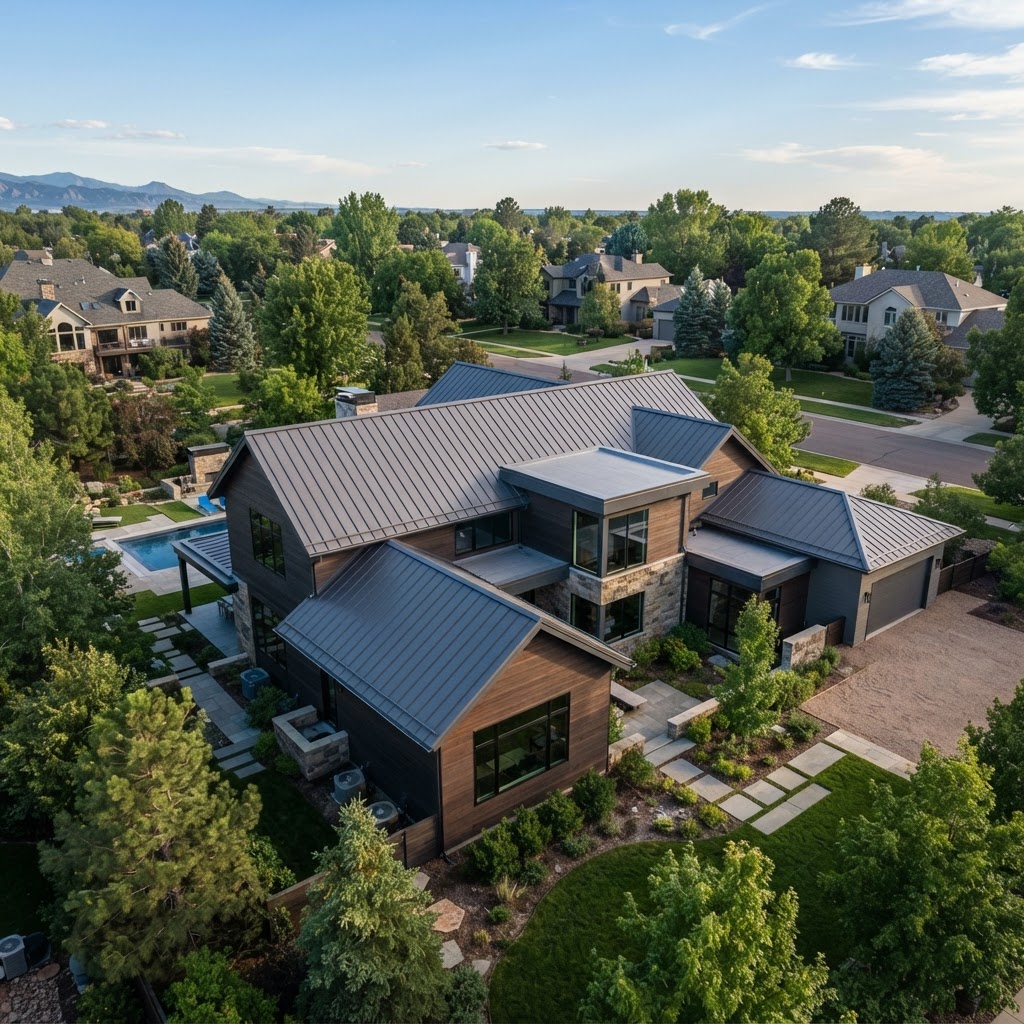
Standing seam metal roof on a Colorado home, a long-lifespan premium option.
Frequently Asked Questions
- Licensed & insured — documentation available on request
- Free, documented roof inspections
- Real emergency service available
- 5-year workmanship warranty (manufacturer warranties vary by product)
- 30 years of construction experience
- Serving Denver, Adams, Arapahoe, Douglas, Jefferson, and El Paso counties
Promise Keepers Restoration
9615 E. County Line Rd, Ste. B-477, Centennial, CO 80112
Hours: Mon–Sat 8:00 AM–5:00 PM